Feline Focus

Feline Focus
My latest puma, July 2016

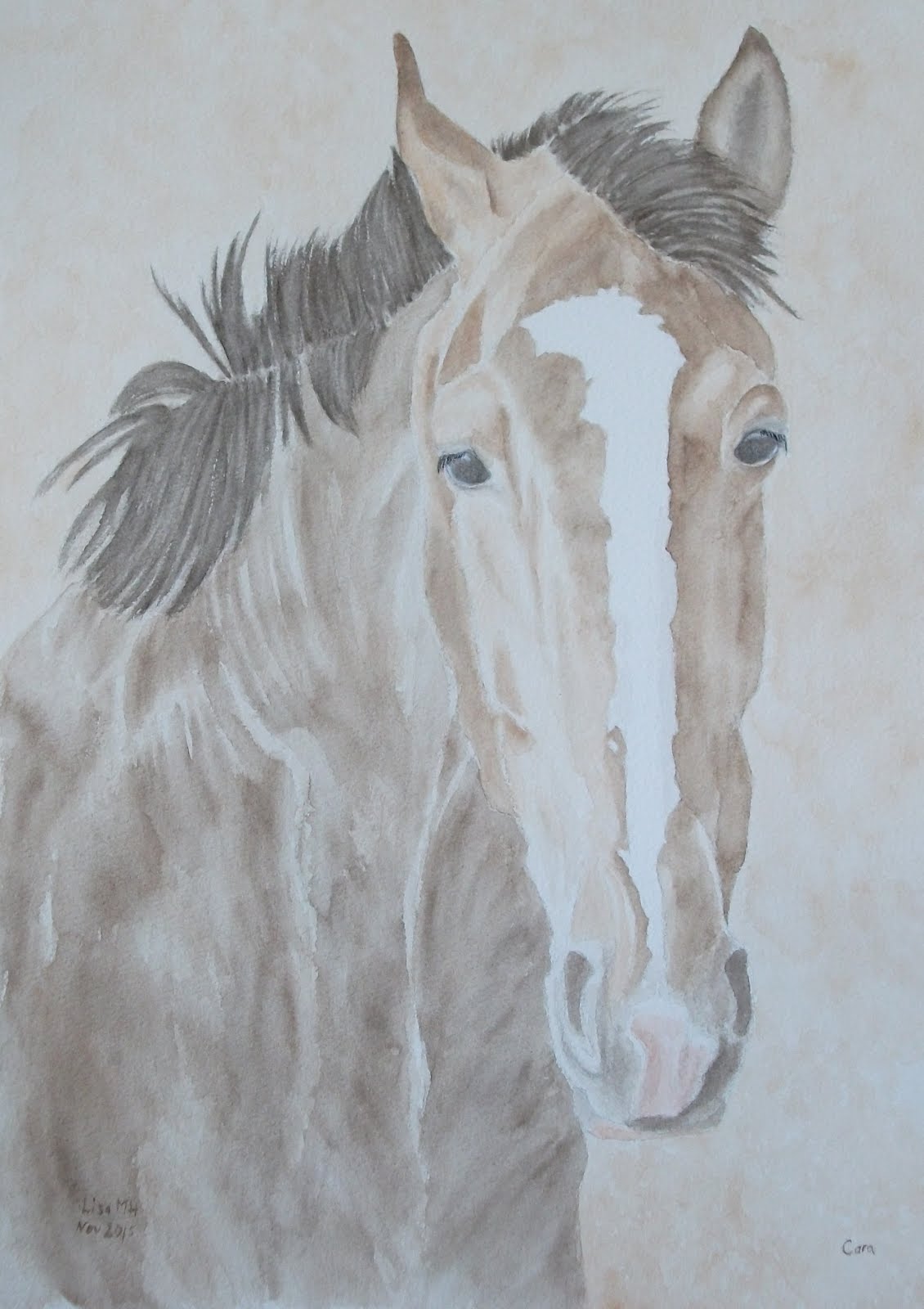
Carra

Carra
Beloved companion to Sarah, Nov 2015

Window To The Soul

Window To The Soul
Watercolour Horse, June 2015

Sleeping Beauties

Sleeping Beauties
Watercolour Lionesses, Nov 2012

QUOTES QUOTA

"Outside of a dog, a book is man's best friend. Inside of a dog it's too dark to read."

"Those are my principles, and if you don't like them... well, I have others."

Groucho Marx


Snow Stalker

Snow Stalker
Another snow leopard - my latest watercolour offering - July 2013

03 November 2014

A Secondhand Life

You may have noticed that I like quoting other people in my blog.  More often than not, I’ll stick a quote, or two, at the top of the page, and away I go.  Sometimes I use it as the starting point, the source of inspiration for what I write: other times it’s like an affirmation of the point I’ve been trying to make.  

Until now I’ve not given much thought to why I do it: I’ve just assumed it’s a good thing, to be able to memorise and then recite things that I’ve read.  I’ve seen it as a sign of intelligence, good memory, and learning.  And I’ve always admired people who can do it; been in awe of those able to spout forth the words of wisdom of others.  Of course, this idea kind of gets blown out of the water when you consider that you can teach a parrot to quote.

Now, I’m not saying that quoting is a bad thing, though only being able to parrot words that you’ve learnt is not really very helpful; being able to use quotes in the right context, understanding what the author meant by them, is a step up.  But, as I’ve recently realised, for me there’s something else going on as well when I use them.  

It’s as if my own words are not enough, like I don’t believe that they carry any weight compared to other peoples’, even if it happens that I am speaking from experience, and they are simply imparting academic knowledge (an example being that of autism, and the precedence I give to the words of those non-autistic ‘professionals’ and ‘experts’ in the field.  If my experience doesn’t match up with what they say, then I discount my experience - or I try to bend it to fit into the autistic-shaped hole that they’ve carved out). 

It wouldn’t be so bad if I confined my use of them to my blog.  But the fact is that I liberally pepper my speech with other peoples’ words, in preference to coming up with something original of my own.  I reference things I’ve read, usually with the words, “It’s like (insert name  here) says in (insert name of book or other source material here) …”, which I’ve now become aware produces the unfortunate result of isolating me from myself, and keeping everything in a state of abstraction - i.e. it all stays in my head, and never touches my heart.  I end up building a life for myself based on my dodgy understanding of someone else’s beliefs (and not just one, but lots of someone else’s).  So it’s yet another bloody form of copying - I just can’t seem to get away from wanting to follow the herd!

And it isn’t as if I can’t think for myself - this whole blog is a testament to the fact that I have plenty of my own opinions and words to share.  I just seem to be filled with such a level of self-doubt that I feel the need to have to refer back to someone else’s interpretation, or experience, rather than trusting my own, and utilising my own words.  I constantly question my own judgement and understanding; and, believing that it’s not quite enough, not quite right, seek to validate it - hence the ubiquitous quotes.

So, in an attempt to divest myself of this habit/trait, I have put aside for the next three months some of the books which I reference frequently, and which are responsible for colouring and shaping a great many of my beliefs and opinions.  Hopefully, not having them to re-read (which reinforces and concretises them in my mind) will lead to me thinking more for myself, and coming up with original ideas, rather than simply dipping into the bottomless pit of my memory.  I think it’s time to give that area of my brain a rest - it’s been shockingly overused, while the rest is in a state of semi-retirement.  

No wonder it takes me so long to get going with writing or art - my brain is fast asleep, and has to be resuscitated first.

01 October 2014

The Declutter Bug

“The ability to simplify means to eliminate the unnecessary so that the necessary may speak.”    Hans Hoffman

“Keep It Simple”

I’ve been decluttering for the past week or so (I’ve kind of lost track of time, as I am wont to do when I get locked onto one of my little ‘projects’).  I say “been”, but the fact is I’m still in the midst of doing it, though it has calmed down to a trickle rather than the flood I had going on last week.  But, even though I had the physical evidence as proof of the extensive clear-out (a massive pile of bags, boxes, and random large items, all carted off to the charity shop), my home doesn’t look that much different.  In fact, if you were to see the state of it, you’d maybe wonder whether I was being delusional, and a tad optimistic: it looks more like I’ve been doing the opposite, what with the chaos that abounds, kind of like the aftermath of a mini tornado. 

So what has it taught me?  Well, apart from the obvious, which is that I hoard things (even though I hate doing it), my approach to the process of clearing out has been an illustration of certain of my ADHD, and autistic, traits running rampant.

Of course, I never meant for it to be - I had every intention of approaching it like a sensible, neurotypical person would, the way I’d read about it on the internet (of course I ‘had to’ go and read about it first, and then keep returning in order to re-motivate myself.  Nothing at all to do with getting distracted by being on the internet… not much).  It’s a wonder I actually managed to get anything decluttered at all.  And it’s why it has taken me so long - ‘cos I don’t really have that much stuff, nor that much space.  I live in a small, one-bedroomed flat.  But there we go.

So I started off in typical fashion - not accepting that, as someone with ADHD and autism, reading about something that is actually very simple was a bad idea, especially given that it was being espoused by a lot of non-autistics/ADHDers; only to find myself, once again, comparing myself to them, and using them as my template.  

And I discovered that, for something so simple, there were a lot of variations, and an enormous amount of blogs/sites out there dedicated to the art of decluttering/living simply/minimalism.  I guess when you’re making a living out of it you’d have to stretch it out, otherwise you’d have nothing to write about on your blog (or in your book/s).  It’s kind of ironic that we apparently need a book, or a blog, full of instructions on how to live simply.  But hey, I’m dumb (and willing enough) to buy the idea.

Of course, when I set out I didn’t really make a decision at all.  I just sort of fell into it, with the desire/need to empty out and get rid of a set of drawers, which I duly did: and then it simply escalated - as these things have a tendency to do with me.  I kept making vague murmurings about needing to slow down, focus on one bit at a time, and not move onto another area until I’d completed that.  But, in true ADHD fashion, I ended up starting in one place, becoming overwhelmed, being distracted by thoughts about what needed doing elsewhere, losing interest in what I was doing, and abandoning it to go start somewhere else, ad infinitum…  

Hence I’m now sitting in a flat in a state of semi-completion, with smaller piles of unsorted clutter in each room - but, still, piles all the same.  I’m beginning to think I might be allergic to order and tidiness, because I never quite get there (‘there’, I think, being a kind of utopian state where everything has a place, and it’s always in its place).  Or I do, but it only lasts for about sixty seconds.  Or I get one bit, or most of it, done, but never quite finish it (I have a problem finishing things in general - and starting them.  But I’m okay with the bit in the middle).  

It’s as if I see the finish line, where the spectre of neatness stretches out in front of me like an endless desert (a bit like an extreme minimalist’s home), and then I seemingly panic and baulk at running through the tape.  I don’t know whether my mind subconsciously worries about what I’m going to do if I haven’t got anything to distract me, and so basically sabotages it all; or whether it’s as simple as me needing to accept that I’m a bit of an untidy person, that it’s a character trait of mine, but as long as I don’t end up hoarding, and let it get overwhelming, it’s okay.  It’s not life-threatening (I’m not going to die from chronic untidiness), and it doesn’t make me a ‘bad’ person.

I’ve been chasing after the illusion of wanting to be a neat person for years, and so far it’s eluded me.  That’s a lot of years.  Perhaps if I stopped chasing it, my own version of order and tidiness might come to me.  After all, there isn’t only one way to be ordered - there are those people who find order in chaos, or enjoy creating order from chaos - perhaps I’m one of those, and I should stop trying to obliterate what might be an essential part of my personality.

When I was on my web-trawl (doing my ‘research’ on decluttering) I saw a photo of Steve Jobs’ office, and it could only be described as looking rather messy and chaotic - and yet he created, and managed, Apple.  Obviously to him his ‘chaos’ was inspiring rather than distracting, and he looked to create order and simplicity in the computers he built, rather than in his environment.  Just think if he’d done what I do, and spent his time worrying about the fact that his room was untidy, and how to go about decluttering it - his Apple tree would still be a sapling, and never have grown enough to bear fruit.  

“To each their own”, as they say.  Now, if I could only stop trying to follow everyone else’s…

21 July 2014

Language Of The Heart (Part One)

“When we try to speak to each other - Me to you, you to Me, we are immediately constricted by the unbelievable limitation of words…  Words are really the least effective communicator.  They are most open to misinterpretation, most often misunderstood.

And why is that?  It is because of what words are.  Words are merely utterances: noises that stand for feelings, thoughts, and experience.  They are symbols.  Signs.  Insignias.  They are not Truth.  They are not the real thing.”     From “Conversations With God”, by Neale Donald Walsch

Imagine a blind person still trying to use their eyes through which to see; or someone who is deaf who continues to listen with their ears; or an individual who has lost the use of a body part attempting to utilise what no longer works.  

And now think of an autistic, for whom communication and understanding via language is, at worst, frustrating and bewildering, and at best incomplete, still insisting on depending on this form.

This is me.  Yep, it finally dawned on me that, despite my diagnosis four years ago, I still have not accepted this rather major facet of my character (it is, after all, one of the defining traits of autism), and persist in relying almost wholly on words as my means of understanding, and communication. 

I realise that my perception is at fault, and I am limiting myself as a result.  I have a narrow, rigid comprehension of the word “communicate”: I see it as referring solely to the use of language - to talking, reading, and writing - when, in fact people, communicate via other means, through their feelings and actions.  But, since I am largely unconscious of this, I have always chosen language by default to express myself and interpret what others are trying to convey. 

Therefore, in order to broaden my perspective, it needs adjusting to include other definitions -  which, as an autistic with a narrow viewpoint, and a tendency to focus on minute details, forgoing the bigger picture in the process, is alien and unnatural.  But I believe it can be done: it’s just not going to be instinctive.  I’ll have to make a conscious effort to do it, to remind myself when I’ve become narrow and limited once again.  

As I have said before, I LOVE language - playing with words, crafting a piece of written work, constructing the perfect sentence.  When I really let myself play (when I’m not constraining myself with a lot of rules, which take all the fun out of it) then it’s like my heart becomes engaged in the process, not just my brain, which I think is what allows me to be able to communicate through this medium.

Unfortunately, though, I have come to depend almost wholly on words; to revere them as if they hold the key to all knowledge and understanding; to believe that because I can read and write and understand what I’m reading on a literal level, that this means I understand what is being said.  This can be very confusing.  

Snow Leopard

Snow Leopard
An experiment in watercolour and gouache

Quotes Quota

"Do you believe in Magic?" asked Colin.

"That I do, lad," she answered. "I never knowed it by that name, but what does th' name matter? I warrant they call it a different name i' France an' a different one i' Germany. Th' same thing as set th' seeds swellin' an' th' sun shinin' made thee well lad an' it's th' Good Thing. It isn't like us poor fools as think it matters if us is called out of our names. Th' Big Good Thing doesn't stop to worrit, bless thee. It goes on makin' worlds by th' million - worlds like us. Never thee stop believin' in th' Big Good Thing an' knowin' th' world's full of it - an call it what tha' likes. Eh! lad, lad - what's names to th' Joy Maker."

From 'The Secret Garden', by Frances Hodgson Burnett

Love

Love
Copied from photograph of the same name by Roberto Dutesco

Quotes Quota

"There is no way to happiness - happiness is the way."
The Dalai Lama

"If you don't stand for something you will fall for anything."

Malcolm X

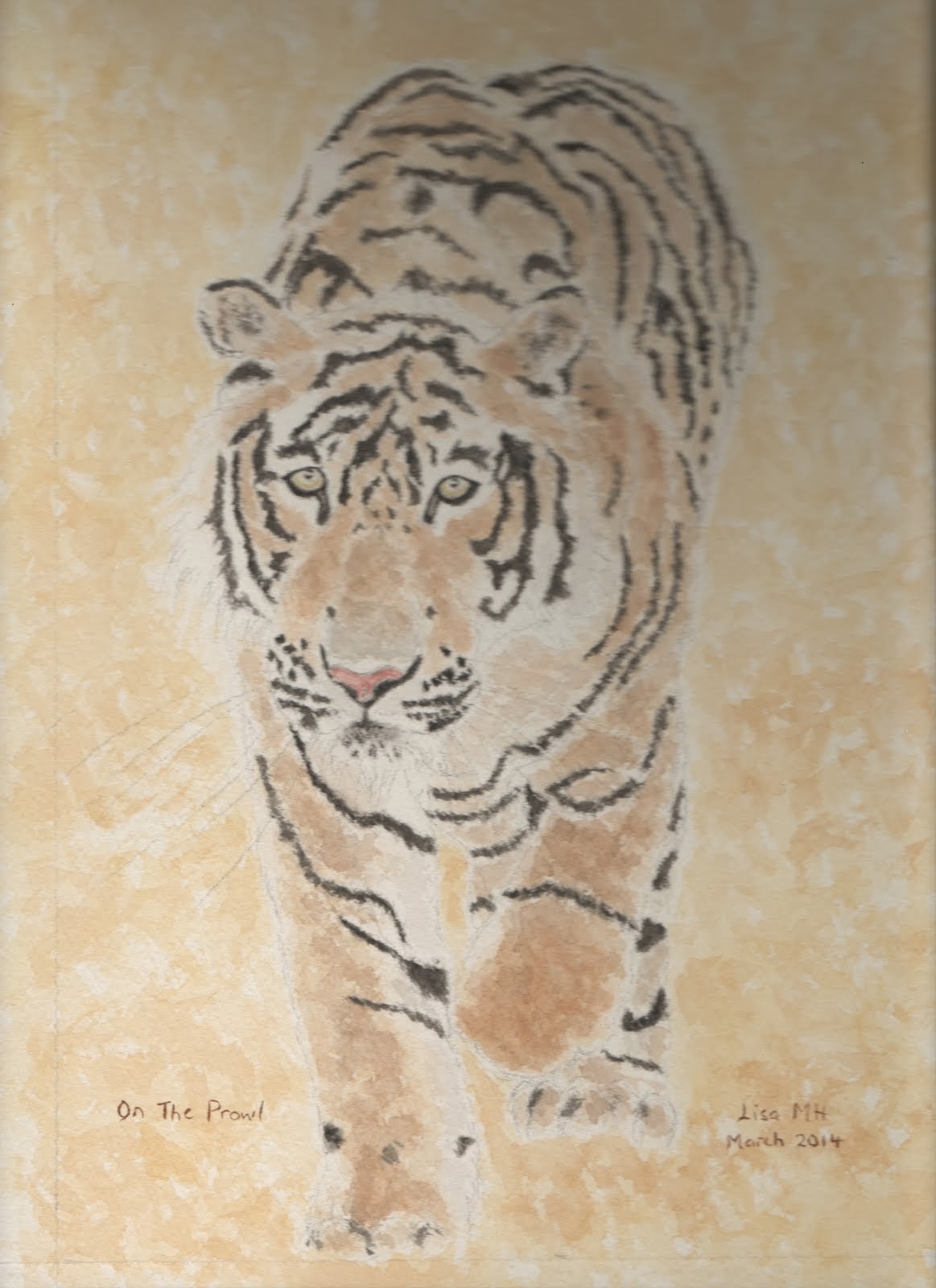
On The Prowl

On The Prowl
Watercolour tiger

Quotes Quota

"What saves a man is to take a step. Then another step."

"There are far, far better things ahead than any we leave behind."

C S Lewis