Feline Focus

Feline Focus
My latest puma, July 2016

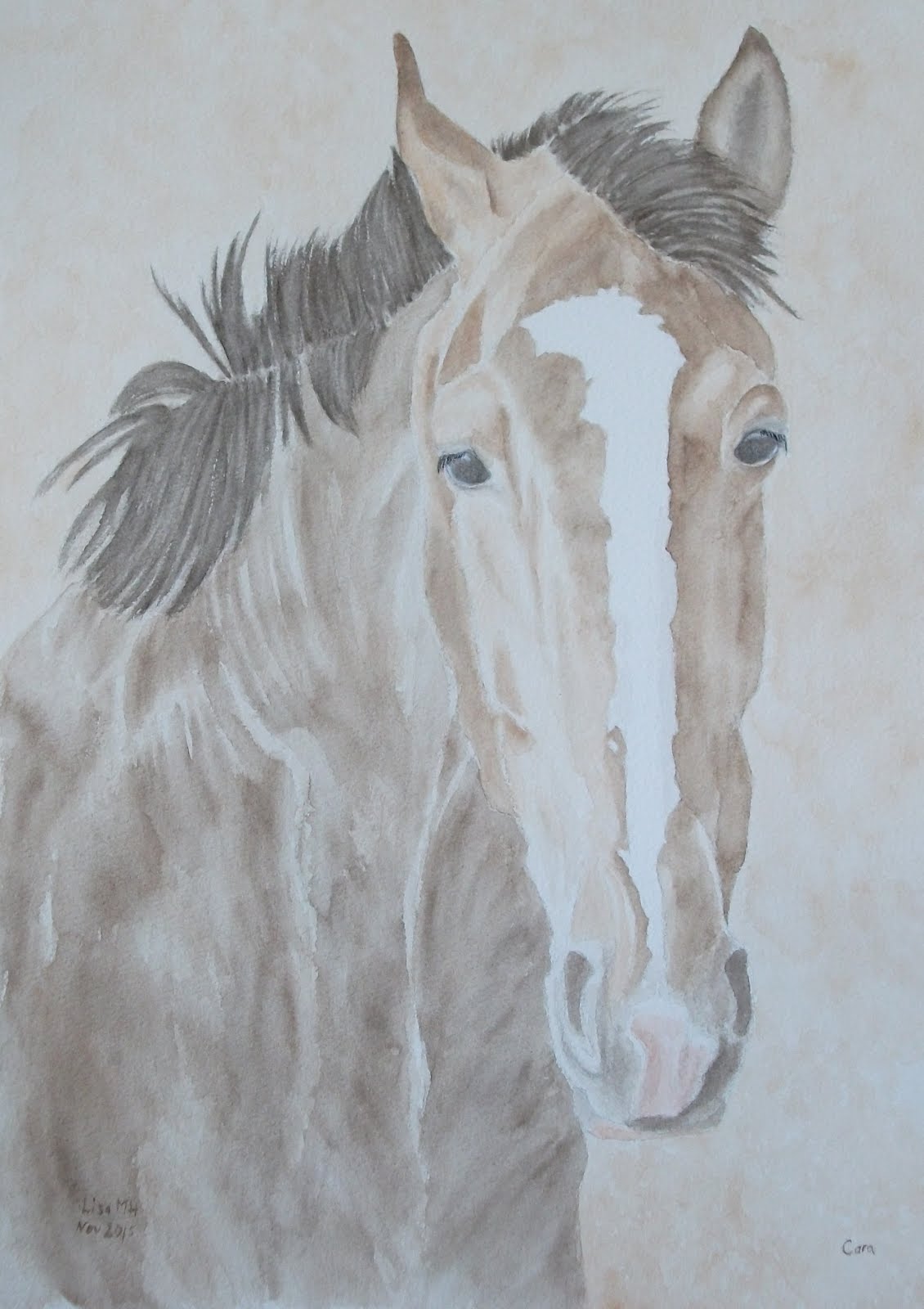
Carra

Carra
Beloved companion to Sarah, Nov 2015

Window To The Soul

Window To The Soul
Watercolour Horse, June 2015

Sleeping Beauties

Sleeping Beauties
Watercolour Lionesses, Nov 2012

QUOTES QUOTA

"Outside of a dog, a book is man's best friend. Inside of a dog it's too dark to read."

"Those are my principles, and if you don't like them... well, I have others."

Groucho Marx


Snow Stalker

Snow Stalker
Another snow leopard - my latest watercolour offering - July 2013
Showing posts with label AA/OA. Show all posts

21 July 2018

Weebling To Thirty

Do you remember those toys called Weebles, which first appeared in the 1970s, and had the tag-line “Weebles wobble but they don’t fall down”?  (I just googled them, and it turns out you can still get them.)  They were great fun, and I especially loved the tree house, in which they lived.  I really wanted to live in that tree house.

Anyway, this is not a post about Weebles, per se.  This is about the fact that today is my AA birthday, and I have somehow managed to cobble together thirty years of consistent sobriety (that’s 30 years, in case anyone out there has problems with discerning the letters in words - though my internal grammarian baulks at the informal and technically grammatically incorrect use of numbers within a piece of text).

But enough of that pedantry.  So where do Weebles come into this miracle of recovery, you may be asking?  Simply in the fact that I’ve decided that the Weebles’ means of locomotion is one I share when it comes to describing the way I’ve done my recovery (and can be extended to encompass the way I “do” life in general) - namely, I’ve wobbled a lot but I haven’t fallen down.  Sometimes I go from side to side whilst remaining stationary; frequently, it seems I’ve gone backwards; oftentimes I’ve gone round in circles; but ultimately I have managed to make slow, tentative, frequently tortuous, forward progress.  

This is how come I happen to be sitting here now, the bemused (but grateful) recipient of the gift of thirty years of sobriety, which I have to tell you I was never really sure I wanted in the first place, didn’t ever really make a conscious decision to go after, but rather (in the classic autistic way, I can now see with hindsight) simply copied my way into; and for the first ten years wished I could give back, and return to the ignorance of not knowing that alcohol was not the solution to anything in life but simply one more problem to add to the pile.

Briefly, my journey of sobriety began with my second, and last, visit in 1988 to the psychiatric ward of my local hospital, after I’d been arrested for criminal damage, and had then tried to kill myself with an overdose.  

After this I was given the choice of either going home (where I was extremely miserable), or going to the local rehab unit for alcoholics/addicts, which conveniently happened to be next door to the hospital.  

Even though my initial visit to psychiatric had been for a two week detox from alcohol, which I’d voluntarily kept extending until I’d outstayed my welcome at the seven week mark (I felt strangely safe and at home there, after the initial terror on being admitted), I don’t recall any of the staff ever using the word ‘alcoholic’ to describe my drinking.  I believe I was initially considered to be possibly suffering from manic-depression (bipolar disorder), because I suffered extreme mood swings (due to both the effects of coming off alcohol, and what I now know is a combination of autistic meltdown, and ADHD).  

What is most remarkable is that, despite the fact that medication seemed to be freely and routinely prescribed to patients willy-nilly, I escaped the psychiatric system without ever being given anything other than the standard sleeping tablet, which I only took during my stay there.  It was years later, when discussing it with my best friend, that I realised just how blessed I had been, given that I had so many things for which I could easily have been medicated, especially given that, due to complete ignorance on the part of the staff, I was being misdiagnosed (autism not being widely recognised, especially in females, back in1988).  

And, distressingly and painfully uncomfortable as my life has frequently been since then (living without anything chemical to replace the alcohol and mute the chronic anxiety, and general sensitivity to everything around me), I am extremely grateful for being kept safe from what could have been a disastrous transference of my addiction to alcohol to an addiction to prescribed medication, as has happened to so many other people I know of.

To continue (before I weeble myself into a standstill), I chose to go to the rehab unit as the lesser of two evils.  And, as with my stay in the hospital, once I got over the shock of moving into an unfamiliar environment, I settled in and duly repeated the same pattern of becoming dependent - duly becoming the longest-serving resident, clocking in at a year and a half.  Yet again, I had to be almost forced to leave.

After I left and moved into my own home, at the age of twenty-three, things proceeded downhill from there.  Despite having been taught all things domestic by my dad starting at the age of seven (and then being expected to take care of him), I was hopeless at looking after myself.  And, whilst I’d come away from rehab with the knowledge that I couldn’t ever drink safely (‘one drink is too many, and a thousand is never enough’), there wasn’t a great deal else that was keeping me sober.  Essentially nothing had changed.  

Add to that an escalation in my undiagnosed anxiety, and a full resurgence of my also undiagnosed and raging eating disorder (compulsive overeater/under-eater/bulimic - in remission for a number of years now).  Plus I’d discovered that I could get mildly stoned on certain over-the-counter medications, which I used whenever I had to leave my flat.  A joyous existence, what ho!

It’s not surprising that, after nearly ten years of this, I descended into a state of hopelessness and depression, in which I wished daily that I could die, and finally progressed to the planning stage.

And at that point God stepped in and, in a remarkable act of Providence, reunited me with someone I’d met at the end of my time in rehab, for whom I’d briefly worked as a voluntary alcohol services counsellor (yes, me, counselling people - it doesn’t bear thinking about, I know), and who was now firmly steeped in the AA Twelve Step programme.  Through her, God saved my life.  

She became my AA sponsor; introduced me to the real recovery programme (it’s in the Big Book, not the meetings); helped me find a God of my own understanding (a Friend who loved me, rather than the critical and punishing father figure in which I’d come to believe); was the first person to recognise that I suffered from chronic anxiety, and the first person who identified me as being autistic; and she has been with me on this journey for the last twenty-one years.  Having just one person who truly knows me, and accepts me for who I am, has made all the difference - and for that I am extremely grateful.

What’s also remarkable is that, despite the struggles, I have never had the desire to drink alcohol again since sometime in the first year of my stay in rehab - the obsession to drink was removed (as it says in the Big Book) without me even realising it.  I have also never wished I were dead, and thought about killing myself, since reuniting in 1997 with the aforementioned person who is now my best friend and who, ironically, has also turned out to be a fellow autistic; and thoughts of wanting to die plagued me daily from the age of about seven, after my mum left us.

So, here endeth this brief overview of my time in recovery.  I can’t say it’s been easy (I’ve never been known to do anything easily), and there have been frequent set-backs, but I have to say it is ultimately worth it; and I will, no doubt, continue to wobble my way in Weebly fashion through the rest of my life.  

Therefore, I guess all that’s left to say is:-

HAPPY BIRTHDAY TO ME, HAPPY BIRTHDAY TO ME, HAPPY BIRTHDAY DEAR LISA WEEBLE, HAPPY BIRTHDAY TO ME!!!!

01 July 2017

Confounding Co-Factors

Here’s a conundrum - what sometimes looks like addiction, feels like addiction, sounds like addiction, but isn’t?  Answer - autism.

How so?  Well, take, for example, my perennial problem with the internet.  Regular readers might already be aware of my on-going struggle to reign in my obsession with it, and may be bored out of their brains with my seemingly constant references to it - as I am myself.  But bear with me: this time I may actually have had a genuine epiphany.

As usual, I have not posted for so long because I’ve been stuck on the web.  In between bouts of trawling, I’ve been tying myself in knots trying to work out why I can’t seem to stay away from it, and how to manage my use of it (which, ironically, is all part of the obsession - so even when I’m not on there, I’m worrying about how to stay off there, etc).  

This time around, I finally determined that it’s an addiction - that I’d been “in denial”, minimising and rationalising my behaviour (for example, by blaming it on my ADHD).  After all, did it not fit within the simple AA definition of addiction in the Big Book:

‘If, when you honestly want to, you find you cannot quit entirely, or if when drinking, you have little control over the amount you take, you are probably alcoholic.  If that be the case, you may be suffering from an illness which only a spiritual experience will conquer.”

Substitute internet use for drinking, and it described perfectly what seemed to be the problem - inability to choose to stay off there (away from my compulsive web-trawling, as opposed to my “responsible” use of the internet for things like communication, or blogging) for any decent length of time even when I wanted to, or needed to in order to get anything else done; and lack of control over what I would do once I got on there, which not even extreme tiredness, or physical pain, could induce me to stop.

And, also as described in the Big Book, I have tried all ways to control it (egs setting up rules, using a timer, hiding the router AND the computer at times) - and failed.  All that’s done is driven me round the bloody bend, obsessing about how to stop being so bloody obsessed with the bloody thing!

I’ve tried fear, I’ve tried guilt, I’ve tried coaxing; and I’ve done what I do with everything, which is to compartmentalise it into two distinct and extreme camps (because I really don’t do middle ground) - those being my responsible, sensible, creative, productive use of it; and my unproductive, wasteful, negative use.  They haven’t worked.  

The unfortunate effect of categorisation is that, by extension, whenever I ‘give in’ to my compulsion, I judge myself to be choosing to be irresponsible, unproductive, and slothful; that I could stop myself if I really wanted to; that I just need to ‘pull myself together” (like a pair of curtains), and pull my socks up (as if having droopy socks are responsible for me not applying myself, or trying hard enough?!)   

Yet Step One of the AA programme says that, when it comes to addiction, we are unable to exercise free choice when we are in the grip of an overpowering mental obsession and physical compulsion to use whatever substance or behaviour it is to which we find ourselves enslaved, no matter the damage it may be causing. 

So, having arrived at what I thought was the right conclusion, I set about applying the solution: part of which involved the practical first step of trying to ‘detox’ (AGAIN) from my compulsive use of the internet.  Only this time (I thought) it was going to be different, because I believed I’d got to the root of my dilemma - finally identifying what the problem actually was.

Then I had a conversation with my sponsor/best friend, who mentioned that we’d been here before (with alarmingly frequent regularity) - having an obsessive conversation about my obsessive use of the internet; and that perhaps it wasn’t an addiction after all.  Did I not recall that being obsessed is part of being autistic, she asked (for probably the ten thousandth time since I’d been diagnosed back in 2010)?

And something clicked.  Perhaps she was right?  And perhaps it was time to try to make a wholesale shift in the way I think about myself, because I still seem to have some vague, unconscious idea that there are still parts of me - like my alcoholism, for instance - which are the same as the neurotypical version, and aren’t influenced by my autism: as if I have a brain that is separated into two halves (one being the autistic part, and the other the neurotypical), and they operate in tandem; and I just need to find a way to tap into the NT side in order to overcome the influence of the autism/adhd.  Fuck’s sake!  I thought I’d got over this ‘split personality’ business already!

I realise I haven’t gone into any specific details about the confusing similarities between autism and addiction, which I intended to include here, but this post is already long enough, so I’ve decided to split it up, and (hopefully!) I’ll write a second one about that stuff, soon.  I’m just relieved to have finally got something written.

May you find clarity and truth about your own life.    

31 July 2016

RECOVERY POST - AN INTRODUCTION

The AA Big Book on the left, along with other recovery literature

This is the second idea I’ve had for a ‘series’ (along with the Literary Inspiration one), in order to give areas of my writing some focus, and to hopefully help with the issue of continuity on my blog.

As I have alluded to on numerous occasions, I use the 12 Step Programme of AA to stay recovered, and to help me live my life (more effectively in some areas than others).  It is the primary framework around which I have built my world, and without which I would be completely lost (as opposed to only vaguely so).

My original intention when I started the blog, back just after I’d acquired my Asperger’s diagnosis, was to write about my life as an autistic, but with a focus on applying the principles I’d learnt within the Programme to this new facet of my life.  

It didn’t quite turn out that way, mostly because I kept struggling to try to fit autism within my literal interpretation of the parameters of the illness and recovery model of the 12 Steps, as written down in the Big Book.  Instead of adapting the Programme to fit it, I was constantly trying to adapt the autism to fit the Programme: it didn’t work.  It doesn’t work.  It’s not meant to work like that, even when using it for its original purpose of dealing with alcoholism.  And even there, I had a hard time getting to grips with it, because of my rigid, literal-minded, autistic brain.  But that doesn’t mean that there isn’t a way to work it, just not like this. 

And what that way is, I’m not really sure: I have no definitive answers, and I’m still frequently bothered and bewildered by it all, but I thought that a way of dealing with it might be to investigate the Big Book (and other relevant 12 Step literature), but in a different way.  Rather than approaching it in my typically rigid manner (ie believing that the only  ‘right’ way to do it means starting at the beginning, and working in chronological order), I would work organically, and go with the flow of how my own brain works; and it doesn’t work linearly, much as I might try to force it to do.

Inside of each of my well-used books

So to clarify, this is not meant as some kind of blog version of a traditional Big Book Study Group (which would be difficult anyway, given that there’s no way to interact as I don’t have a comments section.  There is a reason for this, but I won’t go into it here).  I’m not trying to teach anything (not my understanding of the Programme, as it applies to alcoholism, or overeating, etc, of which I do have long-term experience).  
I’m simply trying to share - which may include some of my experience and knowledge about what works for me in those areas (as prompted by the literature), but mostly I’m hoping that it can help to shed light on the areas of difficulty I have; how to deal with the business of living with the WHOLE of me on a daily basis; and inspire me to change what I can, and make peace with myself for what I can’t.
Most of all, this is the experience of an AUTISTIC alcoholic, compulsive overeater/undereater/bulimic, general addict, social anxiety sufferer, with adhd (have I forgotten anything??!)  I have no idea what the non-autistic version of all of these things feels like, though I’ve seen a lot of examples of them, and they seemed strangely ‘normal’ - less intense.  You have been warned.

I’m doing this primarily to help myself, but I hope that it will be of benefit to anyone out there reading it.  You also need to know that I won’t be following a schedule (just another word for a  plan!), so expect them when they arrive - hopefully more than once a year.

May you find hope, peace, joy, and love, and a simple path through the often confusing mass that is life - one day at a time.

Namaste


Snow Leopard

Snow Leopard
An experiment in watercolour and gouache

Quotes Quota

"Do you believe in Magic?" asked Colin.

"That I do, lad," she answered. "I never knowed it by that name, but what does th' name matter? I warrant they call it a different name i' France an' a different one i' Germany. Th' same thing as set th' seeds swellin' an' th' sun shinin' made thee well lad an' it's th' Good Thing. It isn't like us poor fools as think it matters if us is called out of our names. Th' Big Good Thing doesn't stop to worrit, bless thee. It goes on makin' worlds by th' million - worlds like us. Never thee stop believin' in th' Big Good Thing an' knowin' th' world's full of it - an call it what tha' likes. Eh! lad, lad - what's names to th' Joy Maker."

From 'The Secret Garden', by Frances Hodgson Burnett

Love

Love
Copied from photograph of the same name by Roberto Dutesco

Quotes Quota

"There is no way to happiness - happiness is the way."
The Dalai Lama

"If you don't stand for something you will fall for anything."

Malcolm X

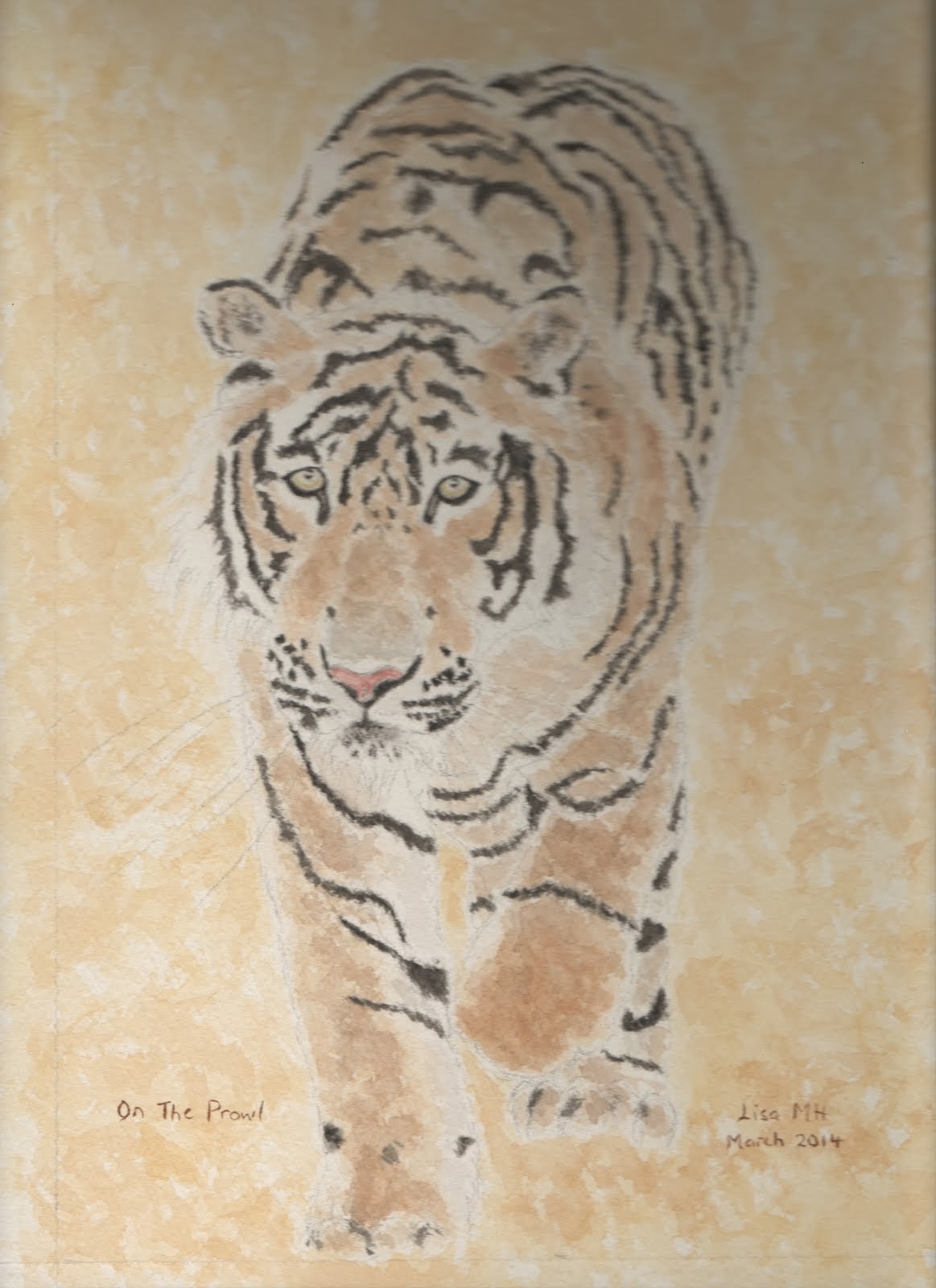
On The Prowl

On The Prowl
Watercolour tiger

Quotes Quota

"What saves a man is to take a step. Then another step."

"There are far, far better things ahead than any we leave behind."

C S Lewis