Feline Focus

Feline Focus
My latest puma, July 2016

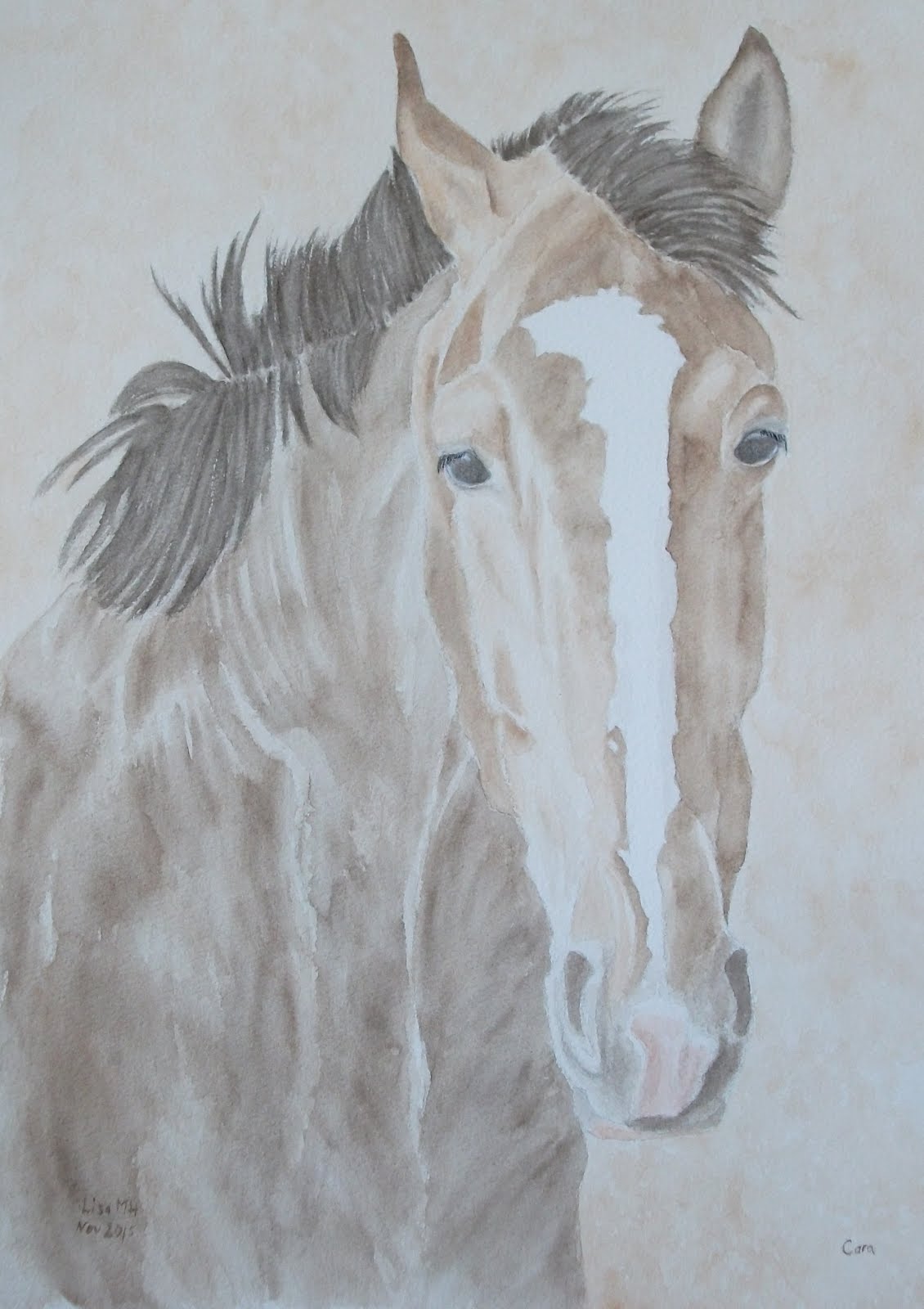
Carra

Carra
Beloved companion to Sarah, Nov 2015

Window To The Soul

Window To The Soul
Watercolour Horse, June 2015

Sleeping Beauties

Sleeping Beauties
Watercolour Lionesses, Nov 2012

QUOTES QUOTA

"Outside of a dog, a book is man's best friend. Inside of a dog it's too dark to read."

"Those are my principles, and if you don't like them... well, I have others."

Groucho Marx


Snow Stalker

Snow Stalker
Another snow leopard - my latest watercolour offering - July 2013
Showing posts with label Communication. Show all posts

03 December 2017

PRACTICAL SUGGESTIONS - Conflict With People

I’ve been meaning to write some posts like this for, oh I don’t know, maybe two or three years?  Don’t know where the time (and the inspiration) went…  

I had intended starting with how I deal with my sensitivity to noise (I’d made notes and EVERYTHING for it), but then something happened last week which has shifted my focus, so I’m going with that first instead, in case I lose momentum.

I don’t know what it’s like for you, but I have a real struggle having to stand up for myself, no matter how minor the issue might be.  The anxiety I feel makes me want to curl into a ball and hide.  And last week I was confronted with just such an incident.  

I looked out of my living room window and saw christmas lights hanging from my trellis-fence, fencing which I paid for, so there is no dispute about ownership - it’s mine.  And on going outside and checking, I found that the lights were draped on both sides - which meant that my neighbour had come into my garden to hang them, and had never bothered to come and ask me first.  
My initial reaction was confused and diffused by the voice in my head that tells me that whatever I feel is bound to be ‘wrong’ or over-reactionary due to my being autistically over-sensitive, anxious, and paranoid.  So when I spoke to my friend that evening and told her about the lights, I described how I felt as being “a bit miffed”.  

Imagine my surprise when she said that she’d be steaming angry if it happened to her, and that she wanted to come down here, remove the lights, and return them to my neighbour, along with a few choice words. 

As we spoke, I was able to begin to process what I really felt and thought: and imagine my horror when she then said that I was going to have to go round to my neighbour’s and tell her that what she’d done wasn’t okay, and to ask her to take them down, otherwise she was going to continue to take advantage if I didn’t put a stop to it now.  She only moved in about a month ago, and already she has shown herself to be a bit of a bully - not threatening, but the kind of person who expects to get her own way, and rides roughshod over everyone else in order to do so.

At that point my real reaction kicked in - gut-clenching fear at the idea of having to go and deal with her, and possibly start a conflict.  That’s what I’d felt earlier when I first saw the lights, but part of my instinct for survival is to avoid anything which has the potential to explode into an argument or disagreement by minimising what I feel about it.  Plus I’m just plain slow at processing information, so it took me until the next day to fully realise just how far beyond ‘miffed’ and into ‘piffed’ (with a double ’s’) I really was.   

And then I remembered that I’d got another option to the dreaded talking - writing.  I could write her a note (or, in my case, a letter).  I’d done it before, with another neighbour, and it had helped tremendously, giving me a way of alleviating the feeling of being powerless to do anything because of my anxiety.

This way I could relieve some of the stress and fear about not being in control - not knowing how she would react, but possibly even worse not knowing what my own reaction would be: would I babble incoherently?; become mute with fright and brain-freeze?; or bolshy with impulsive anger?  And, knowing myself, would I forget who was actually in the wrong, feel guilty and end up almost apologetically grovelling for forgiveness, and for her to do me the favour of taking them down, if it wasn’t too much trouble…  All in an attempt to try to control her, and hopefully stop her from being angry with me (which is how I assume she’s going to react, because it’s what I assume about everyone, given that I cannot for the life of me ‘read’ people.  And I am a depressed donkey whose default position is to expect the worst…*big sigh*).  But then I would hate myself.  And then I would blame her, and then I would hate her.  Not a happy place to be. 

So yes, writing.  A way to have some control over my part - what comes out of my ‘mouth’, as it were.  I also use writing for when I have to phone people (eg to report repairs).  I write scripts for myself to help me remember what it is I need to say, otherwise I’m likely to forget the words, or lose focus and babble.  These are as specific or as loose as I need them to be - so sometimes I literally write whole sentences to say, or I’ll just need to make a note of key words or phrases as prompts.

I know this suggestion won’t be useful to everyone (for those of you for whom writing in itself produces stress and anxiety), but I hope it might help someone who might not have thought of it, and who is labouring under the illusion (as I was) that there is only one way, and that I HAD to learn to be able to confront/challenge/tackle/communicate with people verbally, and in person.  As my friend frequently reminds me, “There are many ways up the mountain.”  

Therefore why would I keep persisting in trying to follow the hardest route, which keeps me stumbling about at the bottom making no progress, without the necessary means to overcome the obstacles in my way?  As I’ve remembered just recently, trying to use force will always create resistance.  Better to make use of the tools that God has given me to move into His flow, and find an easier way, one that relieves some of the stress.  Life’s difficult enough as it is for autistics without adding to it by trying to follow a neurotypical route.

So, I wrote my letter, read it to my friend to check that it was okay, and posted it (eventually).  It took me a couple of days to find the courage to go out and stick it through her letter box (under cover of darkness at the crack of dawn, I kid you not!), and of course I had the anxiety of wondering how she would react.  But it achieved what it was meant to - the lights were taken down that day, and I haven’t seen her to know how she reacted to the letter.  I just have to keep reminding myself that she was in the wrong.  

And I thought it might be helpful to add the letter here, in case anyone needed some kind of guidance.  So here it is:


Hi (I’m sorry but I don’t know your name),

I noticed on Friday evening that there are christmas lights on my trellis, and, given that they’ve never been there before, I’m assuming that they are yours (if I’m wrong, and they’re not, apologies, and please ignore this letter).

I am autistic, and I also suffer from social anxiety, and I found it extremely disturbing to see not only that they had been put on there without my permission, but that they are also on my side as well as yours - which I can only assume means that whoever did that for you either came into my garden, or leaned over the trellis into my garden.  

I was in all day on Friday, and I didn’t hear anyone knock on my door to ask me if it was okay for them to do that; but if they did knock, and I didn’t hear them (which is a possibility), the fact that they went ahead anyway, rather than wait until they caught me in, I find equally disturbing, discourteous, and inconsiderate.

I would never dream of doing any such thing to anyone else, especially knowing how anxious and distressed the idea of other people encroaching on my space and privacy makes me feel, and how difficult I find it having to challenge them about it.  I would appreciate it if, in future, you would respect my privacy and my boundaries, and ask before you decide to do anything that might affect me.   

So, having had time to think about it, I would like you to take down the lights: you do have your own trellis in the back, so it isn’t that you don’t have anywhere to put them.  I’ve also decided that I would prefer it if you did not put anything at all up against my trellis, having also had time to think about your question about planting a climber there.  I already have a honeysuckle growing up there.

As I said, I am autistic, so I struggle to communicate clearly with people to make myself understood, and the anxiety makes this worse.  This is why I have written this letter rather than talk to you directly, as I find it easier to express myself in writing - it allows me time to think about what I want to say, which talking to people does not.

Kind regards

Lisa

25 September 2016

NO COMMENT

You may have noticed that I don’t allow comments on my blog.  Here’s why.

I am someone who cannot just ignore what people say about me, or what I write.  I know there are those who say you have to not take any notice of the negative comments; that it comes with the territory; and that you can’t let those people stop you from engaging with other like-minded individuals (unlike the trolls, who aren’t looking to engage in a conversation at all, but seem to simply enjoy posting inflammatory comments in order to incite an argument; and appear to like having the opportunity to express their opinions on anything and everything, no matter that they may be completely ignorant about the subject matter - which is more often than not).  

I have lived on this planet for forty-nine years now, and I have yet to be able to take anything “with a pinch of salt”.  Whoever said, “Sticks and stones may break my bones, but words will never hurt me” was an idiot.  Or they had never met anyone like me, for whom words cause more harm than a bloody heat-seeking missile.  So I’m not about to give some negative arse-hole the key to the missile launcher.

There are also those well-meaning people (mostly non-autistics) who might misunderstand what I’ve written, and then say things like, “I know what you mean.  I do/feel/think that too.”  And then proceed to prove that they don’t know what I meant at all, but they’re just being neurotypical, doing that thing that so many of them find so necessary to do, which is to identify with everything in order to connect, make the writer feel better, included, the same.  Whilst I understand there is no harm meant, and that this is the basis of community to a neurotypical, this also drives me nutty - which would lead to even more time spent obsessing about what was written; or responding in an attempt to explain what I meant, and thus tying myself in ever-increasing knots.  

I’m also easily influenced, so anyone questioning what I’d written, or offering an alternative viewpoint, would inevitably spark into action Mrs Self Doubt, the part of my brain that can’t seem to hold onto one opinion for longer than sixty seconds before she’s wondering whether another one might be better.  She’s bad enough as she is: she doesn’t need a readily available source from which to choose, to make it worse.  I’m trying to train her to stick to one thing, thanks all the same.  It’s like potty-training a labrador puppy.  Or a cat.  Have you ever tried training a cat to do ANYTHING?

Also in the same vein, I would inevitably start questioning whether what I was writing was what people wanted to read.  I’ve seen other bloggers do this, though it’s been intentional with them - they ask their readers what kind of content they want to see.  But that’s not my intention with my blog, though it could inadvertently end up being.  It’s so easy to get caught up in the desire for ratings, and wanting to be popular.  

It’s happened to me a lot: I’ve found myself thinking about how to tailor my blog to appeal to more people.  It’s ridiculous: I’m a bloody autistic, meant to be writing from a specific, unique viewpoint.  Also meant to be writing, primarily, for my own benefit.  But no, I want to be more inclusive…  I sound like one of those neurotypicals I just described, who’re unconsciously suppressing individuality in an attempt to make everyone a part of the world-wide community.  See?  Easily influenced.  Get me around non-autistics, and I start forgetting who I am.   Before you know it, I turn into PSEUDO-NEURO-WOMAN!!

And finally, I want to say that I wish I could allow comments in order to be able to participate in ‘the conversation’ with anyone reading my blog (if there is anyone actually reading my blog who would even want to leave a comment, never mind have a conversation.  I could be worrying for nothing here).  But actually I don’t really want to.  This would just be my Politeness Gene popping up; and have you ever noticed how much shit being polite gets you into?  

Plus, I’d be suffering from one of my frequent bouts of delusion, where I think that I’m a social butterfly, and a people-person at heart; when, in fact, I’m useless at conversation (hello? Impaired social communication and understanding - two of the three defining characteristics of autism), and I much prefer to converse with myself.  I call it thinking.  Hell, I don’t need anyone else to debate with, I do a fine job alone.  Adding anyone else into the mix would just confuse me (more than I already am, if that’s possible).  Besides which, I do have someone (other than me) with whom to converse, which is enough for me.

So there you have it.  I hope that none of what I’ve said has offended anyone - unless you happen to be a troll.  In which case, please feel free to return to your bridge.

Though I can’t join in (other than in spirit), I wish you all many happy and productive conversations.

Namaste

01 February 2016

Higher Learning

“Knowledge without wisdom is like man without a faith - a self-propelled disaster waiting to happen.”     Lisa M H 

Yes, that’s me - the self-propelled disaster area, not waiting to happen, but in a constant state of happening.

Which idiot is it who said that “knowledge is power”?  Had they never heard that “ignorance is bliss”?  Do they not know that the ‘wrong’ knowledge in the ‘wrong’ hands (or minds, to be literally precise) can be a total liability, causing great harm?  And not just to other people - there’s the stress you can inflict upon yourself just from having an insatiable need to know, without being discriminating about what knowledge you seek, and why you pursue it.

Perhaps the originator of the phrase “curiosity killed the cat” knew this, and was being intentionally vague because he thought it might scare the arse off of people if he actually reported that “curiosity killed my Uncle Horace, who read one too many medical articles about how stress could contribute to a heart condition, and promptly died from a heart attack brought on by the stress he experienced as a result of continually reading such depressing news.”  Plus, it’s not quite as catchy as the cat version.

Which brings me, inevitably, back to me - the self-exploding, knowledge-seeking missile; who, had I been a cat, would have lost all nine lives within minutes of learning how to walk.

I like to think of myself as a seeker of knowledge and truth: which makes it sound terribly noble and worthy, as if I’m on some kind of crusade, searching for a latter-day version of the Holy Grail - information.  I should be wearing armour, a cape, and bearing arms.  I think a horse might be a bit too much, though: I hardly have enough room for a cat. 

The problem is that I’m not very discerning about the knowledge I seek, or what its impact on me might be.  I am a human hoover - I mainly suck up crap.  And why should I be surprised by this when I am a hoarder by nature?  

Random ideas pop into my head, about which I am absolutely convinced I need to know more (preferably right now, or I will expire on the spot): and off I go, back onto the internet - the Font of all Knowledge (dubious as it frequently is).  My true quest, it seems, is to find a legitimate reason for being on the web.  Again. *Sigh*  God, at this rate I’ll soon be overtaking the amount of time the Crusaders spent battling in the Holy Land.  Can’t I find another quest?

So, my latest ‘quest’ (which basically means I got distracted by a thought, and have since been in obsessive pursuit) has been for self-education.  Again.  I say “again” because I have a series of interchangeable ‘interests’ , with which I become engrossed (to put it mildly - I think the more appropriate terminology is obsessed, or hyper-focused), and repeatedly return to, ad infinitum.  My forays into the realm of academia have become a regular highlight, especially since I discovered the world of free, on-line learning resources.  

“Oh joy!  Finally, a valid reason for going on the internet.”  Er, not.  “But why?  WHY?!!!!!  Why can’t I, when everybody else can?!  It’s not fair!!!!  I LOOOOOOOOOVE learning!  And EVERYBODY says learning is a good thing - a means to self-improvement.  It makes you a more interesting, well-rounded person.  And it’s good for your brain - stops it from atrophying, and improves your memory.  I’ll miss out on all of those benefits.  It has to be good for me!”

This is what the knowledge I’ve acquired from other people tells me: people I know nothing about, other than what they choose to share on their sites - and even then I cannot get a read on them, or determine whether I’m meant to take what they say literally, due to the minor issue of my being autistic (impaired social understanding, anyone?).  Which brings us to the fact that most of these people writing this stuff aren’t autistic, so they’re not writing it for me: I just think they are.

But the wisdom of my repeated experience (repeated ad nauseam because I repeatedly ignore it) tells me that I don’t do well with academic learning; that I’ve already found my calling, which is for writing and art, for which I already have everything I need within me - I don’t need to keep looking for “what I want to be when I grow up” (I’m nearly fifty, for God’s sake: I could drop down dead tomorrow, and then it’d be a bit late for that!), or just looking for more. 

And then there’s the fact that it’s passive - I don’t actually do anything, neither whilst learning, nor with the knowledge I acquire, other than let it wash over me, and hopefully retain some of it (or not, since most of it goes over the top of my head anyway, for one reason or another - distraction and boredom being the two main culprits).  It just becomes another obsession with which to bore myself, and any other poor sod who’s unlucky enough to gravitate within my orbit at the time, until it fizzles out and I move on to the next thing that grabs my attention.  “Oh joy.”  *Sigh* 

But the real irony is that, despite apparently being extremely intelligent, I struggled with learning at school (other than English, for which I have a natural affinity), mostly due to a mixture of anxiety, easy distractibility and loss of interest, and just plain confusion about the subjects I was learning: they didn’t fit within the context of my life, other than as an abstract means to an end - that of passing exams in order to secure either a ticket into higher education, or a good job.  

And I don’t do abstract.  Nor do I do the formal model of education, or learning, but still I ignore my inner wisdom and keep on trying to fit myself into a round hole when I’m most definitely an alternatively-shaped peg.

So I guess it’s not what you know, but what you do with what you know.  Or what you don’t do with what you know.  Or even what you do with what you don’t know.  Or what you do when you don’t know.  The possibilities, it seems, are endless… like this paragraph.

And I guess that’s why we refer to the wisdom of Solomon, not the knowledge.

Knowledge you learn, wisdom you earn.

13 April 2015

I Don't Speak Text

Do you ever wonder whether we, the human race, are still progressing, or that we have come as far as we can, and are now in a state of retrogression?

The question occurred to me the other day, whilst I was compiling a list of words for inclusion in a poem (hopefully, having found myself in a rather rare poetic mood) - wonderful, juicy, full-bodied words to get one’s teeth into, chew over, digest, and enjoy, like a good, solid, satisfying meal; words to contemplate and admire for their simple ability to encapsulate within their singularity whole concepts, and to fully communicate their meaning; words which give a solid foundation on which can be constructed a sentence, a phrase, a line of poetry, an essay, a story…

And whilst rhapsodising thus over the beauty of language, my mind wandered forth onto the subject of text-speak, with its use of acronyms and contractions: a form of language no longer confined within the sphere of mobile phones and computers, but now proliferating like a fungus everywhere words are used - including in books, and other forms of literature. 

From there I was reminded of a poem I wrote, called A Yorkshire Sonnet (it’s on the Poetic License page, in the side-bar), in which I employed a broad Yorkshire dialect.  I have to confess that, whilst I am a Yorkshire lass, born and bred, I’ve always had a love of the English language, which has been developed and expanded through my extensive reading; as a result of which I seem to have been safeguarded from developing a broad Yorkshire accent or speech pattern, despite having been surrounded throughout my life by people who actually say things like, “Does tha know?”; “I were in shop other day…”;  “Gee oar (the ‘g’ is soft, as in ‘go’, and the phrase means “give over” - obviously); or my favourite, “Nayou” (that’s ‘no’ to the uninitiated).  Despite this lack of development of broad Yorkshire, I can employ it when necessary.  Which, funnily enough, is not right often. 

It struck me that there appears to be a similarity to text-speak: two examples of  seemingly underdeveloped versions of the English language (similar to olde English), with their predilection for shortening words, as if the speaker doesn’t have either the time or the inclination to give voice to fully-formed words and sentences - kind of like one step up from our linguistically-challenged prehistoric ancestors.

And then it occurred to me that the advent of text-speak, despite its connection to the world of technology, and therefore supposedly a sign of our intellectual advancement, could be seen as not so much an example of our evolution, but of a devolution: an indication that we’re in retreat when it comes to communication.  People, it seems, aren’t interested in fully or deeply communicating with each other; or they don’t have the time for anything other than shallow, alphabetised conversations, and jargon-laden interactions. 

Perhaps it’s a sign of things to come?  One day, in the not-too-distant future, we’ll all be speaking in acronyms; from whence it’s only one small step back to where we all began - mute, apart from animal-like grunts, and hand signals.  

Well I guess it’s one, albeit rather extreme, way of removing the distraction of words from my life.  Maybe then I'll get something written.


PS It wasn't until after I'd posted this piece that I was struck by the irony of a woman who struggles to communicate at any depth (surface included), despite her extensive vocabulary and proficiency with the English language, writing about the apparent lack of communication between non-autistics.  What do I know about why they choose to interact with each other in shorthand?  I barely understand them when they do speak in complete sentences.  Perhaps I'd actually do better if we did go back to the days before words.  And think of all the stimming we could do without anyone thinking we were odd.

21 July 2014

Language Of The Heart (Part One)

“When we try to speak to each other - Me to you, you to Me, we are immediately constricted by the unbelievable limitation of words…  Words are really the least effective communicator.  They are most open to misinterpretation, most often misunderstood.

And why is that?  It is because of what words are.  Words are merely utterances: noises that stand for feelings, thoughts, and experience.  They are symbols.  Signs.  Insignias.  They are not Truth.  They are not the real thing.”     From “Conversations With God”, by Neale Donald Walsch

Imagine a blind person still trying to use their eyes through which to see; or someone who is deaf who continues to listen with their ears; or an individual who has lost the use of a body part attempting to utilise what no longer works.  

And now think of an autistic, for whom communication and understanding via language is, at worst, frustrating and bewildering, and at best incomplete, still insisting on depending on this form.

This is me.  Yep, it finally dawned on me that, despite my diagnosis four years ago, I still have not accepted this rather major facet of my character (it is, after all, one of the defining traits of autism), and persist in relying almost wholly on words as my means of understanding, and communication. 

I realise that my perception is at fault, and I am limiting myself as a result.  I have a narrow, rigid comprehension of the word “communicate”: I see it as referring solely to the use of language - to talking, reading, and writing - when, in fact people, communicate via other means, through their feelings and actions.  But, since I am largely unconscious of this, I have always chosen language by default to express myself and interpret what others are trying to convey. 

Therefore, in order to broaden my perspective, it needs adjusting to include other definitions -  which, as an autistic with a narrow viewpoint, and a tendency to focus on minute details, forgoing the bigger picture in the process, is alien and unnatural.  But I believe it can be done: it’s just not going to be instinctive.  I’ll have to make a conscious effort to do it, to remind myself when I’ve become narrow and limited once again.  

As I have said before, I LOVE language - playing with words, crafting a piece of written work, constructing the perfect sentence.  When I really let myself play (when I’m not constraining myself with a lot of rules, which take all the fun out of it) then it’s like my heart becomes engaged in the process, not just my brain, which I think is what allows me to be able to communicate through this medium.

Unfortunately, though, I have come to depend almost wholly on words; to revere them as if they hold the key to all knowledge and understanding; to believe that because I can read and write and understand what I’m reading on a literal level, that this means I understand what is being said.  This can be very confusing.  

Language Of The Heart (Part Two)

“Words may help you understand something.  Experience allows you to know it.  Yet there are some things you cannot experience.  So I have given you other tools of knowing.  These are called feelings.  And so, too, thoughts…  

Your experience and your feelings about a thing represent what you factually and intuitively know about that thing.  Words can only seek to symbolise what you know, and can often confuse what you know.”      From ‘Conversations With God’, by Neale Donald Walsch

So, to continue, my problem is that I don’t see beyond what I literally see, and I have no idea what other people see, so I assume that they see what I see, and that what I am seeing and hearing is what they are saying (get your head around that one if you can!!)  Only to frequently discover that it’s not.

It also dawned on me that not all autistics have the exact same problem.  Sure, we all share the difficulty with social communication and understanding (which not only includes language in the form of words, but reading body language too), but they don’t all depend on language the way that I do.  And yet some of them live full and successful lives; have found ways to compensate for what they ‘lack’; are happy and accept themselves as they are; and trust what they feel.  My autistic friend is one of them.  

She has the ability to see the essence of what is being expressed, along with any literal interpretation she might have.  At first sight it can appear that she is not that literal at all, especially not when compared to me, which I have concluded must mean that she isn’t: that the part of the brain which deals with language interpretation is not as affected in her as in me, or that she is not quite so far on the autistic spectrum.  All of which is quite plausible - after all, we aren’t all exact replicas of each other.  

But it seems as if, when she reads something, she is not reading solely with her eyes, simply engaging her brain - she is reading with her heart, her soul, her whole being,  which appears to compensate for the literality.  She trusts and depends on her instincts.

I, on the other hand, don’t trust mine at all.  I was raised differently: I learnt to doubt, distrust, ignore, suppress, and fear what I felt.  If I couldn’t name it then it didn’t exist.  And I did it so well - the evidence of this is that I’m still doing it now, though I’m hoping that there is a shift taking place, now that I’ve seen this truth.  

I have learnt to place great importance on words: it has not served me well.  I read and re-read things, in the futile belief that understanding will come by constant  repetition and familiarity.  It doesn’t work.  If all you can see is the surface, then all you’re going to see is more of the same surface when you’re looking at it from the same angle, no matter how often you look at the same thing!

Then we have my attempts at trying to see beyond the literal meaning.  Not good.  I invariably misconstrue what’s trying to be conveyed, as I strain my brain to see beyond my limited viewpoint.  This usually leads to long bouts of deep analysis, where I manage to bypass the point completely - all because I’m still doing it through my ‘eyes’, with that part of my brain that doesn’t process language well.  Plus I’ll often try to look for the deeper meaning to things which have none, and are actually meant to be taken at face value.  

But then there are times when I have discovered the essence of what I am reading - which appears to occur when I’ve read with my heart, and my feelings have been engaged, not just my mind.  Like I’m connected to God, who then does for me what I can’t do for myself, and opens my mind to a more unlimited veiwpoint.  It might still take me quite a few attempts at reading something before I get beyond the surface, and if I try to force understanding then it doesn’t work.  But if I relax, and let God lead the way as it were (or, another way of putting it, be guided by my feelings) then it gradually comes.

Words, I have finally realised, actually impede and limit my understanding.  They clutter my mind, and distract me from seeing the true meaning.  They fill me with doubt, leaving me constantly questioning the validity of what I feel or experience, causing me confusion, resulting in a constant state of indecision and conflict.  I get caught up in the minutiae of trying to determine the exact meaning of a word or sentence, which narrows my focus, so shutting me off from the bigger picture.

So what does this mean?  It means, I hope, that there is hope of change.  

It means that if I give up trying to force a part of me to work in a way that it can’t, and being totally dependent upon it, and instead shift to learning to tune into and trust what I feel, then I might well have a better chance of communicating and understanding.

It means that I might learn a more effective way to utilise my ability to read, without being dependent on the words themselves to impart the meaning.

It means that I might shift my perspective even further to see it not as a liability, a deficiency, or a problem, but as something that allows and encourages me, and all those with whom I engage, to find more effective ways to interact - to see that my autism is not meant to limit but to liberate me.

And the truth is that words are not that effective at all, as it says in the quote at the beginning of this article.  Even when used between non-autistics, they frequently miscommunicate and misunderstand when relying on them.  After all, isn’t that how arguments and wars are often started?  One wrong word and you’ve got Armageddon! 


09 June 2013

Twitter Ye Not

I fear I may have inadvertently become an internet stalker. 

I’ll try to keep this short and tweet. 

What began as a bit of loitering, has gradually progressed into lurking, only to finally evolve  into stalking.  I am talking here about having discovered the world of social networking – Twitter, in particular.

 As I may have mentioned before, I have this ‘thing’ with the internet.  ‘Thing’ being a mild way to describe the driving desire I experience when I come on here without strict guidelines and a specific goal in mind.  Otherwise it’s akin to sending a lone child off into a sweet shop, with a credit card – don’t expect me back any time soon, or without having bought or eaten everything in sight.   

Apart from my insatiable desire for seeking out information on any topic which randomly distracts my mind, I have a particular ‘interest’ in reading ebooks – an extension of my love of reading the real thing.  This unfortunate turn of events came about as the result of acquiring an iPod Touch a while ago, when I was suddenly catapulted into the world of apps. And, being of limited imagination when it comes to using technology, my attention was drawn to the familiar and comforting world of books – available instantaneously on my iPod.  Oh joy!  I thought I’d died and gone to heaven.    

Then, oh double joy, I found that they were also accessible to me on my computer.  All this time and I hadn’t known I’d got an instant library at my fingertips.  Out of my mind went the tiny detail about why I had given up going to the real library (because it’s full of books, and I would bring as many of them home as possible, and promptly get lost in reading them all, whilst neglecting other areas of my life – like sleeping, eating properly, getting dressed, and suchlike.  You know, the trivial details). 

So I failed to make the obvious connection between an internet library and the real thing, but instead made up for what I’d been missing out on, promptly going berserk, reading round the clock, and probably doing untold damage to my eyesight, and my brain, in the process.  All attempts at controlling it didn’t work, due in part to the fact that I couldn’t think of anything else to use the iPod for, other than to listen to music (which was the original purpose for buying it).

In the end I did the only sensible thing – I got rid of it.  However, a monster had been unleashed, and now demanded to be kept fed - the love of on-line reading.  I’ve always been a voracious reader, and here I’d found another way of doing it, with access to a whole world of literature I’d never have otherwise encountered, or wanted to pay for.  Or wanted to be seen in the company of.  This way I could have access to books which I would not consider checking out of a library, or buying from a bookshop, because of the embarrassment.  I have my image to maintain, don’t you know.

In the process I discovered a particular author whose books I found I liked.  That would not have been so bad had I not also discovered that she has a blog, which I proceeded to follow.  And then I found ‘THE LINKS’ – yes, there they were, sitting innocently on the page, under the heading ‘Want to get social?’  And, of course, the social butterfly in me (yeah, right – she sits alongside the maths genius, the computer geek, and the musical maestro), she piped up and insisted that yes, she did, that she’d like to stretch her wings a little, and that it would be okay just to have a little look.  Really, it would only be a peek.

And the rest, as is so often the case, is history: meaning a repetition of the same old thing, with the inevitable conclusion - I am now a Twitter obsessive.

However, this does not mean that I have joined the ranks of the Twitterers, and am now gaily interacting with the inhabitants of that strange on-line world.  On the contrary, I merely sit on the sidelines, reading tweets, feeling a familiar sense of detachment, whilst being fascinated with the conversations taking place.  It actually feels like I’m reading a book, or watching television (another medium which I had to rid myself of, ‘cos it was sucking the life out of me).  I begin to live vicariously, whilst my own life gradually fades into the background, eventually almost ceasing to exist. 

I have gone so far as to calculate the time difference between the countries of said author and myself, in order to be able to work out when I can next expect new tweets to appear.  This is on account of the fact that I initially spent a great deal of time checking and re-checking every few minutes, only to be frustrated to find there was nothing new to read: until I realised that it was the middle of the night in America when I was doing most of my twalking (a new word for tweet stalking).  Yes, it’s got that bad.  If I carry on like this, I’ll be plotting out her day!

I feel a bit like a voyeur, which is faintly disturbing, even though there’s nothing sexual in what I’m doing.  But then our world has become quite voyeuristic, the way we are able to read about or watch what’s happening in other peoples’ lives, via the news or reality television, newspapers and magazines, and the internet.  Me, I find myself strangely fascinated and enthralled by the way people discourse with each other.  I imagine this is how an alien would feel, peering through a microscope at an entirely different species, studying how it works.  

Or perhaps it’s ‘cos it’s a bloody effective way of avoiding my daily routine!

Whatever the reason, the fact is that Tweeting is bad for my health, and I think I should leave it to the people who can do it without abandoning the rest of their lives.  And to the birds.  Tweet tweet.

18 September 2012

The Trick Is To Keep Breathing


“If you don’t go within, you go without.”
From ‘Conversations With God’ by Neale Donald Walsch

“God is in every breath.”

It’s remarkable how I can completely miss the obvious.  I astound myself sometimes, I really do.  I’d bypass the point even if my life depended on it.  Take breathing, for instance...

The first thing I learned in yoga was how to breathe properly.  And the first thing I forgot was how to breathe properly.  Phenomenal, isn’t it, what an autistic mind can misplace when left to its own devices?  And that, unfortunately, is what I was left to – to try to learn yoga by myself, with only the aid of a book for me to work through and attempt to understand, and no-one to keep reminding me of the salient points: like the need to focus on the breath.

So of course, once I’d read the section on breathing, I promptly forgot most of it in my excitement and impatience to move on to what I viewed as the REALLY important bits – the asanas (that’s postures or poses to you non-yogis).  Plus, I probably knew that trying to rein in my mind to pay attention to what I was doing was going to be a bugger, so I conveniently consigned that part to the ‘inconsequential’ pile, possibly to be attempted at a later date – when I was able to focus better.  Yes, I imagined that simply doing yoga postures, without specifically practicing concentrating on the breath or on what my body was doing, would somehow miraculously teach me how to focus - whilst I continued to let my mind wander wherever it wanted.  This is what I call the autistic version of multi-tasking: I appear to be able to do two things simultaneously, but one of them is suffering badly from a lack of attention – and it isn’t the thinking.

At this point in the proceedings (just over nine years ago) I hadn’t yet discovered that I was autistic, or had ADHD to explain the decided lack of anything resembling an attention span.  But when I did find out, I came to the erroneous conclusion that this explained why I hadn’t been able to attain any measure of control over my mind (thereby completely circumventing the fact that I actually hadn’t tried very hard either, it being excruciating, like trying to keep a jack in a box when the lid’s broken); and that the book was written for non-autistics, so this definitely meant that I was not going to be able to do it at all, thus letting me off the hook.  I thought.

The funny thing is that once I started to progress in my yoga practice, I found myself wanting to be able to attain what was promised in my books, which drove me to make time to include the practice of breathing and meditation techniques.  And, remarkably enough, they started to work.  I actually found myself able to sit still and do nothing, other than breathe and try to focus, for longer than thirty seconds.  Okay, so my mind was still rampantly running amok, but it was no longer dictating what my body should do – a bit like sitting still in the middle of a war-zone, with people yelling at me that I should move out of the way.  Not a lot of peace, but I wasn’t going to shift until I decided it was time.

And then I discovered that, even though I still couldn’t seem to control my mind, which insisted on attaching itself to every thought that came my way (the opposite to what you’re supposed to do, which is to let the thoughts flow in and out – totally not autistic!), I felt calmer, and my mind was quieter: it was like someone had finally managed to find the volume control and turn the noise down.  I wasn’t reacting to every thought that entered my head, trying to analyse and talk myself out of having them.  It had finally clicked that the moment I engaged in any way with my thinking, was the moment when my mind had won the battle to get my attention, thereby diverting it away from what I was supposed to be doing, what was really important – focusing on the breath, and being in the present. 

The irony is that my best friend has been telling me this for years, with regard to the rest of my life.  It’s one of a number of phrases she has to keep repeating to me, parrot-fashion, until I get the meaning.  “Stop analysing, stick to the plan, focus on what you’re supposed to be DOING, and ignore what you’re THINKING and it’ll go away.”  Unfortunately, I was always too busy listening to what my mind had to say about it all, and analysing what she’d said, to actually follow her advice. 

And I basically did the same when it came to reading my yoga book which, coincidentally (or not), contained almost the exact same advice: “Just enjoy what you are doing, give it your full attention, stay present in what you are working on, and keep focusing on the breath ...”; and: “The mind loves to wander to the past or the future; try and stay in the present moment when you practice.  Keep the mind on the breath, observing what it’s doing and how it feels.  By doing this the mind stays in the now.”; and one more time, just in case you missed the point (which I did, repeatedly): “Thoughts will begin to slow down and you will find yourself simply observing their flow, without grasping at them or becoming attached to any of them.”

So, what is it that is so special about the breath?  Well, in yoga they consider it to be the essence of existence, so that when you inhale you not only take in oxygen, but the energy of life, out of which everything in the universe (including us) is made.  Another name for it is God, which I personally prefer: it’s a lot less of an abstract concept to have to deal with, especially when it comes to the question of talking to It.  “Good morning, energy, please help me stick to my plan today,” would make me feel rather as if I were talking to nothing in particular,just a lot of air – or myself.  Whereas the word God denotes that I am talking to a friend.

I also find it amazingly symbolic that in the Bible it tells of how when God created man, He breathed life into him.  Yep, breathing is probably the most effective way of connecting with God (or your spirit, soul, or higher Self, whatever you want to call it), and it doesn’t cost a thing.  You just have to learn to slow down in order to be able to listen, not just talk, otherwise it’s like asking someone for directions to somewhere, and then walking off before they get the chance to tell them to you; which is the kind of relationship I have frequently had with Him.  Fortunately She’s never taken the hump and walked off when I’ve returned to talk at Her.    

When you breathe deeply, into your tummy, you slow down the breath, and when it slows down the mind slows down too.  And if you practice enough you can actually shut it up completely (for a while, anyway): it’s almost as if it gets bored when it’s not being listened to.  But you have to practice A LOT – this thing, this mind with its plethora of thoughts, is persistent, patient, and has had a great deal of practice at running the show: and it requires the exact same attributes in order to take back control.  Attributes with which an obsessive/compulsive autistic, with ADHD, is not exactly naturally endowed.  I can spell them, and I know how to use them in a sentence, but the Three Ps have left me frequently perplexed when it comes to applying them in my life.

Which is why it’s only taken me just over nine years to work out that I’ve been missing a bit in my yoga practice.  That it just happens to be the essential bit is par for the course for me.  And the final irony is that the word ‘yoga’ actually means ‘to unite, combine, yoke’, which translates to meaning that the body, mind, and soul all end up working in unison through the practice of yoga.  Mine have all been doing what they always do, going their separate ways, whilst I have questioned whether yoga is really as effective as I’ve read that it is supposed to be.  After all, it’s only been going for about three thousand years!

06 June 2012

Lamb To The Slaughter


Gullible – easily deceived or tricked, credulous. 
Credulous – apt to believe without sufficient evidence; unsuspecting. 
Absorbent – something that absorbs; retentive. 
Absorb – to suck in; to swallow up; to imbibe; to take in; to assimilate; to take up and transform instead of transmitting or reflecting (this last definition is actually related to physics, but it describes perfectly what I’m talking about). 
Naive – overtrusting and unworldly.

This is me.  At least, this is a part of me.  And, if you ask me, it’s a most annoying part which I could well do without, since it appears to be nothing more than one ginormous liability, and to achieve little other than to frequently drop me in a deep pile of poo.  But no-one asked my permission when they were dishing out personality traits, so I’m basically lumbered with them.

So here’s an example to illustrate.

I had a brainwave recently.  At least, I thought that’s what it was at the time.  And when I got it out in the open and shared it with my friend, she agreed that it seemed like a good idea.  Except it transpired that it wasn’t.  A lot of which was to do with the fact that we were, once again, talking at cross-purposes.  And that the third party involved in this comedy of errors turned out to be wholly inappropriate for an autistic with a history of eating disorders, the absorbency of a toilet roll, and the passivity of a new-born lamb.  Lead me on to the slaughter, baaaa ...

This great idea?  I finally decided to go and see an ayurvedic practitioner to check whether my diet really is as healthy as my friend insists it is.  And ‘cos I love yoga, to which ayurveda is generally attached – so I just have to go the whole hog, trotters and all.  Plus, it’s ancient, eastern, and holistic, so it’s got to be good: well, that’s the message I’ve absorbed anyway, and who am I to argue with a bunch of three thousand year old wise men and their collected words of wisdom, not to mention the force of nature that is today’s media hype?  I even had my friend phone the aforementioned practitioner beforehand (sounds like something akin to Magic and the Dark Arts), to pave the way.  So, on that note, what could possibly go wrong? 

Well, let’s see what happens when we approach this from a more realistic perspective, starting with the not-so-insignificant detail of my autism – you know, the thing that sets me apart from my fellow man, and impairs my ability to communicate with, and understand, the world at large?  Ooops!  It seems I’d forgotten about that.  Or I’d decided that this was not going to be a problem because she’s ayurvedic, so we must speak the same language – yogi.  It transcends all communication barriers.  Yeah, right.  I really must stop snorting turmeric. 

Then there’s the equally-inconsequential item which is my ADHD.  Ah yes, that’s that thing which affects my ability to sit still for nigh on a nanosecond, and influences the length of time I can focus on anything before my brain disengages and my mind drifts off into inner space (of which there appears to be an infinite amount, given the number of times I get lost in there).  But of course that’s not going to be a problem when I’m going to be expected to sit still and concentrate for an hour and a half, in the company of a complete stranger, a feat I can only manage for thirty minutes at a time at home, where I’m by myself.  No, not going to be a problem at all – not when she’s got ayurveda on her side.  Makes perfect sense – to a deranged lunatic, high on the combined effects of numerous eastern mystical philosophies.

And furthermore, we have the negligible factor that is my anxiety.  That’s my Social anxiety.  You know, where a person suffers anxiety when out in society – that thing that involves people.  And where I get extremely anxious about going anywhere unfamiliar, in case I get lost and end up having to ask one of those people-things for directions.  But again this is not going to be a problem because this person is an Ayurvedic Practitioner – she doesn’t count as part of that societal thing.  She was going to have a magical effect on me.  Sheeesh!  I really should give up mainlining coriander as well.

Ergo, the question should really be, “What could possibly go right?”

As it turned out, not a lot, really.  First off, she sent me a booklet to read before my visit.  Bad sign.  I was supposed to be avoiding any more reading because my mind is already addled from attempting to understand what is, basically, another foreign language.  That’s why I was paying to see her, so that she could demystify and simplify it all.  Obviously we were already having difficulty communicating, and we hadn’t even spoken yet.

Then, two days before, I had a blinding flash of insight – what the hell was I doing, going to see someone I didn’t know, with everything I’ve got going on with me?  Really augured well.

The experience itself was underwhelming, to say the least.  The person who recommended her to me (whose dietary advice I have frequently followed like an over-enthusiastic lemming leaping repeatedly from a cliff-top) had said that she had an aura about her.  Well, all I can say is that her aura must have taken a sabbatical that day to get recharged. 

The only aura visible to me was that of wealth, and a carefully controlled and contrived environment of calm and spirituality.  You know, where everything is in its place, she’s got all the right accoutrements (yoga magazines carefully arranged on the dining room table, incense burning, the occasional Hindu statue dotted discreetly around the place), the decor consists of thirty different shades of beige (my idea of decorating hell), and her first words are: “Just be yourself”, followed by, “Could you please take your shoes off as we don’t allow outdoor footwear inside.”  Yep, two phrases guaranteed to make me feel welcome and at ease.  There is something not quite right about a person who has to tell you to be yourself in their company.  “House of correction” is what sprang to mind.

So, what did I gain from my visit?  A headache and a feeling that my mind had reached way beyond saturation-point in its absorbency quota for the day.  Were it actually a toilet roll, then it would have had the composition of one that had been dropped down the loo.

Apparently they don’t do labels in ayurveda – which  confused me somewhat when she labelled me a pitta person (it’s my dosha type.  Don’t ask.)  It also made it rather difficult for me to fulfil her earlier wish for me to just be myself.  By the very nature of being autistic I find it difficult to know who my self is (hence the copying), and labels help me in piecing together a picture of who I am, and how I want to develop.  I don’t use them to restrict my growth but to enable it: after all, if you don’t know where you are then you can’t know where you’re going, or whether you even need to go.  Unfortunately this is not how she saw it, so she completely disregarded all my ‘labels’, which I had diligently listed, when diagnosing me and formulating her idea of my food plan.  I felt so valued.

What I did get was the knowledge that the quality of my diet is excellent – BUT...

I also came away with a great sense of disappointment, and my illusions about ayurveda rather dismantled somewhat.  I’d gone with the expectation of it being something great, mystical, magical, fail-proof, totally non-generic, and tailored completely to the needs of the individual: and come out of there feeling like I’d been put in a box marked ‘Pitta Person’. 
This, as it turns out, is not a bad thing (seeing the truth, I mean, not the part about being put in a box), because I finally have a realistic view of what I have been so gullibly enamoured with. 

Of course, how long this view of reality lasts is anyone’s guess, given my propensity for forgetting the truth at the speed with which it takes someone to mention that Manuka honey is the new wonder food, and is highly valued in ayurvedic medicine ...  The wonder of it all is that anyone bothers to eat any of the bog-standard foods any more, when you can apparently gain everything you need from a few specially selected ‘superfoods’.  It’s also a bloody wonder that I haven’t gone bankrupt or killed myself from my dabblings.  Yep, it definitely starts to sound like I’ve been dallying in the Dark Arts: and me the ultimate sacrificial lamb.  God knows the results are just as terrifying ...

Unfortunately, though, there’s been a high price to pay for the knowledge (and I’m not just talking about the expensive consultation fee).  She has planted seeds in my mind - seeds of doubt, which will now take root and grow, no matter how much I take a spade to them to dig them up and discard them.  And I’ll have to keep doing that for a very long time, to make sure I don’t end up with a bloody forest in there, blocking out the light of truth (not to mention sanity!), otherwise I’ll suddenly find myself surreptitiously changing the bits of my diet she said were not ayurvedic, and altering my daily plan.  My mind, it seems, is nothing more than a manure pile just waiting for any random person to come along and cast indiscriminate information my way, to take root in my fertile noggin.  I should have a sign painted on my forehead: “Plant your seed here, free!”   

09 March 2012

Mouthing The Words

"Rabbit's clever," said Pooh thoughtfully.

"And he has Brain."

"I suppose," said Pooh, "that that's why he never understands anything."

(Excerpt from 'The House At Pooh Corner', by AA Milne)


Sometimes I wonder whether being intelligent and literate is a hindrance rather than an asset. There’s a joke in AA (that’s Alcoholics Anonymous, NOT the Automobile Association!) that the people with the most intelligence are actually the dumbest when it comes to trying to follow the 12 Step Programme. They tie themselves in knots complicating everything, when it’s really very simple. I have to concede to being one of them, though I now have the “excuse” of being autistic to explain why it took me so long to get it. Not to mention having been labouring under the illusion that I was just one of your average, non-autistic brand of alcoholics, whose main block to recovery was a big brain coupled with a massive ego.

It’s true, I do have these in abundance too. But I also have a ‘little something extra’ that makes a massive difference – I don’t understand the words. Unfortunately this problem is compounded by me believing that I do: which means it never occurs to me to ask for help. After all, if you already think you know why would you ask someone to explain it?

When I say that I don’t understand the words, this is where it gets a little tricky to define. You see, the fact is that I do understand the literal meaning of a vast number of individual words. I even understand the general meaning of a large number of words when they are strung together. I am capable of understanding certain nuances, and double entendres, and of employing such techniques within my own writing. I am not so literal that I cannot work out that being asked to take a seat means sit down, and not that I am being requested to pick up a chair and remove it to some other, unspecified, vicinity.

The problem, as I see it (and I could be seeing it all wrong – it has been known!), appears to be twofold. On the one hand, as an autistic, I seem to use words differently to the way that non-autistics do. For me the literal meaning of each word is retained when it is placed within the context of a sentence.

Yes, I am able to be figurative and metaphorical: but I sometimes struggle to recognise it in what other people write or say, or to work out whether what is being conveyed is meant to be taken at face value, or if there is some hidden meaning that requires a shovel in order to dig below the surface. And, I have to say, I’m not that great at digging. It tends to give me a headache, largely because I can become obsessed with it, but also due to my propensity for trying to dig in the wrong place – concrete, mainly. I can find deep, symbolic meaning where there is none, and nothing but surface where a great underground cavern full of riches waits to be unearthed. Give me a book to read which employs extended metaphor, and I’ll show you an autistic on the verge of having a brain haemorrhage!

But then add to that the added impediment of my not fully understanding the definition of some words at all, especially those which have more than one interpretation (which is a large proportion). I struggle to take on board more than one meaning, so will often only latch onto one part of a dictionary definition – and that’s if I even bother looking up a word. Having managed for forty-four years to acquire an understanding of the English language that has got me by, it’s rather difficult to accept the need to look up words that I assume I know the meaning of – much like being told you need to learn to walk again, when you’re already an adult and thought you were doing okay. I often find that even in conversations with my friend Dee we can end up talking at cross-purposes simply because we have a completely different take on a particular word, or words – only we don’t realise that we have.

I also hate having to stop reading in order to check the dictionary: it upsets my flow, especially as I read so fast, and I basically skim-read everything, probably on account of having ADHD, and being compulsive. It’s like I don’t actually want to digest the words (I haven’t got the time), I just want to gobble them up – the way I used to do with food, as a compulsive overeater/bulimic!

Disconcertingly for me, I am finding out that I understand less than I thought I did, and I am more literal than I ever imagined, despite my apparent mastery of the English language. I even looked up the word ‘literal’, just to be certain that I hadn’t misunderstood that too, and found that it describes perfectly what it is that I do: “inclined to use or understand words in a matter-of-fact sense.” Yep. That’s what I do. And even when I employ metaphor, I have to try to quell (frequently unsuccessfully) the overwhelming urge to explain what I mean by it because I imagine that everyone else is as literal as I am.

So then you string all of these words together to make sentences and, hey presto, you get total confusion (as if you weren’t confused enough already)! In the non-autistic world the fact is that individual words almost inevitably change their meaning the minute they are combined - sometimes subtly, sometimes blatantly, but undeniably clouding the issue even more. But that’s not the worst of it. Not only is their meaning altered, but there are numerous ways to interpret the whole – which confounds any ideas about simply learning this stuff by rote. At least not if you wish to have any kind of meaningful conversation with someone.

Of course, if you don’t want to you could always just mouth the words like a parrot, and hope that no-one ever asks you what you mean exactly when you say, “Pieces of eight, pieces of eight,” in a squawky voice, whilst standing on the shoulder of a one-legged man!

Snow Leopard

Snow Leopard
An experiment in watercolour and gouache

Quotes Quota

"Do you believe in Magic?" asked Colin.

"That I do, lad," she answered. "I never knowed it by that name, but what does th' name matter? I warrant they call it a different name i' France an' a different one i' Germany. Th' same thing as set th' seeds swellin' an' th' sun shinin' made thee well lad an' it's th' Good Thing. It isn't like us poor fools as think it matters if us is called out of our names. Th' Big Good Thing doesn't stop to worrit, bless thee. It goes on makin' worlds by th' million - worlds like us. Never thee stop believin' in th' Big Good Thing an' knowin' th' world's full of it - an call it what tha' likes. Eh! lad, lad - what's names to th' Joy Maker."

From 'The Secret Garden', by Frances Hodgson Burnett

Love

Love
Copied from photograph of the same name by Roberto Dutesco

Quotes Quota

"There is no way to happiness - happiness is the way."
The Dalai Lama

"If you don't stand for something you will fall for anything."

Malcolm X

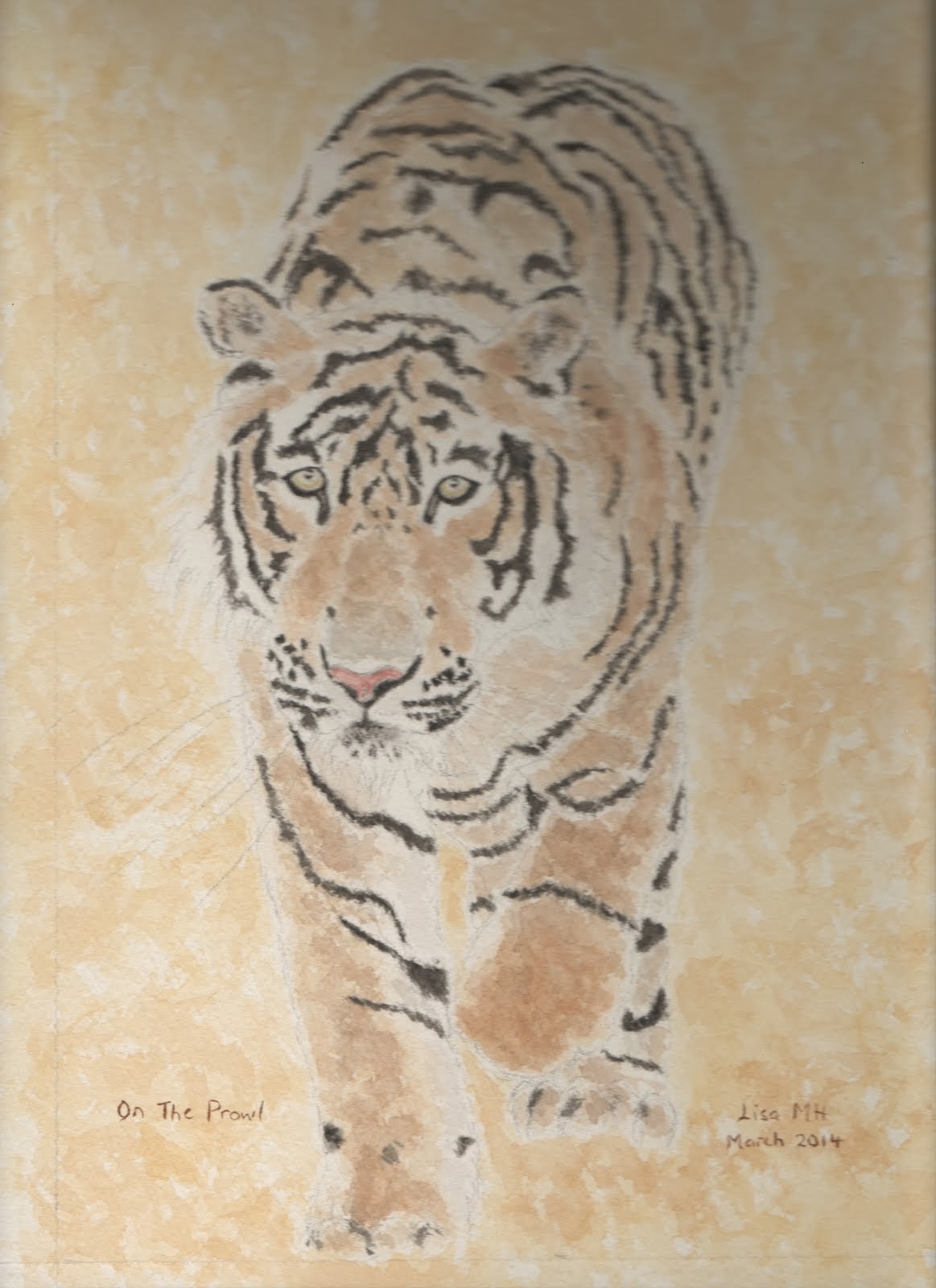
On The Prowl

On The Prowl
Watercolour tiger

Quotes Quota

"What saves a man is to take a step. Then another step."

"There are far, far better things ahead than any we leave behind."

C S Lewis