Feline Focus

Feline Focus
My latest puma, July 2016

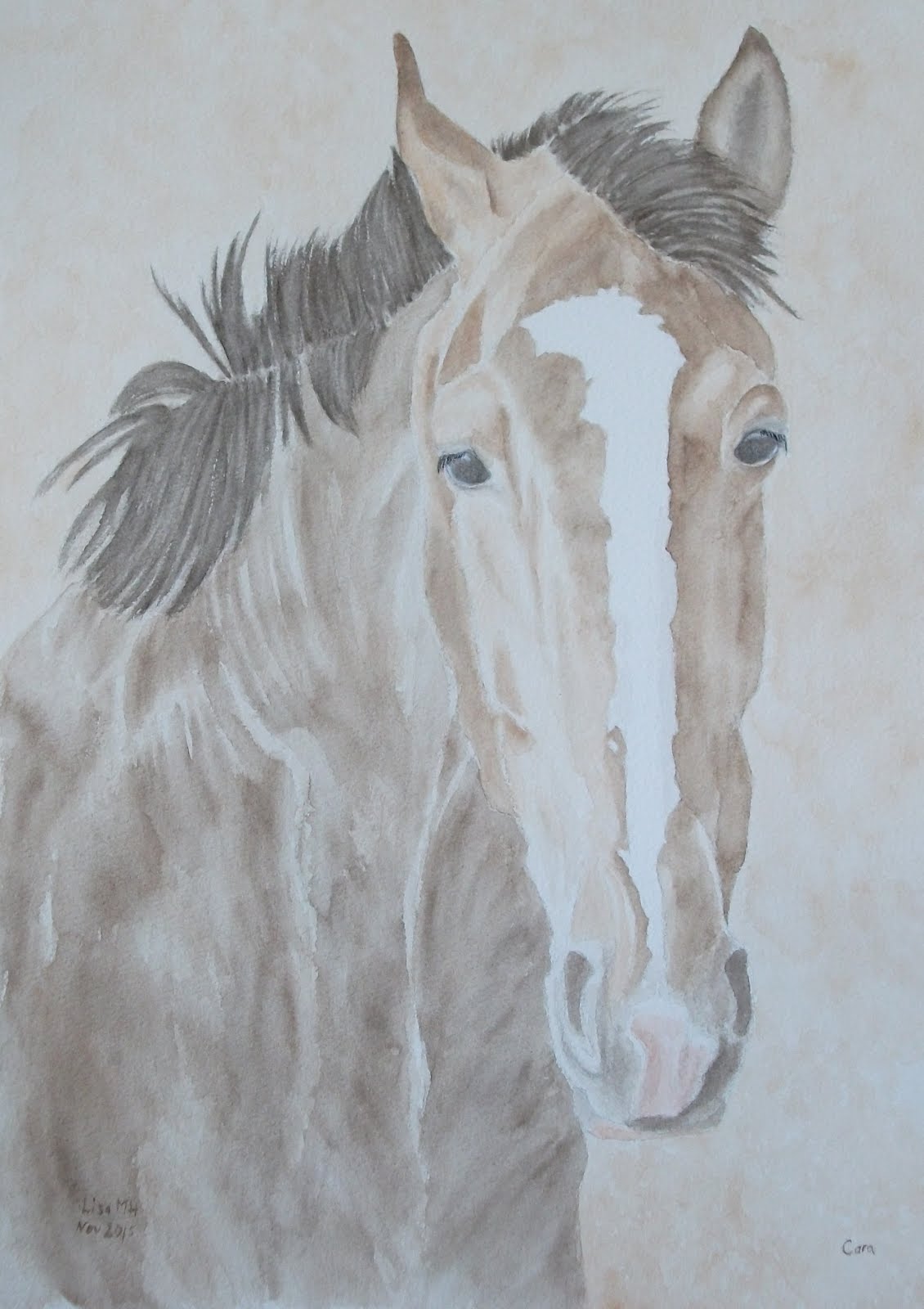
Carra

Carra
Beloved companion to Sarah, Nov 2015

Window To The Soul

Window To The Soul
Watercolour Horse, June 2015

Sleeping Beauties

Sleeping Beauties
Watercolour Lionesses, Nov 2012

QUOTES QUOTA

"Outside of a dog, a book is man's best friend. Inside of a dog it's too dark to read."

"Those are my principles, and if you don't like them... well, I have others."

Groucho Marx


Snow Stalker

Snow Stalker
Another snow leopard - my latest watercolour offering - July 2013
Showing posts with label Faith. Show all posts

06 August 2018

FOOD FOR THOUGHT #4

"Imagine yourself as a living house.  God comes in to rebuild that house.  At first, perhaps, you can understand what He is doing.  He is getting the drains right and stopping the leaks in the roof, and so on; you knew that those jobs needed doing and so you are not surprised.  But presently He starts knocking the house about in a way that hurts abominably, and does not seem to make any sense.  What on earth is He up to?  The explanation is that He is building quite a different house from the one you thought of - throwing out a new wing here, putting on an extra floor there, running up towers, making courtyards.  You thought you were being made into a decent little cottage: but He is building a palace. He intends to come and live in it Himself."   
Mere Christianity by C S Lewis

I may not be a Christian, and I may not believe in the Christian concept of God in which Lewis believed, but I do believe in the idea that we are a physical manifestation of the Creative Energy which underlies the whole universe and beyond; and that Lewis's description of the process of becoming a true expression of that Power is, for me, simple, accessible, comprehensible, and beautiful.  

God, it seems, has greater plans for me than I do for myself, and I'm okay with that because I don't have the imagination to think big - but I don't need to, because He'll do it for me.  Plus, as I've often discussed, I am hopeless with plans, so if it were left up to me to do the planning for my life I'd still be a broken-down shack.  I just have to get on board with following along, and doing the little things each day which keep me by Her/His side, invite Him into my 'home', and make Her feel welcome enough to want to stay.   

21 July 2018

Weebling To Thirty

Do you remember those toys called Weebles, which first appeared in the 1970s, and had the tag-line “Weebles wobble but they don’t fall down”?  (I just googled them, and it turns out you can still get them.)  They were great fun, and I especially loved the tree house, in which they lived.  I really wanted to live in that tree house.

Anyway, this is not a post about Weebles, per se.  This is about the fact that today is my AA birthday, and I have somehow managed to cobble together thirty years of consistent sobriety (that’s 30 years, in case anyone out there has problems with discerning the letters in words - though my internal grammarian baulks at the informal and technically grammatically incorrect use of numbers within a piece of text).

But enough of that pedantry.  So where do Weebles come into this miracle of recovery, you may be asking?  Simply in the fact that I’ve decided that the Weebles’ means of locomotion is one I share when it comes to describing the way I’ve done my recovery (and can be extended to encompass the way I “do” life in general) - namely, I’ve wobbled a lot but I haven’t fallen down.  Sometimes I go from side to side whilst remaining stationary; frequently, it seems I’ve gone backwards; oftentimes I’ve gone round in circles; but ultimately I have managed to make slow, tentative, frequently tortuous, forward progress.  

This is how come I happen to be sitting here now, the bemused (but grateful) recipient of the gift of thirty years of sobriety, which I have to tell you I was never really sure I wanted in the first place, didn’t ever really make a conscious decision to go after, but rather (in the classic autistic way, I can now see with hindsight) simply copied my way into; and for the first ten years wished I could give back, and return to the ignorance of not knowing that alcohol was not the solution to anything in life but simply one more problem to add to the pile.

Briefly, my journey of sobriety began with my second, and last, visit in 1988 to the psychiatric ward of my local hospital, after I’d been arrested for criminal damage, and had then tried to kill myself with an overdose.  

After this I was given the choice of either going home (where I was extremely miserable), or going to the local rehab unit for alcoholics/addicts, which conveniently happened to be next door to the hospital.  

Even though my initial visit to psychiatric had been for a two week detox from alcohol, which I’d voluntarily kept extending until I’d outstayed my welcome at the seven week mark (I felt strangely safe and at home there, after the initial terror on being admitted), I don’t recall any of the staff ever using the word ‘alcoholic’ to describe my drinking.  I believe I was initially considered to be possibly suffering from manic-depression (bipolar disorder), because I suffered extreme mood swings (due to both the effects of coming off alcohol, and what I now know is a combination of autistic meltdown, and ADHD).  

What is most remarkable is that, despite the fact that medication seemed to be freely and routinely prescribed to patients willy-nilly, I escaped the psychiatric system without ever being given anything other than the standard sleeping tablet, which I only took during my stay there.  It was years later, when discussing it with my best friend, that I realised just how blessed I had been, given that I had so many things for which I could easily have been medicated, especially given that, due to complete ignorance on the part of the staff, I was being misdiagnosed (autism not being widely recognised, especially in females, back in1988).  

And, distressingly and painfully uncomfortable as my life has frequently been since then (living without anything chemical to replace the alcohol and mute the chronic anxiety, and general sensitivity to everything around me), I am extremely grateful for being kept safe from what could have been a disastrous transference of my addiction to alcohol to an addiction to prescribed medication, as has happened to so many other people I know of.

To continue (before I weeble myself into a standstill), I chose to go to the rehab unit as the lesser of two evils.  And, as with my stay in the hospital, once I got over the shock of moving into an unfamiliar environment, I settled in and duly repeated the same pattern of becoming dependent - duly becoming the longest-serving resident, clocking in at a year and a half.  Yet again, I had to be almost forced to leave.

After I left and moved into my own home, at the age of twenty-three, things proceeded downhill from there.  Despite having been taught all things domestic by my dad starting at the age of seven (and then being expected to take care of him), I was hopeless at looking after myself.  And, whilst I’d come away from rehab with the knowledge that I couldn’t ever drink safely (‘one drink is too many, and a thousand is never enough’), there wasn’t a great deal else that was keeping me sober.  Essentially nothing had changed.  

Add to that an escalation in my undiagnosed anxiety, and a full resurgence of my also undiagnosed and raging eating disorder (compulsive overeater/under-eater/bulimic - in remission for a number of years now).  Plus I’d discovered that I could get mildly stoned on certain over-the-counter medications, which I used whenever I had to leave my flat.  A joyous existence, what ho!

It’s not surprising that, after nearly ten years of this, I descended into a state of hopelessness and depression, in which I wished daily that I could die, and finally progressed to the planning stage.

And at that point God stepped in and, in a remarkable act of Providence, reunited me with someone I’d met at the end of my time in rehab, for whom I’d briefly worked as a voluntary alcohol services counsellor (yes, me, counselling people - it doesn’t bear thinking about, I know), and who was now firmly steeped in the AA Twelve Step programme.  Through her, God saved my life.  

She became my AA sponsor; introduced me to the real recovery programme (it’s in the Big Book, not the meetings); helped me find a God of my own understanding (a Friend who loved me, rather than the critical and punishing father figure in which I’d come to believe); was the first person to recognise that I suffered from chronic anxiety, and the first person who identified me as being autistic; and she has been with me on this journey for the last twenty-one years.  Having just one person who truly knows me, and accepts me for who I am, has made all the difference - and for that I am extremely grateful.

What’s also remarkable is that, despite the struggles, I have never had the desire to drink alcohol again since sometime in the first year of my stay in rehab - the obsession to drink was removed (as it says in the Big Book) without me even realising it.  I have also never wished I were dead, and thought about killing myself, since reuniting in 1997 with the aforementioned person who is now my best friend and who, ironically, has also turned out to be a fellow autistic; and thoughts of wanting to die plagued me daily from the age of about seven, after my mum left us.

So, here endeth this brief overview of my time in recovery.  I can’t say it’s been easy (I’ve never been known to do anything easily), and there have been frequent set-backs, but I have to say it is ultimately worth it; and I will, no doubt, continue to wobble my way in Weebly fashion through the rest of my life.  

Therefore, I guess all that’s left to say is:-

HAPPY BIRTHDAY TO ME, HAPPY BIRTHDAY TO ME, HAPPY BIRTHDAY DEAR LISA WEEBLE, HAPPY BIRTHDAY TO ME!!!!

05 August 2017

FOOD FOR THOUGHT #3

"My argument against God was that the universe seemed so cruel and unjust.  But how had I got this idea of just and unjust?  A man does not call a line crooked unless he has some idea of a straight line.  What was I comparing this universe with when I called it unjust?"     C S Lewis

I do love Lewis, despite not being a Christian myself.  

As to his quote, I do this all the time (mostly now in other areas of my life), and it always leaves me feeling frustrated, conflicted, and out of synch with myself and God.  And where do I get my ideas?  From other people: and not just non-autistic people (who are my default guides to how to live a 'better' life), but also from people who are as out of step with God (or even more so) as I am.  The blind leading the blind, indeed.

I compare my "universe" with other peoples', which only serves to confirm my beliefs about myself - that I'm not doing well enough; that I should try harder; that I'd be happy if I did it someone else's way, blah blah blah.

Take, for example, my obsession with the idea of the need for discipline, and more productivity.  My personality, my wiring, does not lend itself to consistency - I am, by nature, erratic.  I get enthusiastic about something, and want to do it all the time (right now I'm really into posting these quotes - it'll pass, unfortunately).  But then, after a while, I lose interest and move on to the next thing (told you it'll pass).  

But rather than accepting this about myself, going with the ebb and flow (no-one ever mentions the ebb), trusting that I'll always return to the things which really are my special interests (like writing, and art), and that this is God directing me, instead I compare myself to those people who propagate the idea of self-determination (some of them even talk about "setting an intention" to do something, which makes it sound quite spiritual, but which, on careful examination, often looks suspiciously like self-will to me); who elevate and seem almost to worship the ideas of daily discipline, productivity, and consistency.  

Yet I fail, every time, to live up to these expectations and ideas - ideas which seem to be universally accepted as being the blueprint for a happy, successful, and fulfilling life.  So, of course, for those of us who fail to follow these guidelines, the natural assumption is that our unhappiness, etc is because we aren't following them, and trying harder to walk this path is the only way to to achieve these goals, and get what we want.

And therein lies my other source of conflict - my relationship with God. As I understand it, I get a choice to either follow God's guidance, or my own; to ask Him/Her/It to direct my life and my thinking (this is where inspiration comes from), or to think for myself (which basically means following other people, because I'm relying on my limited stock of acquired information, nearly all of which originates from them; and which also incorporates my wobbly autistic interpretation of said ideas).  So what I want, or think I want (if I even have half an inkling, which I mostly don't), is not necessarily what I need, or what God wants for me. 

To me, therefore, if I'm following God, then me deciding what I want to do is in direct opposition to this.  The minute I decide I want to be more productive, or more organised, I fall back on my default, narrow-minded understanding of what this means (the one that I have picked up from other people, and which always involves a plan of some sort, even if it's just a mental decision to write or paint every day, for example), and therefore take back control of directing my own life again, rather than turning it over to God to guide me throughout the day.  

Being rigid in nature makes it impossible for me to shift focus between any plan for the day that I've made, and trying to let God direct me. Following the plan becomes my obsession.

Along with that, my black or white viewpoint also impedes my ability to see that there might be any alternative interpretations - that there isn't just one way to manifest organisation, productivity, consistency, etc. As my friend Dee frequently jokes, I am actually consistent - consistently inconsistent; I'm also reliably unreliable; and even chaotically organised.  

Yet I laugh these things off, and view them as qualities which need to be overcome, because the bar against which I am measuring them is one created by a society which is primarily obsessed with efficiency, productivity, and keeping people under control, and doesn't really allow for creative alternatives.  Things which God isn't interested in at all.  S/He doesn't want to control me; S/He doesn't want me to follow the crowd.  S/He wants me to be free.

So the assumption that the reason I can't find happiness, peace, and fulfilment is because I'm failing to try harder to follow the path laid out by other people, is wrong.  The reason I can't find those things is because their path is the wrong one for me: it's too narrow, and it literally leads to unhappiness. Yet I keep insisting on trying to walk down it.  And God won't walk down it with me.  So there goes my peace, happiness, freedom, and fulfilment, waving to me as I walk away from Him, once again.  


15 July 2015

If You're Happy And You Know It, Flap Your Hands

“When I became a man I put away childish things, including the fear of childishness, and the desire to be very grown up.”    C S Lewis

Are you a flapper, a rocker, a spinner, or maybe even a twitcher?  In other words, do you stim?  For the uninitiated it means self-stimulation (think hand-flapping, body rocking, spinning around in circles, etc - not masturbation!)  

I stim, though, up until recently, I didn’t really understand why.  I kind of thought it was just one of those peculiarities attributable to people with autism: yet another example of the difference between us and the non-autistic population.

Strangely enough, given its conspicuity, it’s one thing about myself of which I’ve never felt self-conscious.  Of course, this could be due to the fact that I’ve been largely unaware that I’m doing it (difficult to feel self-conscious when you’re not even conscious); or that it’s considered an odd thing to do.  Why would I?  It’s part of who I am, what I do, so to me it’s perfectly normal.  Plus, having perfected the art of avoiding looking at people (because I cannot read their facial expressions, nor simultaneously listen to, and look at, them), I have no idea whether they are looking at me, or exchanging questioning glances.  

So it wasn’t until after I’d got my Asperger’s diagnosis, years later, that I discovered that people do, indeed, notice what to them is considered to be my odd behaviour.  My best friend told me how some of the members at our local Alcoholics Anonymous meetings would stare and point at me in concern, directing their silent questioning at her to find out what was the matter with me, whilst I remained blithely unaware.  

After all, it was perfectly logical to me to bend my body into a pretzel-shape to make myself as small as possible in order to hide (I also happen to have a problem with sitting ‘properly’, and stationary, on a seat); avoid all eye contact by staring at the floor; and then soothe myself by rocking.  I was astounded to learn that it produced the opposite effect - that I made myself conspicuous, which to some people would even appear as if I was attention-seeking.  Dread the thought.

My particular preferences are for rocking, hand-wringing, stroking (myself, particularly upper arms; and, if available, dogs, cats, soft toy animals, and anything else with a soothing texture), and patting/drumming/tapping (especially my upper chest, which produces a pleasant sensation, and a satisfying noise).  I do these for their soothing and calming abilities, which makes perfect sense - think of how people rock, pat, and stroke babies.  And yet some of those same people think we’re odd.  Have they forgotten how soothing, and effective, such things were?  Perhaps it’s  because they expect us to have grown out of the need for such things: but then they don’t have a highly sensitive nervous system like ours. 

I’m also a bit of a flapper, sometimes, though I don’t do it as frequently.  This I do when I get excited about something - it’s like there’s a surge of energy that needs releasing, so madly flapping my hands helps.  It makes me look like a sea mammal flapping its flippers, so we now refer to it as me doing my seal impersonation.  

Oddly enough, until I found out I’m autistic, and then read about flapping, I don’t recall ever doing it before: unlike the others, which I know I’ve done throughout my life.  It’s like I unconsciously started copying what I’d read.  I did it with stammering, too: never stammered in my life until after my diagnosis (I’ve always been more prone to becoming mute than babbling, when anxious), then suddenly I couldn’t stop tripping over my words!  

Having discovered that what I do has a name, I have become increasingly more aware of when, and why, I am doing it, which has given me the ability to choose whether I continue to do it or not in that moment (for instance, my best friend will sometimes tell me I’m rocking whilst we’re on Skype, which can make her feel a bit dizzy, and be rather distracting for her).  What I have not consciously tried to do, though, is attempt to control it.   And yet it has lessened, seemingly of its own accord.  

I put this down to a number of factors.  One is that, remarkably for me, I have accepted it as being part of my autism, and so haven’t tried to force myself to stop doing it (an approach which has never worked yet).  Another is that the level of general anxiety I experience on a daily basis has reduced phenomenally over the last few years, which means an automatic lessening in the need to sooth and comfort myself via stimming.  You can tell when I’m really anxious because I turn into a restless, rocking rambler again.  

I believe that my improvement is due in part to the practice of the AA programme, which has led to an increasing faith and dependence upon a God of my understanding (spiritual, not religious), one of the results of which is a reduction in my anxiety about the world around me.  Then there’s the practice of yoga, which has taught me how to calm myself, and control my anxiety, through the breath. 

So, this may well sound like it’s a post about how to reduce stimming, which would totally conflict with the title, not to mention a large proportion of the content.  On the contrary, it is, in effect, a celebration of what is, essentially, an intuitive, benign tool for self-care; and the fact that I have recently discovered a socially acceptable way of stimming.  I kid you not.  

Yoga.  Seriously.  

I can’t believe it’s taken me this long to realise it (I have, after all, only been doing it for twelve years), but it makes perfect sense.  When we stim we are unconsciously stimulating the autonomic nervous system (responsible for, amongst other things, heart rate, breathing, and the fight or flight response).  The practice of yoga does exactly the same thing.  However, it wasn’t until I started supplementing my regular practice with Kundalini yoga a year or so ago that I made the connection.

Kundalini yoga employs a lot of quite vigorous exercises, which are called kriyas - a number of which actually look as if they were designed by autistics!  Truly.  So, not only am I absolutely, positively induced to try to bend myself into a pretzel shape with my usual yoga routine (something I was naturally drawn to doing before I ever came across the formal practice of yoga), but I now also get to spin in a circle, rock backwards, forwards, AND sideways, and flap to my heart’s content (with variations).

So I say flap like a loon if you feel the need; and if anyone questions what you’re doing, just tell them you’re practising yoga!


12 January 2015

Christmas Crackers

So, that was Christmas, eh?  And I hardly felt a thing.

Did you feel it - the Christmas spirit?  And, if so, could you enlighten me as to what it feels like, ‘cos I haven’t got a clue.  (I realise that I am lagging behind somewhat with my dissection of the festive season, but there we go: it’s time I got used to the idea that I’m hopeless when it comes to trying to work to a deadline, so I shouldn’t even bother trying - it’s not like my life depends upon it.  I’m just never fully prepared for any event: so christmas, and new year, have been and gone, and I’m only just digesting them.)

There’s a Christmas song called I Believe In Father Christmas, which contains the line, “The Christmas we get we deserve.”  I used to think it was like an adult variation of the idea that Santa Claus wouldn’t bring you anything if you’d been bad, which I considered was rather gloomy and depressing: but I’ve reassessed the idea, and come up with a different understanding.  And it’s really quite simple (which explains why it’s taken me so long to grasp it).

I think that it’s basically saying that however you have been throughout the year, is how you’ll be at Christmas: the person you are the rest of the year is not going to have a sudden personality transplant and become someone completely different just because it’s Christmas.  All that Christmas does is magnify already existing conditions and emotions, what with all that extra stress piled on top. 

So if, for example, you are envious, competitive, depressive, angry, short-tempered, lonely, greedy, materialistic, etc then that’s what Christmas will likely bring out - an increase in such characteristics, exacerbated by the influence of those sections of the media which target and promote such a negative traits as greed, materialism, and consumerism.  Alternatively, if you happen to be a generally happy, content, sharing, joyful person then Christmas will just be another opportunity for more of the same.  

As for me specifically, it has highlighted things like the fact that I still have a tendency to make my happiness, and other emotions, dependent on things outside myself (be they people, places, or things), which contributes to the desire to want to control said outside circumstance in the misguided belief that that will change how I feel; that I am extremely gullible, naive, literal, and childlike (believing, hoping, that there is such a thing as the magic of christmas); having high, unrealistic expectations, which always lead to disappointment; taking things way too seriously (apparently, there are people out there who don’t tie themselves in such knots about the whole thing, despite the apparent frenzy that appears to go on at this time of year); comparing myself, and what I’ve got, to other people (or what I imagine they have, which is not necessarily their reality), and trying to copy them; and, of course, simply finding myself caught up in, and being distracted by, yet one more obsession.  All of which I do quite happily the rest of the year.  So what’s so different about Christmas?

As much as I hate to say it (and I really do hate to say it), there is no such thing as ‘the magic of Christmas’, contrary to what the media (or my mind) says.  But they’re very good at selling it (both the media and my mind), especially to someone like me, whose gullibility and naivety is just begging to be taken advantage of.  And every year I’m left feeling disappointed - though, I have to say, I have noticed that the disappointment is lessening with each passing year, as I try to accept that Christmas isn’t any different to any other time).

You know the irony of this is the fact that my whole lifestyle now is completely in conflict with everything that I’ve learnt that Christmas is all about - stuffing oneself on turkey dinners, mince pies, Christmas puddings, and other rich foods; alcohol; parties, and family gatherings; presents; cards; Christmas television; carol services; and the birth of Jesus.

I’m a single, non-religious yogi, vegan, alcoholic/bulimic/compulsive overeater with a sugar sensitivity, anxiety suffering autistic with ADHD.  Which, just to clarify, means:-

I live on my own, and have little contact with the family I do still have - so no family get-togethers, and Christmas dinners, and no gift-buying; 

I don’t socialise ‘cos it’s too stressful, it makes me anxious, and I don’t enjoy it - I’m happiest when I’m by myself, which is good ‘cos I’m by myself most of the time;  

I have a faith in a Higher Power, which I choose to call God, but I don’t believe in Christianity, or any other religion, so I can’t honestly claim to celebrate Christmas for its religious symbolism - especially as I know that Jesus wasn’t born on the 25th of December: a person chose that date, so it really holds no magical significance for that reason: so there go the church services, and carol singing;

I don’t eat meat (so there goes the turkey!);

I don’t drink alcohol (so there goes the mulled wine, hot toddies, and getting sozzled   at parties);

I don’t eat anything with sugar, or sugar substitutes (so there goes dessert - all the chocolate, pies, cakes, etc), or any of my other many binge foods which were once staples in my diet;

I don’t send cards, because I no longer wish to do what everyone else is doing, being coerced into doing the dutiful, but meaningless, thing of remembering people at this time of year, whilst forgetting about them for the remainder.  Plus, think of all those trees;

I don’t own a television (so there goes my Christmas viewing);

And I do yoga, and follow a Twelve Step recovery programme, the principles behind which are in complete opposition to the general excess and mayhem which Christmas seems to have become.

So it’s really rather daft for me to be comparing my circumstances to other peoples’, and attempting to copy the way I see (or imagine I see) them celebrating Christmas, or the way I used to do, when I no longer have the necessary requirements.  But I’m nothing if not tenacious - I do hold onto things way past their sell-by date.  And I think my ideas about Christmas are far beyond outdated.

Of course, I also have a very poor short-term memory, so no doubt next year I’ll be experiencing exactly the same ‘problems’ as this year (and every year prior to that).  But Ho Ho Hopefully it won’t last as long.  At least now I don’t start dreaming of a White Christmas at the beginning of September.

21 July 2014

Language Of The Heart (Part One)

“When we try to speak to each other - Me to you, you to Me, we are immediately constricted by the unbelievable limitation of words…  Words are really the least effective communicator.  They are most open to misinterpretation, most often misunderstood.

And why is that?  It is because of what words are.  Words are merely utterances: noises that stand for feelings, thoughts, and experience.  They are symbols.  Signs.  Insignias.  They are not Truth.  They are not the real thing.”     From “Conversations With God”, by Neale Donald Walsch

Imagine a blind person still trying to use their eyes through which to see; or someone who is deaf who continues to listen with their ears; or an individual who has lost the use of a body part attempting to utilise what no longer works.  

And now think of an autistic, for whom communication and understanding via language is, at worst, frustrating and bewildering, and at best incomplete, still insisting on depending on this form.

This is me.  Yep, it finally dawned on me that, despite my diagnosis four years ago, I still have not accepted this rather major facet of my character (it is, after all, one of the defining traits of autism), and persist in relying almost wholly on words as my means of understanding, and communication. 

I realise that my perception is at fault, and I am limiting myself as a result.  I have a narrow, rigid comprehension of the word “communicate”: I see it as referring solely to the use of language - to talking, reading, and writing - when, in fact people, communicate via other means, through their feelings and actions.  But, since I am largely unconscious of this, I have always chosen language by default to express myself and interpret what others are trying to convey. 

Therefore, in order to broaden my perspective, it needs adjusting to include other definitions -  which, as an autistic with a narrow viewpoint, and a tendency to focus on minute details, forgoing the bigger picture in the process, is alien and unnatural.  But I believe it can be done: it’s just not going to be instinctive.  I’ll have to make a conscious effort to do it, to remind myself when I’ve become narrow and limited once again.  

As I have said before, I LOVE language - playing with words, crafting a piece of written work, constructing the perfect sentence.  When I really let myself play (when I’m not constraining myself with a lot of rules, which take all the fun out of it) then it’s like my heart becomes engaged in the process, not just my brain, which I think is what allows me to be able to communicate through this medium.

Unfortunately, though, I have come to depend almost wholly on words; to revere them as if they hold the key to all knowledge and understanding; to believe that because I can read and write and understand what I’m reading on a literal level, that this means I understand what is being said.  This can be very confusing.  

Language Of The Heart (Part Two)

“Words may help you understand something.  Experience allows you to know it.  Yet there are some things you cannot experience.  So I have given you other tools of knowing.  These are called feelings.  And so, too, thoughts…  

Your experience and your feelings about a thing represent what you factually and intuitively know about that thing.  Words can only seek to symbolise what you know, and can often confuse what you know.”      From ‘Conversations With God’, by Neale Donald Walsch

So, to continue, my problem is that I don’t see beyond what I literally see, and I have no idea what other people see, so I assume that they see what I see, and that what I am seeing and hearing is what they are saying (get your head around that one if you can!!)  Only to frequently discover that it’s not.

It also dawned on me that not all autistics have the exact same problem.  Sure, we all share the difficulty with social communication and understanding (which not only includes language in the form of words, but reading body language too), but they don’t all depend on language the way that I do.  And yet some of them live full and successful lives; have found ways to compensate for what they ‘lack’; are happy and accept themselves as they are; and trust what they feel.  My autistic friend is one of them.  

She has the ability to see the essence of what is being expressed, along with any literal interpretation she might have.  At first sight it can appear that she is not that literal at all, especially not when compared to me, which I have concluded must mean that she isn’t: that the part of the brain which deals with language interpretation is not as affected in her as in me, or that she is not quite so far on the autistic spectrum.  All of which is quite plausible - after all, we aren’t all exact replicas of each other.  

But it seems as if, when she reads something, she is not reading solely with her eyes, simply engaging her brain - she is reading with her heart, her soul, her whole being,  which appears to compensate for the literality.  She trusts and depends on her instincts.

I, on the other hand, don’t trust mine at all.  I was raised differently: I learnt to doubt, distrust, ignore, suppress, and fear what I felt.  If I couldn’t name it then it didn’t exist.  And I did it so well - the evidence of this is that I’m still doing it now, though I’m hoping that there is a shift taking place, now that I’ve seen this truth.  

I have learnt to place great importance on words: it has not served me well.  I read and re-read things, in the futile belief that understanding will come by constant  repetition and familiarity.  It doesn’t work.  If all you can see is the surface, then all you’re going to see is more of the same surface when you’re looking at it from the same angle, no matter how often you look at the same thing!

Then we have my attempts at trying to see beyond the literal meaning.  Not good.  I invariably misconstrue what’s trying to be conveyed, as I strain my brain to see beyond my limited viewpoint.  This usually leads to long bouts of deep analysis, where I manage to bypass the point completely - all because I’m still doing it through my ‘eyes’, with that part of my brain that doesn’t process language well.  Plus I’ll often try to look for the deeper meaning to things which have none, and are actually meant to be taken at face value.  

But then there are times when I have discovered the essence of what I am reading - which appears to occur when I’ve read with my heart, and my feelings have been engaged, not just my mind.  Like I’m connected to God, who then does for me what I can’t do for myself, and opens my mind to a more unlimited veiwpoint.  It might still take me quite a few attempts at reading something before I get beyond the surface, and if I try to force understanding then it doesn’t work.  But if I relax, and let God lead the way as it were (or, another way of putting it, be guided by my feelings) then it gradually comes.

Words, I have finally realised, actually impede and limit my understanding.  They clutter my mind, and distract me from seeing the true meaning.  They fill me with doubt, leaving me constantly questioning the validity of what I feel or experience, causing me confusion, resulting in a constant state of indecision and conflict.  I get caught up in the minutiae of trying to determine the exact meaning of a word or sentence, which narrows my focus, so shutting me off from the bigger picture.

So what does this mean?  It means, I hope, that there is hope of change.  

It means that if I give up trying to force a part of me to work in a way that it can’t, and being totally dependent upon it, and instead shift to learning to tune into and trust what I feel, then I might well have a better chance of communicating and understanding.

It means that I might learn a more effective way to utilise my ability to read, without being dependent on the words themselves to impart the meaning.

It means that I might shift my perspective even further to see it not as a liability, a deficiency, or a problem, but as something that allows and encourages me, and all those with whom I engage, to find more effective ways to interact - to see that my autism is not meant to limit but to liberate me.

And the truth is that words are not that effective at all, as it says in the quote at the beginning of this article.  Even when used between non-autistics, they frequently miscommunicate and misunderstand when relying on them.  After all, isn’t that how arguments and wars are often started?  One wrong word and you’ve got Armageddon! 


10 July 2014

"Aren't I Blessed?"

“You seem so sad, Eeyore.”
“Sad?  Why should I be sad?  It’s my birthday.  The happiest day of the year.”      From ‘Winnie-the-Pooh’, by AA Milne

It’s my birthday today.  I’ve been on this planet, in this corporeal form, exploring this life, for forty-seven years.  Do you know what’s so remarkable, so miraculous about this fact?  When I was almost twenty-one I tried to kill myself.  My life was so bleak, so devoid of any hope, so overwhelmingly joyless, and I so completely unhappy and despairing, that I finally got up the courage to try to end it all.  

I nearly succeeded.  I ended up in the hospital, in A&E, being pumped out, and then spent a few days hooked up to a drip.  The worst of it was that I felt even more hopeless when I came to and realised that I was still alive.  I’d always counted on suicide as a last-ditch option for when life became too unbearable, yet here I was, and it hadn’t worked.  Despair doesn’t begin to do justice to my state of mind at that time.  

Yet here I am, and I can barely describe to you the amazing change that has taken place in my life.  My stay in the hospital catapulted me back onto the psychiatric unit (where I had spent seven weeks, earlier in the year, being detoxed and ‘counselled’ about my drinking), and then into a rehab unit for alcoholics, where I first came into contact with AA and the Twelve Step programme of recovery.

I can’t say that I found the programme, took to it like a duck to water, and my life altered radically at that time.  The truth is I tried reading the Big Book (the basic text book of AA which contains the programme and the instructions on how to do it), and it made very little impact on me at all, other than to confuse me, and cause me to question whether I was, in fact, alcoholic at all, because I couldn’t find an exact match to my drinking ‘career’ or my life and personality.  

I was, of course, reading it literally, and I couldn’t see beyond the words, to the essence of the message.  But at that time I had no clue that I was autistic, and so I took on board the idea that was spouted forth by the ‘average’ non-autistic alcoholics, that I was merely in denial about my drinking, and that I simply didn’t want to admit that I was that bad, that I was alcoholic.

Well, I have to say, for someone in denial I did my damnedest to try to fit the picture of the classic alcoholic, and I stuck it out in the rehab, without a drink, for eighteen months: I was the longest serving resident there.  And on the 21st July this year I will be celebrating my 26th year of continuous sobriety.  People in denial don’t tend to last that long!!  I think, perhaps, the unfortunately misguided people of AA who have a tendency to generalise about alcoholics need to rethink their approach, and consider the fact that there are, among them, many of us who are not wired exactly the same, and who require alternative approaches to cater to our differences.

Interestingly enough, we are covered in the Big Book, which was published in 1939, and is so farsighted it has to have been what we sometimes call ‘a God Job’ - it was divinely/spiritually inspired.  On page 58 of the chapter ‘How It Works’ it says, “There are those, too, who suffer from grave emotional and mental disorders, but many of them do recover if they have the capacity to be honest.”  Even though the language is not what I would use to describe my autism, it is the terminology in current general use.  But then that’s the miracle of the Big Book - despite its age, it remains timeless and relevant in its principles, hence the fact that it has never been altered, other than to add new stories to the personal histories at the back.

So, to return to the narrative of my life, I didn’t leave rehab with a completely altered perspective on life, brimming with joy, hope, and confidence.  I felt much as I’d always felt, a great sense of anxiety and trepidation.  But the one thing I did have was the knowledge that I was alcoholic, and that that meant I couldn’t ever safely drink alcohol.  So I was now sober, afraid of the consequences of drinking if I relapsed (I’d had that fear bashed into my brain), and with no coping skills for life - alcohol had been it.  Oh, and food - which was not as effective as booze, but which now took centre stage.  And not forgetting over-the-counter medication, with which I'd get stoned - not the pleasantest of experiences, but effective in its own way, nonetheless.  

And I was never the kind of person who came into contact with illegal drugs, nor would have had the courage to go and find a dealer - my anxiety around people was so great it precluded any such interactions, unless drunk.  So, since my creative use of medication didn't begin until after I got sober, I was kind of limited: which was, undoubtably, a good thing, as it turns out.  Who knows what type of mess I could have gotten myself into, being such a naive and gullible innocent, and not just with the drugs themselves.  You kind of get the picture?  One addiction/compulsion replaces another.

I lasted six years in this miserable cycle, until I once again reached a place of complete despair and hopelessness, and was ready and planning how to kill myself.  And then a miracle happened - I found an angel!  I reached out to someone I’d known six years previously, who was now in AA, but who actually followed the programme in the Big Book (there are lots of people who don’t, who believe that the programme is in the Fellowship: they are, I believe, sadly misguided).  I admitted that I was not well, and she offered to help me.  She then became my sponsor (my mentor).  She’s also the person who suggested that I might be autistic.  

And, seventeen years later, she remains so, and more - she is my best friend, my spiritual guide in human form, an inspiration in so many ways.  And, even more amazingly, it turns out that she, too, has Asperger’s!  This is the woman I once described here on my blog as being about as autistic as a plastic bag - that’s how perceptive I am!  She was diagnosed at the end of last year, at the age of 66, but it hasn’t made a bit of difference to how she lives her life (other than to answer some questions about certain behaviours, etc that she has) because she’d created a life that suited her, using the AA programme.  She truly is remarkable, and a groundbreaker. 

And so, back to the present.  I have spent my birthday in joyous contemplation of everything that I have in my life - I decided to list 47 things that I appreciate, one for every year of my life, which I duly did on the bus journey into town..  And I have been full of wonder and enthusiasm at the amazing spiritual insights that I’ve been having today, and in the last week or so - I feel like a well that has sprung a leak, the thoughts are just spouting forth all over the place.

I spent the morning shopping in my local market town of Retford, and at the dentist having my teeth de-scaled: not a usual method of celebration, I grant you, but it reminded me of the days when I was drinking, and how I would have to get drunk in order to go to the dentist, so crippling was my anxiety.  Then once I got sober, and had nothing to anaesthetise myself with, nor any way of dealing with the fear of being in such close proximity to another person, I simply stopped going to have my teeth done for the next twenty-odd years.  Fortunately, nothing happened to them in that time, and they stayed remarkably intact and healthy.  And now I can go in there and just get annoyed at the fact that he doesn’t understand my allergy to sugar!

And then I decided that I wanted to share all of this, my birthday, with anyone out there who might be reading this, in the hope that it might give someone hope, or insight, a feeling of connection, or just a bit of a laugh.  There is much to laugh at in this world, and, as I am learning, it only takes an instant to switch a light on, and go from darkness to light - you just have to make sure you’re plugged in and connected to the right Source.  And to think I could have been here twenty years ago if I hadn’t kept sticking my plug in the wrong socket!

And on that profound note, I bid you adieu, and a happy birthday to, and from, me.  ‘Cos, in the words of Eeyore (and Pooh):

“Oh!  Well, many happy returns of the day, Eeyore.”
“And many happy returns to you, Pooh Bear.”
“But it isn’t my birthday.”
“No, it’s mine.”
“But you said ‘Many happy returns’-“
“Well, why not?  You don’t always want to be miserable on my birthday, do you?”
“Oh, I see,” said Pooh.


30 June 2014

Fear Of Flying

“People wish to learn to swim and, at the same time, to keep one foot on the ground.”     Marcel Proust

Last night I had a dream about flying.  At least, we were meant to fly but, symbolically, we never actually took off, merely spent a great deal of time on the preparation.  Yes, even in dreams I still manage to procrastinate!

The dream itself involved me boarding a plane for the first time, and then wandering the length and breadth of the whole thing, trying to find the perfect seat, probably in an attempt to keep the anxiety about flying at bay.  And, as is often the case in dreams (with them often being representative of something), the plane was not an exact replica of the real thing.  Instead, it was set out in a series of ‘rooms’, and the seating resembled that of a cafe or restaurant - lots of dining tables and chairs.

We never did take-off in my dream (kind of the story of my life).  By the time I woke up, I was still wandering around anxiously, trying to find a place to settle, attempting to locate the toilets in case I needed to vomit (which I was already anticipating would be the case), and to find the person with whom I’d connected in the queue, who had said that they would guide me since it was my first time, but who had taken off alone the moment we reached the boarding tunnel (symbolic of my lack of trust in real life - I expect people to let me down, and I often confuse guidance with dependence).

In reality, I have never flown: I’ve hardly travelled at all, in my forty-seven years of existence.  This is where my anxiety really impacts on my life, and no amount of yoga has so far helped to overcome the obstacles which impede any prospect of me travelling.  That doesn’t necessarily mean it won’t ever happen, though, sometime in the future.  

I’ve done lots of things in my life since coming into recovery, and finding the Twelve Step programme, which has led to a connection with a Higher Power of my understanding (which I call God): none of which I ever believed possible before.  For one thing, I left my family home, and acquired a place of my own - something I never imagined I’d be able to do.  And, since then, I’ve moved twice more - another feat I thought myself incapable of, since I hate change so much, and any disruption causes me such anxiety and distress.

But travel for me is fraught with extreme stress (from the planning, packing, etc, to the journey itself: and once I reach my destination, the anxiety doesn’t stop there), and I require so much stuff (part of the need to exert some feeling of control, I believe), that it’s really not worth the hassle at the moment.  

I worry especially about food, since I have such a ‘specialised’ diet - I am vegetarian/almost vegan; can’t eat sugar, of ANY description (and so much of it is hidden in foods you wouldn’t expect it in), other than certain fruits; can't eat bread products, so no quick and easy sandwich snacks for me to carry with me; don’t have dairy; don’t eat anything processed, pre-packaged, instant, etc - I make everything from scratch.  And the list goes on).

So, back to the dream, since there was a great deal of meaning to it, which, for once, I had no problem interpreting.

On the surface, there’s the literal interpretation of flying that I fear (though that in itself is merely symbolic of the whole act of travelling, by whatever mode of transport I choose).   But beneath that it represents my fear of allowing my self, my soul, my spirit, my essence, my whole being to take off and fly; to be free; to think my own thoughts; to have my own beliefs; feel my own feelings; experience my own experiences; to live my own life; to let go of trying to control everything.  

I fear not being in control, and letting go and letting God do His/Her/Its part - which means trusting that all is well, and will be well.  So of course I worry about having to trust the pilot (God), and the plane to stay up in the sky, especially when I don’t understand the ‘mechanics’ behind any of it (how does something so heavy remain airborne?; and how does one fly a plane?)

I fear that if I do allow myself to fly (to let go of all the negativity and enjoy my life) that it won’t last (like a plane can’t stay in the air forever), and I’ll come crashing down to earth at some point: no gentle landing to refuel for me.  No, my ‘plane’, I seem to believe, has to have a crash-landing.  Either I, or someone else, will do something to bring me down to earth - ‘cos of course I worry (become paranoid) that some people will be envious, and try to sabotage my flight.  And since I’ll have further to fall if I soar too high, it will be more painful: therefore it’s better to keep one foot on the ground, which means I never really take to the air at all.  

Or there’s the option of a Harrier jump jet take-off - lift vertically into the air a few metres, hover for a short while, then return to earth in almost the exact same position you started from.  Sounds like my kind of journey. 

 And then, of course, there’s the fact that I not only literally require so much luggage to take with me when I venture anywhere (no matter how long I’ll be away from home), but that I figuratively lug around tonnes of baggage, which I struggle to let go of - worries, fears, resentments, obsessions.  All of which contributes to impeding my ability to take flight.

So, the dream I believe, in essence, was showing me all of the stuff which I have designed, both consciously and unconsciously, to keep myself grounded (and not in a good way), to stop myself from travelling further along on my life’s journey, and to slow down and control the process of growth and change.  Because it’s my mind in which all of this is taking place, and which my dream is dredging the depths of in order to bring to the surface what’s happening ‘down’ or ‘out’ there, in the dark abyss that often gets overlooked.

And the only way I know of to change any of it is to first become conscious of its existence; to bring it out into the light where I can get a good look at it; share it with someone who has a more objective perspective and can, hopefully, offer guidance on how to deal with it; and own it - stop blaming it on other people, or circumstances, or things.  Only then can the journey to freedom continue.

Doddle.  Just don’t forget to take your parachute, and a spare (or two), just in case…!  

Or, better yet, trust that God is always there to catch you if you fall… unless you believe that God is man-made, and likely to malfunction.  In which case you’re in deep shit, and probably better off staying on the ground, like a bird with its wings clipped.  But oh, you’ll miss out on so much.

Take a risk, ask God to remove the fear of flying (the fear of change), let go and let God be in charge of the outcome, and just enjoy the journey, like we are meant to do.  Simple, but not easy (as we say in AA).  Bon voyage!

03 April 2014

Fear Is The Key

‘“Ah!” said Rabbit, who never let things come to him, but always went and fetched them.’      From ‘The House At Pooh Corner’, by AA Milne

“Every human thought, and every human action, is based in either love or fear.  There is no other human motivation, and all other ideas are but derivatives of these two.”      From ‘Conversations with God’, by Neale Donald Walsch

I have all the patience of a toddler waiting for Christmas to arrive.  Just like Rabbit, I find it almost impossible to wait for things to come to me, be it inspiration for a painting or a piece of writing, or the answer to some question.

For a long time I believed that this was intrinsically part of my ADHD, but I’m no longer certain that’s true.  I think it just happens that one of my particular personality traits is an excess of impatience (like I seem to have an excess of everything!), and having ADHD exacerbates it.  

It’s as if the ADHD trait of poor impulse control combines with my impatience to produce, or heighten, my distractibility, restlessness, and quick loss of interest.  It’s kind of like they have a symbiotic relationship - the more impatient I become, the more easily distracted, etc.  The same goes with any emotion, whether it be positive or negative, e.g. if I get too happy I find it impossible to calm down, leaving the way open to the familiar ADHD symptoms.

Another characteristic I have, which I believe is part of my autistic hard-wiring, is a bone-deep inability to stop myself from copying, and absorbing.  I say it’s hard-wired because I do not choose to do it.  It happens automatically, without any conscious decision on my part, and more often than not I haven’t got a clue that it’s occurred, until later.  

If I had a choice, I wouldn’t do it - it’s one of the things about having Asperger’s that I actually hate.  It has confused me for a long time because I am so vehemently against the idea of imitating other people: I long to be an individual.  Before I got my diagnosis I wasn’t even aware that it was something I did, probably because I was wandering around with the conscious belief that I didn’t want to be like other people, or follow the crowd.  

But it seems it’s often the case that the conscious thought is merely what you would like to be the truth, and not what the reality is: as in this case.  And everything about me screamed out otherwise - from the way I behaved, how I looked, to what I believed and said.  I was like a walking car-crash, a tangled mess of confusing and conflicting influences, with hardly a sign of the original, intact person left behind.

The fact is that, much as I might be telling myself that I don’t like copying, at the root of me something is going on which I can’t see, which drives me to do so.  And, again, just as with the ADHD, discovering that copying is part of my nature as an Asperger, and trying to attribute it solely to that, has only served to answer half the puzzle.  But I might have finally found the rest.

I copy because I don’t have the patience to wait for an answer, or the faith to believe that one will come in time (God’s time, not mine).  

I copy because it’s easier and quicker than having to deal with the unknown, and the feelings that sprout forth as a result - I can just follow someone else’s path instead.  Unfortunately, this still means that I have to wait for the result, which I also find impossible to deal with, hence my inevitable tendency to chop and change, abandoning one person’s ideas in favour of someone else’s, and never being able to stick to one path and see it through to its natural conclusion.  As I’ve mentioned before, I am the Queen of Tweak.

I copy because when I get distracted, restless, and lose interest (an ADHD attack) it’s the quickest way to fix it, to go on-line seeking new stimulation to try to awaken my dopamine-deficient brain.

Basically, what all of this boils down to is that at the root of me I am motivated by fear.  I fear that if I don’t go and look for the answers then they’ll never come; I fear that I’ll miss out on something; I fear that I might be doing it (whatever ‘it’ is) wrong, and I won’t learn unless I go looking to someone else for the answers; I fear that the feelings will not pass. 

In the words of God (from the book ‘Conversations With God’), “This is what I have called the Sponsoring Thought.  It is either of love or fear.  This is the thought behind the thought behind the thought.  It is the first thought.  It is prime force.  It is the raw energy that drives the engine of human experience.”

So then you put these two things together, the autistic copying/absorbing, along with the fear-driven motivation, and the result is me going searching on the internet for quick answers and inspiration (not to mention it’s distractibility  appeal, which allows me to forget myself and all those pesky feelings that I’m trying to escape).  

But, whilst I might break free for a while, I don’t escape unscathed.  Instead, I return with a confused mess of new ideas and information which will inevitably come back to bite me on the arse at some point in the future, when I’m suddenly reminded of something I read, and decide on a whim to try to integrate it into my life.  Which usually means abandoning something that works in favour of something new that inevitably doesn’t.

Of course, this wouldn’t be such a problem if I weren’t autistic, and if I possessed that miraculous ability to filter information, discarding what isn’t relevant, and adapting what is to suit my needs.  But I don’t.  For some reason, God saw fit to create me without a filter.

It also requires some modicum of self-awareness, to be able to identify what is relevant, and to recognise the commonalities you share with the people about whom you’re reading.  Nope - I don’t have any of that either, and it doesn’t look like it’s coming my way any time soon, much as I’ve kept on striving to acquire it.  Seems this, too, is a hard-wiring issue, and I came out of the factory with the relevant bit missing.

So what’s the answer?  Well, I guess I have to accept that I copy, and always will do, so seeking solutions and an escape on the internet will always be a problem.  It does not hold the answers for me, but merely compounds my difficulties.  My choice is between non-acceptance of my autism/ADHD and it’s limitations (which could be turned over and viewed as blessings), or giving up the fight to prove that I can do what other people do. 

Acceptance means the need to shift from fear into love (and faith) - which means practicing the opposite to what I do at the moment, and start believing that God has the answers, and will provide me with them and everything I need, if I allow Him/Her/It to do so.  Which means trusting that “This too shall pass” (a slogan we have in AA), when I am plagued by feelings - as long as I allow them to do so, by not going off and trying to escape them.  

Filling my head with other peoples’ ideas and opinions does not help me to find myself - it merely helps me to lose touch even more with who I am, as I get buried under a blanket of random useless information.  To act out of love (to trust in God) would mean to honour the fact that I am autistic/ADHD, and so stop doing the stuff which only serves to hurt me.  

Maybe then I could truly embrace the concept of ‘To Thine Own Self Be True’, ‘cos I might finally find the Self to which I could be true. 

Snow Leopard

Snow Leopard
An experiment in watercolour and gouache

Quotes Quota

"Do you believe in Magic?" asked Colin.

"That I do, lad," she answered. "I never knowed it by that name, but what does th' name matter? I warrant they call it a different name i' France an' a different one i' Germany. Th' same thing as set th' seeds swellin' an' th' sun shinin' made thee well lad an' it's th' Good Thing. It isn't like us poor fools as think it matters if us is called out of our names. Th' Big Good Thing doesn't stop to worrit, bless thee. It goes on makin' worlds by th' million - worlds like us. Never thee stop believin' in th' Big Good Thing an' knowin' th' world's full of it - an call it what tha' likes. Eh! lad, lad - what's names to th' Joy Maker."

From 'The Secret Garden', by Frances Hodgson Burnett

Love

Love
Copied from photograph of the same name by Roberto Dutesco

Quotes Quota

"There is no way to happiness - happiness is the way."
The Dalai Lama

"If you don't stand for something you will fall for anything."

Malcolm X

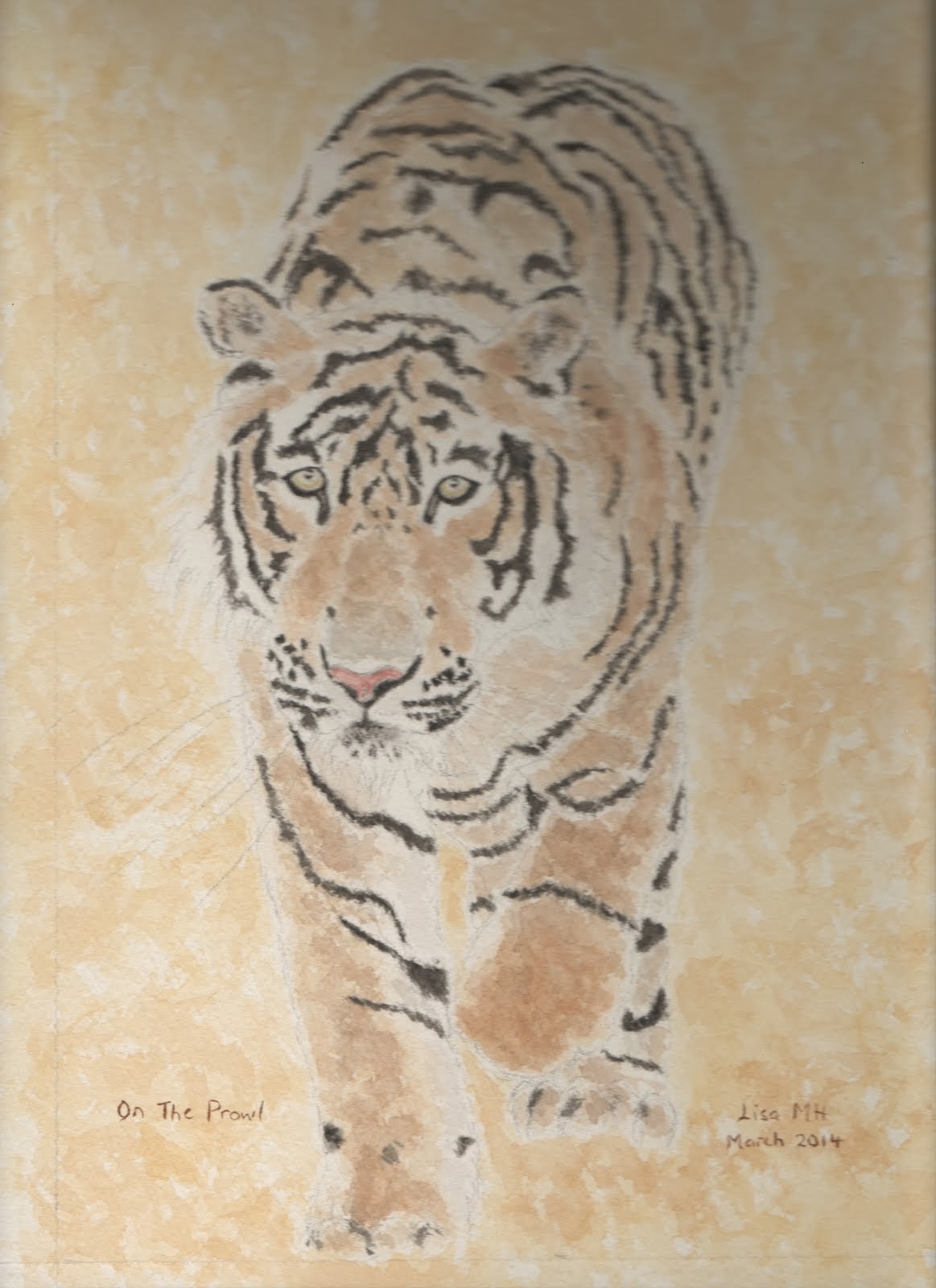
On The Prowl

On The Prowl
Watercolour tiger

Quotes Quota

"What saves a man is to take a step. Then another step."

"There are far, far better things ahead than any we leave behind."

C S Lewis