Feline Focus

Feline Focus
My latest puma, July 2016

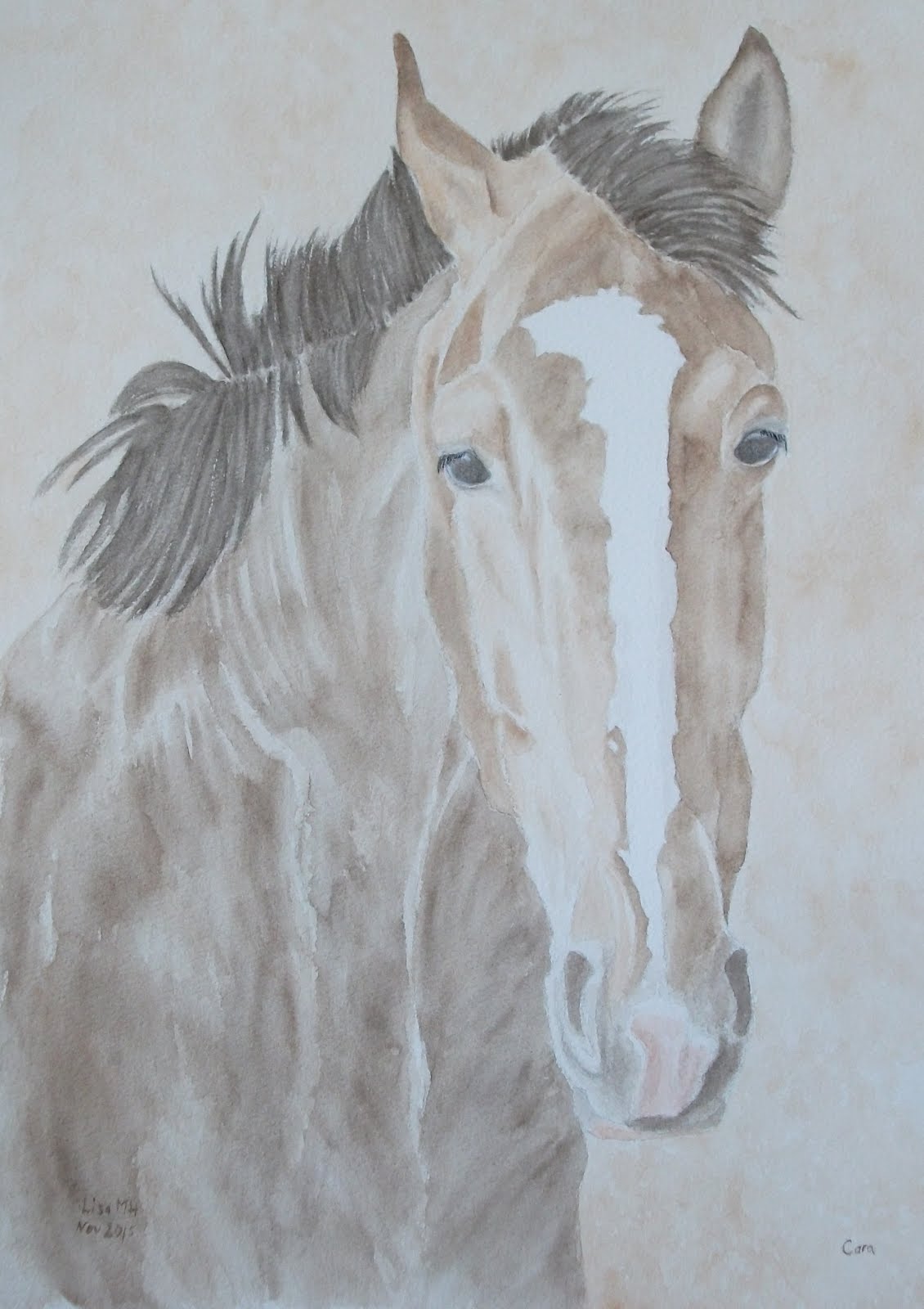
Carra

Carra
Beloved companion to Sarah, Nov 2015

Window To The Soul

Window To The Soul
Watercolour Horse, June 2015

Sleeping Beauties

Sleeping Beauties
Watercolour Lionesses, Nov 2012

QUOTES QUOTA

"Outside of a dog, a book is man's best friend. Inside of a dog it's too dark to read."

"Those are my principles, and if you don't like them... well, I have others."

Groucho Marx


Snow Stalker

Snow Stalker
Another snow leopard - my latest watercolour offering - July 2013
Showing posts with label Brain not Mind. Show all posts

30 January 2019

Add Moron

This is a fox I painted, whose nose is too broad, making him look like a Corgi dog.  Still, I like the colours.

Struggling with feeling overwhelmed?  Can’t make a decision?  Too many choices?  Too much on your plate?  Fret not, I have the solution.  Add more on.  Yes, that’s right - do what I do, and add more to your plate of ever-expanding options.  Never mind that the more you add the less you find yourself able to choose or, ultimately, do anything at all.  Instead you’ll become catatonic with chaos, paralysed by perplexity, incapacitated by information overload.  Embrace it!  After all, variety is the spice of life (so they say).  

And look what fun you’ll have, spending oodles of hours (not to mention money, probably) accumulating all of this wealth of ‘stuff’, which will ultimately leave you poverty-stricken - poorer in mind, spirit, body, and bank balance.  But go on, I say, throw caution to the wind.  You only live once, so you don’t want to miss out on the opportunity to drown in all the wealth of choices life has to offer.

And now I would like to make an interjection, in order to clarify that I am, of course, being ironic.  Please do NOT do what I’ve just suggested.  On the contrary, my advice would be to ignore it completely (if you can).  My point is that this is what I do, and a fat lot of good it does me.  It appears to be my default mode - something to do with a fault in the wiring which leads me to confuse the words “more” with “less”, and “complicated” with “simple”.  Beyond that, I cannot explain the bizarre and perplexing nature of this particular ‘quirk’.

As a consequence of the undesirable results of this behaviour, I am now trying to make a change by doing the opposite - whilst, simultaneously, attempting not to do the other thing I do, which is to go to the polar opposite i.e. rather than lessening my options, ending up removing them completely, and deciding to become a minimalist, or go and live as a yogi on the top of a Tibetan mountain.  Ah, the vagaries of being a person of extremes, with no middle ground to speak of (never mind live in).

So here, hopefully for your edification (and my own amusement), are a few examples of where I have tried applying my version of simplification.

ART SUPPLIES:
Compared to a lot of the artists I’ve seen on YouTube, I don’t have an excessive amount of stuff.  However, for me what I did have felt overwhelming as it was (all the choices left me with barely enough time or energy for the painting itself).  So I came up with the stonking good idea for how to lessen the overwhelm - I gave myself more options.  Yes, I added more, and now I have double the overwhelming choice I had before.  Marvellous.

ART SOURCES:
And still on the subject of art, which is an endless source of overwhelm… I find most of my ideas for my paintings on-line (Pixabay is a good site); but, as with everything, I can’t just have one photo at a time to use, I have to look at and download more (despite the fact I already have a collection of photos for this purpose on my computer), thus adding to my woes when it comes to trying to decide what to paint.

BOOKS:
I couldn’t decide where to start with re-reading the books I already owned, so I decided I should try the minimalist route (having recently become obsessed with reading about the idea on the internet), and get rid of any books which weren’t my favourites, and wouldn’t be re-read.  Strangely, there was a major fault in the way my brain translated this instruction because, rather than getting rid of any of my books, I ended up buying more instead, and dramatically increasing my library.  I’m still quite baffled as to how this happened.

YOGA:
Do you know how many yoga mantras, meditation techniques, mudras, gurus/teachers, and schools of thought there are?  No, neither do I, but I’ve tried incorporating many of them, and then wondered why I don’t feel particularly serene.  It’s because I was too busy worrying about all of the other options I thought I was missing out on, and how in the name of Shiva’s socks I was going to fit them in.  I am happy (and relieved) to say that here, at least, I have managed somewhat to simplify my practice, mostly by giving up wandering about on the internet looking at yoga sites.  As you may have noticed, that’s the third time the internet has been implicated.  It has a lot to answer for.  Speaking of which…

THE INTERNET:
Yes, the very thing which is the source of too much information and too many choices is the first thing to which I head when I feel confused and overwhelmed by too much information and too many choices - thus adding to my ever-expanding pile of options, and my ever-increasing confusion as to what to choose.  And yes, I know it’s obvious what to do when it’s written down, but not when you’re in it: and not when you have an addiction to excessive (and inappropriate) internet use. *sigh*

BLOGGING:
And finally, I have even managed to complicate the process of blogging.  Not content with simply writing things and then posting them, I decided that they needed to be categorised, and also embellished with photos, the way I’ve seen other people do on theirs: you know, “proper, professional-style” blogs - the kind I can get distracted by for hours.  Copying again. *sigh*  I also imagined that it would inspire me to write more consistently for my blog, but it’s simply overwhelmed me, and now I can barely remember all the categories that I’ve implemented.  Plus, the purpose of my blog has become rather obfuscated in amongst all these supposed ‘simplifications’.

And there you have it - but a small selection of all of the opportunities available to me for making my life more complicated and overwhelming, to which I run at the drop of a hat.  Now I just have to learn to recognise when it’s happening (which is relatively easy to spot - it’s when I’m thinking about things, unattended by the guidance of God/a Higher Power; or another, sensible, human being who knows me well enough to recognise the signs), and then run in the opposite direction.  Screaming.  

14 September 2018

LITERARY INSPIRATION #10

BOOK - DIRK GENTLY’S HOLISTIC DETECTIVE AGENCY by Douglas Adams

“It slowly surveyed the whole field, and then decided to plan out a nice, relaxed day for itself.  A little trot later on, it thought, maybe around threeish.  After that a bit of a lie down over on the east side of the field where the grass was thicker.  It looked like a suitable spot to think about supper in…
Good.
An excellent plan.
And the best thing about it was that having made it the horse could now completely and utterly ignore it.  It went instead for a leisurely stand under the only tree in the field.”

I came across this particular quote this morning as I was reading this book (well I wouldn’t have found it had I been reading some other book, so that’s a bit of a redundant statement, but anyway…), and felt it described so perfectly and succinctly the particular way my brain works when it comes to the issue of planning that I just had to share it.

I try to make plans.  Sometimes I make them complicated, with a long series of instructions to follow.  Sometimes (though, admittedly, not often) I make them simple, using a short suggestion.  Whichever way I try, the inevitable result is the same - I, for some unfathomable reason, end up completely ignoring them and doing the opposite.  The minute I form any word or thought which vaguely resembles some kind of plan, guideline, or even a nebulous desire as to what I’m going to do, or want to do, then I can basically kiss goodbye to seeing it come to fruition any time within my conscious present.

Which basically seems to mean that in order to get anything done I have to be in a state of unconscious awareness (or conscious unawareness?) of what it is I’m trying to achieve, because my brain appears to be wired to purposely contradict my instructions.  It “thinks” it knows better than me.  And perhaps it does?  Perhaps, like the horse, I should simply go with it - enjoy myself making a plan, and accepting that at the end of what is essentially a pleasant bout of idle daydreaming I’ll simply discard it and do something else.  The horse seems perfectly content with this idea, so perhaps I  would be too if I simply embraced it, rather than agonising over why this happens, and trying to force it not to do so.

Lesson for today - nature has many lessons to teach us especially about going with the flow, and even horses have wisdom to impart.

(And before anyone feels compelled to point out that horses don’t think like people, and that the horse in this book is not real but a figment of the imagination of Douglas Adams, I know.  Thanks.  I’m literal, but not quite that literal.  Well, not all the time, anyway…)

05 September 2018

A Pain In The Art


Here's my latest painting, which I managed to knock out after a whole lot of the usual lack of self-belief, anxiety-induced executive functioning deficient dithering and inertia (a new thing about which I was recently made aware), which is produced whenever I'm faced with the prospect of needing (even wanting) to put paint to paper.

I may not be improving when it comes to how I feel about my painting, but I have got better at believing in my ability to draw - so, in order to postpone the "dreaded deed", I simply drew a number of things until I felt suitably girded in the loins to take the plunge and get out the painting gear.  And here's the result.

Of course I wasn't happy with it, and gave a running criticism of it while I was doing it - it will be a miracle if the day ever comes when I am, and I don't.  Nor did I particularly enjoy doing it, because I was so fucking uptight and anxious about whether I was getting it "right", and doing it "properly" (those words are the bane of my existence: I shall have them engraved on my gravestone - 'She died right, and properly: indeed, she was a right proper charlie').  

I know "great" artists are often depicted as tortured, hyper self-critical souls, being driven by the unrelenting need to improve and perfect their art, which is often seen as a sign of their greatness, but I didn't want to be one of those kinds of artists who suffered for their art.  I mean, for fuck's sake, I don't know how they ever managed to get anything done if they suffered anything like the bloody insecurities and almost catatonia-inducing fear of making mistakes which I do. 

Perhaps that's the point, though.  Perhaps they don't feel the same.  Perhaps they aren't driven by the same things.  Perhaps at their core they believe that they are great, and they're driven to prove it; and what they fear is being proven to be average.  Me, I have no sense of my own ability, so I constantly seek to measure it against other people - which means I end up trying to copy them, trying to follow directions which I don't fully comprehend (but think I do), and trying to adjust myself to suit another person's modus operandi.  So whenever I pick up a paintbrush it's like there are two people with me at the easel - there's me, and there's whoever is the latest 'guru' artist to whom I've taken a shine, both fighting to stamp their mark on the paper.

I often find myself  wondering whether I'm lying to myself when I say that I love painting.  I mean, you wouldn't think this was the case given the torturous (and tortuous) process I have to go through to motivate myself to do it.  It's like pulling teeth without an anaesthetic.  Perhaps I should just use a bit of reverse psychology, and come out and say, "I FUCKING WELL HATE PAINTING!!!", see if that changes anything.  

Perhaps, though, it's not that I hate painting, but rather that I hate painting the way I think other people paint, or the way I think that other people would tell me I should paint.  After all, I am (annoyingly) also oppositionally defiant, so if I even feel as if I'm being expected to do something (yes, even if it's something I want to do) then I automatically will do the opposite.  Don't ask me why - it's one of the great, unfathomable, frustrating mysteries of my personality, which makes me want to tear my head off and stamp on it.  

So, you want me to paint - I don't want to; you think my paintings are great - I think they're not good enough, probably never will be, and all I can see are the mistakes I made; you think I'm a good artist - I think I'm average, and not as good as... (insert long list of artists' names here), and never will be.  It makes me wonder how I've managed to produce anything at all with a brain like mine.  I should just go and eat worms.

30 May 2018

Still Alive!!!!

This is just a quick note to say I am still here, I just haven't been doing any writing (well obviously).  I haven't abandoned my blog, I've just been caught up in doing art instead - every day for nearly the last three months.  Don't know what came over me!

Of course, this means that my writing has suffered because, as my best friend just pointed out, I cannot maintain focus on, and do, two things at the same time, much as I hate to admit it.  So I'm now going to have to let go of the idea that I can somehow fit both writing and art into every day, and instead do one or the other, as the inspiration flows between them.


And, in order to maintain this blog, I shall be trying to post both writing and my art in blog posts, instead of sticking to what has (inevitably) become a concretised idea that blogging requires me to always have to write stuff.


(I've just tried adding some of my recent artwork to this post, and there seems to be a problem, which I'm having trouble figuring out.  So I'll leave it for now, and hope that it isn't a permanent state of affairs. *the Voice of Doom, commonly known as Eeyore*).


06 November 2017

My Imaginary Self

You know, I often feel as if there are two of me, and now I know why - there are.  I’d like you to meet my Imaginary Self.  She’s the one who convinces me that I am who I’m not, that I can do what I can’t, and, as a result, leads me off down rabbit holes which result in frustrating dead ends - not to mention time wasted on yet another distraction, of which my life seems to be one long series.

She’s been with me throughout most of my life, and has become so interchangeable with my true self that I often can’t tell which of us is real, and which the fantasy.  Even as I’m writing about ‘her’ now, I’m not quite sure whether I should be referring to her as being the one who has created, and believes, all of this false stuff about myself, and therefore convinces me of it; or whether it’s that I have created her, through the combination of ignorance, confusion, the influence of the neurotypical world, and (in recent times) resistance to accepting being an autistic with adhd, and what that really means.  As you can see, she has almost literally taken on a life of her own.  

However, this life she imagines is real doesn’t bear much resemblance to the one I inhabit, which is part of the problem - we are frequently in conflict because I cannot live up to her expectations, and she refuses to accept that I can’t do what she wants me to do, rather choosing to believe it’s because I’m refusing to try (that way she retains the illusion of being in control). 

I’ve been trying to write this post for weeks, now, and I’ve floundered around in the introduction, attempting to explain what I mean by her, instead of allowing the rest of the post to do that.  So I’m going to cut this (relatively) short, and try to be brief and succinct - though that, too, is an example of something my imaginary self can do, and I can’t.  Brevity is not my strong point: everything I write requires extensive editing.  You should see the draft notes for this post.

1  My Imaginary Self has both autistic and neurotypical wiring, which means that she thinks both autistically and neurotypically.  She isn’t clear on the exact details of how this works (details and logic not being her forté, unless it involves getting lost in the minutiae of the English language), just that she believes it does.  As such, she thinks she can suppress/control/manage some of her autistic/adhd symptoms by applying some of the neurotypical techniques she has learnt in her extensive research.  My real self has been trying to do this for fifty years (unconsciously for the most part): it hasn’t worked yet. 

2  As I mentioned above, details and logic are not my forté, but she harbours the illusion that she is a logical, linear, concise, analytical, academic thinker.  She’s not.  She couldn’t think in a straight line even if she had a ruler, and she cannot get from A to B without having to detour through the rest of the alphabet - usually more than once, and often encompassing the alphabets of any other random languages which might happen to be lying around to distract her (hello Sanskrit).

This illusion is compounded by the fact that she loves writing and everything about the English language, which she mistakenly believes means that she must be academic.  It doesn’t, and she’s not.  She’s a creative thinker - it’s just taking her a long time to figure this out, because she thinks in words not pictures (though she does paint pictures with words, which confuses her further).  Plus, she harboured a dream to go to Oxford University and be a scholar (like her hero, C S Lewis), even though she found school and college incompatible with her personality and mode of learning.  In her classically rigid autistic way, she thinks there’s only one way of learning in order to prove your intelligence, which requires the acquisition of a lot of information on a wide range of subjects, most of which actually bore the arse off her.

3  My Imaginary Self is a frustrated musical prodigy.  My real self has no musical talent whatsoever.  Based on this delusion, I spent one hundred and fifty pounds on a music keyboard to fulfil this supposed lifelong ambition to learn to play the piano, only to find it tedious beyond measure.  After hardly using it, I gave it away.

4  This same musical genius also believes that she’s a stifled seamstress waiting to burst forth and make her own clothes, because she thinks this would be easier than having to shop for them.  Unfortunately, the real me happens to be as interested in, and adept at, dressmaking as I am spot-welding, and my talent extends only as far as basic repairs, which I procrastinate over doing - a fact I should have taken notice of before I decided to fork out another hundred and fifty quid on a brand new sewing machine, which has now sat, hardly used, in a cupboard for about three years.  Another item to be donated.  

5  My Imaginary Self believes that putting off doing things will not only be temporary, but also make them easier to do later, when she feels better able to face them.  My real self is a chronic procrastinator who just defers action automatically, no reason required.  And it never makes it easier, but we always forget that.

6  My Imaginary Self thinks she’s tidy at heart, that being a minimalist would suit her, and this way she would get more writing and art done because this, she has read, is the way to combat clutter, and eliminate distractions.  My real self is chaotic, loves collecting and displaying things (like books), but also hoards things which she often doesn’t want to do, but can’t seem to let go of easily (paper, boxes, and containers in particular).  She’s attached to things more than people, and she’d panic if she had to live in a home with very little on display to stimulate her senses.  And it wouldn’t matter how clinically organised her environment was, something would still distract her - most probably the fact that her environment was too clinically organised.

7  My Imaginary Self thinks she’ll get bored if her choices are limited, so she needs lot of options to assuage my adhd; plus, she thinks this way she can overcome the narrow-focused obsessiveness of my autism, and become a more interesting, fully-rounded person.  My real self gets overwhelmed and in a flap if she’s faced with more than one alternative, and will often end up doing nothing at all because her brain has had a mini-meltdown and temporarily stopped functioning.  Or she won’t be able to focus on the thing she is doing, because she’ll be wondering whether she should have chosen one of the other options.

8  My Imaginary Self is erudite, and able to express this in a calm, relaxed, thoughtful, measured way when speaking in person to people.  My real self either clams up entirely because her mind goes blank when faced with another human being (or is reduced to repeating the few inane bits of small-talk she has learnt to express in such situations), or explodes into full-on twitter like a demented sparrow, where she just cannot shut up, and everything that comes into her head leaks out of her mouth.  This is often mistaken for garrulous sociability, when in fact it’s a sign of overstimulation and social anxiety.  Her erudition is confined to the written word, and she’s always relieved when she can escape back into blessed solitude.

9  My Imaginary Self chooses the ideas which are useful to her that she allows into her mind, and discards the rest.  She can distinguish between what’s meant to be taken literally (not to mention seriously, and personally), and what isn’t.  My real self is a sponge - a literal-minded, gullible, easily influenced, sheep-like sponge.  And, contrary to what my Imaginary Self believes, she hasn’t got a clue half the time what’s in her own mind, or why she does what she does - except that it’s usually as the result of something she read or heard somewhere… 

So, there she is - my Imaginary Self.  It took a while to wrangle her onto the page, but she’s there now - in the only place where she does exist, other than my own mind.  Now to try to leave her here… 

Namaste - I bow to the real you

25 August 2016

Thought Bypass

This is what I need when attempting to navigate my mind...

“All action is born of thought.”  Author unknown

Okay, so I just checked my blog to see when I last posted, and it’s been just over a week, again.  It doesn’t seem that long, but then I have no sense of time, so how would I be able to tell?  This is why I now have a calendar notification set to alert me once a week: so I get the question, “When was the last time I wrote my blog?” popping up every Friday as a reminder.  I need something to prod me, given that my initial, over-enthusiastic posting has rather drastically waned to the more familiar dribble.  Ho hum.

This is not to say that I haven’t actually been writing this last week - or trying to.  I have started five separate pieces (they’re all sitting there, in various states of fruition, at the bottom of my screen - waiting…)  

But, unfortunately (as I mentioned last week), my attention has been divided between them and the Olympics - and when something like that happens then you can almost kiss goodbye to the writing; or, at least, to my being able to stick with one thing, and see it through to completion.  

My brain cannot cope with two things or more at once demanding my focus, and it will always choose the most stimulating, but least taxing - the one that gives instant, easier stimulation and gratification.  Writing does stimulate my brain, once I get going, and give myself over to it; but it requires no distractions, otherwise it just ends up as a sporadic, rambling mess, which needs a whole load of editing (if I even manage to complete it).  

It can also seem like too much effort when directly matched against the immediacy of the internet - one click of a button and I can be zoned out within seconds.  This is why I bang on so much about my problem with the internet - it’s a quick-fix to me, which is not good.  It certainly isn’t any good for my creativity and productivity. 

So, kind of moving on…  

... and this is what I imagine my mind looks like.  Scary.  No wonder I get lost.

… to the quote at the top of the page.  Whilst I agree wholeheartedly with this saying, I also think there should be a companion to it which goes, “All inaction is born of too much thought.”  This would perfectly embody my problem with thinking.  

I think too much.  I can think myself into, then out of, a course of action within seconds.  And then back in, and out, in and out, on and bloody on, ad nauseum…  I tire myself out with my thinking, which is why it’s never a good idea for me to give too much thought to what I’m going to do (or to anything at all, really, ‘cos by the time I’ve finished I’ll be too knackered to do much of anything).  

This is partly why I don’t do plans - ‘cos I think myself into and out of them, changing my mind about them every sixty seconds, redesigning them, changing the parameters, worrying about them, blah blah blah, and basically living in the future with the plan, and missing out on the moment: ’cos I am not one of those people who are able to make a plan, and then get on with what’s in front of them in the day.  

It’s like giving my mind the opportunity to talk my way out of it in advance; much better to catch it unaware by simply living in the day,  trying to bypass the receptacle of noise that is my mind, and tune into my higher Self (God - who exists only in this moment, ‘cos this moment is all moments rolled into one - deep, I know) for direction on what to do now.  

Easier said than done.  But I keep trying.  Plus, it is the essence of yoga (and I am, supposedly, a yogi).  Note to self: this might explain why I’m taking so long to reach ananda (the state of bliss that comes with being one with the Divine).

Interestingly, the time when thinking before acting would come in useful is the time when I don’t do it - or, at least, not conscious, considered thought.  I’m talking about just before I leap onto the internet with gay abandon, which I do with the vague idea that it’ll be alright this time.  And it never is. *heavy sigh*

So, once again, as with everything else in life (it seems), it all comes down to balance: too much thinking, and I turn into a catatonic potato; too little, and I turn into a fried potato (from jumping into the frying pan without looking where I leap).  And I don’t do balance.  I do erratic swings and roundabouts.  I guess I’ll have to get used to being dizzy, then.  You’d think I’d have grown accustomed to it by now, I’ve been doing it so long.

Right, I’m off.  Hey, look at that, though.  I managed to focus, and get this written all in a few hours, on the same day.  And I didn’t give it much thought beforehand: just had the title and a vague idea this morning, and off we went.  Yep, thinking is definitely overrated, in my opinion.  Just wish I could get my mind to agree.

I wish you peace and blissful union in the moment you’re in.

Åšanti      

29 July 2016

Obsessed Much?


Some of my obsessions


Why yes, now that you come to mention it, I believe I am.  Why do I sound so surprised by that?  After all, obsession is my brain’s default mode.  It’s not as if I discovered this only recently.  But there you have it: Lisa + obsession = surprised.

So it’s been just over a week since I had The Talk with my friend about my blogging, and decided to alter the way I approach it.  Since then I have posted four times in the last week - a bloody miracle!!  It usually takes me a lot more than a week to write one thing.  Last year I only managed to post four times in total - FOUR TIMES IN FIFTY-TWO WEEKS! - so I’ve already equalled that amount, and am about to surpass it in one month.  I must have had a REALLY bad year last year, ‘cos I also only managed to paint one picture, so I can’t blame it on the fact that I was doing more painting.  Bugger.

But it’s not only that I’ve posted more, there are also the photographs.  I can’t believe I’ve not tried that before!  It’s so much fun.  What is wrong with me that I’ve not thought to do it until now?  It’s not as if I haven’t seen other people doing it on their blogs.  It seems that nearly everyone does it.  And I like it.  It brightens the place up, makes it look more interesting than just a lot of words on a page.  

But no, for some reason to do with my one-track brain, I decided that I was going to stick to one form of illustration, and that was with my painting.  Keep it all uniform; boring; rigid.  Makes it a bit difficult as well when I’m not actually doing any painting.  I think I thought that this would serve as some kind of motivation for me to do more.  Yeah, that went well.

So yes, I’m obsessed with blogging.  It only took me ’til a week later to realise it.  But I got there.  And then I started worrying about it ‘cos obsessing is bad, right?  And what would happen if/when I lost interest (as I usually do), and then reverted to how it was?  How could I stop that from happening?  Blog more.  Panic blog.  Obsessively blog!  Hello?  Wasn’t that the thing I was worried that I was already doing?  Are there any brain cells at all inside my head not running around deliriously without a clue, like little people with their arms flailing about in the air?  Is anyone in charge up there??

I have a problem with the word ‘obsession’.  I will talk about being excited or enthused, but not obsessed - unless it relates to something negative, and then I will happily whip it out to beat myself around the head with.

Another obsession

I have come to associate it with negative connotations (due to a great extent to my time around the AA community), so I assume that it is a bad thing, which needs correcting.  To admit that I am obsessed is to admit that I am somehow at fault; that I am doing something wrong; that I have ‘allowed’ myself to get distracted by something that invokes the obsessive gene in me; that I am not using or applying my 12 step programme correctly.  

And what also confuses me, and makes this worse, is the fact that neurotypicals of all descriptions (even alcoholics, and suchlike) use the word arbitrarily, usually to describe something they’re really into - which sounds like what I’m experiencing, but isn’t quite.  But I just can’t explain what it is that’s different, so it sounds like I’m making a distinction based on a false technicality, in order to excuse myself for something which I think I should, actually, be able to get over if I really wanted to.

You have no idea how much I’ve really wanted to get over the way my brain works (or maybe you do, especially if you’re autistic or have adhd).  Except that the way that I stop obsessing about one thing is to move on to the next: there’s no break from it, no interim period of ‘normal’ thinking.  Just one thing after another.  

Now to a non-autistic this might sound really awful, or sad, or limited, or any number of things.  But the fact is that, unless I’m obsessing about the fact that I obsess, I don’t actually notice it because it is just the way I think: it’s as natural to me as breathing.  There is no ‘obsessive gene’, as such, which only gets triggered by certain things.  It’s not the things that cause the problem, but the brain.  I just think this way about everything.  

Nor is it always a problem to me, unless the thing I get obsessed with is negative, or leads to something negative (like internet trawling), or someone points it out (to basically let me know that I’m boring the arse off of them).  And then I start worrying about it: obsessively.  Endless fucking cycle. 

So, I have a pattern.  Lock onto something (yoga, for instance); get consumed by it (read, think, talk, possibly do if it’s action-based); either lose interest and move onto the next thing; or integrate it into my life, and gradually (hopefully) lose some of the initial intensity of the obsession.  This is what happened with yoga, and I now mostly just do it, and don’t talk or read about it because that just serves to fire up my obsession.

Much as I hate to admit it, I haven’t got a fucking clue how to manage this thing.  My go-to solution is always to follow a plan (another bloody obsession of mine - plans!), and the one thing guaranteed to fail is a plan.  I have yet to find a satisfactory method for dealing with this, other than the vague notion that I should be turning it over to God; but then I have no clear idea how that translates into practical action.  I’m not even certain that what I’ve just written about it in this post is correct.  What appeared to be a perfectly logical explanation seems to get all wobbly once it’s outside of my head.  Ho hum.


But apart from the whole issue of obsession, I have enjoyed my new-found enthusiasm for blogging this week.  I just would like for it to continue, and not to burn out from being so hyped-up.  I fear that the word with which I have but a fleeting acquaintance, in both understanding and practice (‘balance’), is going to make an appearance somewhere as part of the solution.  

I wish you peace and joy (and balance!) in your life.

Namaste

21 July 2014

Language Of The Heart (Part One)

“When we try to speak to each other - Me to you, you to Me, we are immediately constricted by the unbelievable limitation of words…  Words are really the least effective communicator.  They are most open to misinterpretation, most often misunderstood.

And why is that?  It is because of what words are.  Words are merely utterances: noises that stand for feelings, thoughts, and experience.  They are symbols.  Signs.  Insignias.  They are not Truth.  They are not the real thing.”     From “Conversations With God”, by Neale Donald Walsch

Imagine a blind person still trying to use their eyes through which to see; or someone who is deaf who continues to listen with their ears; or an individual who has lost the use of a body part attempting to utilise what no longer works.  

And now think of an autistic, for whom communication and understanding via language is, at worst, frustrating and bewildering, and at best incomplete, still insisting on depending on this form.

This is me.  Yep, it finally dawned on me that, despite my diagnosis four years ago, I still have not accepted this rather major facet of my character (it is, after all, one of the defining traits of autism), and persist in relying almost wholly on words as my means of understanding, and communication. 

I realise that my perception is at fault, and I am limiting myself as a result.  I have a narrow, rigid comprehension of the word “communicate”: I see it as referring solely to the use of language - to talking, reading, and writing - when, in fact people, communicate via other means, through their feelings and actions.  But, since I am largely unconscious of this, I have always chosen language by default to express myself and interpret what others are trying to convey. 

Therefore, in order to broaden my perspective, it needs adjusting to include other definitions -  which, as an autistic with a narrow viewpoint, and a tendency to focus on minute details, forgoing the bigger picture in the process, is alien and unnatural.  But I believe it can be done: it’s just not going to be instinctive.  I’ll have to make a conscious effort to do it, to remind myself when I’ve become narrow and limited once again.  

As I have said before, I LOVE language - playing with words, crafting a piece of written work, constructing the perfect sentence.  When I really let myself play (when I’m not constraining myself with a lot of rules, which take all the fun out of it) then it’s like my heart becomes engaged in the process, not just my brain, which I think is what allows me to be able to communicate through this medium.

Unfortunately, though, I have come to depend almost wholly on words; to revere them as if they hold the key to all knowledge and understanding; to believe that because I can read and write and understand what I’m reading on a literal level, that this means I understand what is being said.  This can be very confusing.  

Language Of The Heart (Part Two)

“Words may help you understand something.  Experience allows you to know it.  Yet there are some things you cannot experience.  So I have given you other tools of knowing.  These are called feelings.  And so, too, thoughts…  

Your experience and your feelings about a thing represent what you factually and intuitively know about that thing.  Words can only seek to symbolise what you know, and can often confuse what you know.”      From ‘Conversations With God’, by Neale Donald Walsch

So, to continue, my problem is that I don’t see beyond what I literally see, and I have no idea what other people see, so I assume that they see what I see, and that what I am seeing and hearing is what they are saying (get your head around that one if you can!!)  Only to frequently discover that it’s not.

It also dawned on me that not all autistics have the exact same problem.  Sure, we all share the difficulty with social communication and understanding (which not only includes language in the form of words, but reading body language too), but they don’t all depend on language the way that I do.  And yet some of them live full and successful lives; have found ways to compensate for what they ‘lack’; are happy and accept themselves as they are; and trust what they feel.  My autistic friend is one of them.  

She has the ability to see the essence of what is being expressed, along with any literal interpretation she might have.  At first sight it can appear that she is not that literal at all, especially not when compared to me, which I have concluded must mean that she isn’t: that the part of the brain which deals with language interpretation is not as affected in her as in me, or that she is not quite so far on the autistic spectrum.  All of which is quite plausible - after all, we aren’t all exact replicas of each other.  

But it seems as if, when she reads something, she is not reading solely with her eyes, simply engaging her brain - she is reading with her heart, her soul, her whole being,  which appears to compensate for the literality.  She trusts and depends on her instincts.

I, on the other hand, don’t trust mine at all.  I was raised differently: I learnt to doubt, distrust, ignore, suppress, and fear what I felt.  If I couldn’t name it then it didn’t exist.  And I did it so well - the evidence of this is that I’m still doing it now, though I’m hoping that there is a shift taking place, now that I’ve seen this truth.  

I have learnt to place great importance on words: it has not served me well.  I read and re-read things, in the futile belief that understanding will come by constant  repetition and familiarity.  It doesn’t work.  If all you can see is the surface, then all you’re going to see is more of the same surface when you’re looking at it from the same angle, no matter how often you look at the same thing!

Then we have my attempts at trying to see beyond the literal meaning.  Not good.  I invariably misconstrue what’s trying to be conveyed, as I strain my brain to see beyond my limited viewpoint.  This usually leads to long bouts of deep analysis, where I manage to bypass the point completely - all because I’m still doing it through my ‘eyes’, with that part of my brain that doesn’t process language well.  Plus I’ll often try to look for the deeper meaning to things which have none, and are actually meant to be taken at face value.  

But then there are times when I have discovered the essence of what I am reading - which appears to occur when I’ve read with my heart, and my feelings have been engaged, not just my mind.  Like I’m connected to God, who then does for me what I can’t do for myself, and opens my mind to a more unlimited veiwpoint.  It might still take me quite a few attempts at reading something before I get beyond the surface, and if I try to force understanding then it doesn’t work.  But if I relax, and let God lead the way as it were (or, another way of putting it, be guided by my feelings) then it gradually comes.

Words, I have finally realised, actually impede and limit my understanding.  They clutter my mind, and distract me from seeing the true meaning.  They fill me with doubt, leaving me constantly questioning the validity of what I feel or experience, causing me confusion, resulting in a constant state of indecision and conflict.  I get caught up in the minutiae of trying to determine the exact meaning of a word or sentence, which narrows my focus, so shutting me off from the bigger picture.

So what does this mean?  It means, I hope, that there is hope of change.  

It means that if I give up trying to force a part of me to work in a way that it can’t, and being totally dependent upon it, and instead shift to learning to tune into and trust what I feel, then I might well have a better chance of communicating and understanding.

It means that I might learn a more effective way to utilise my ability to read, without being dependent on the words themselves to impart the meaning.

It means that I might shift my perspective even further to see it not as a liability, a deficiency, or a problem, but as something that allows and encourages me, and all those with whom I engage, to find more effective ways to interact - to see that my autism is not meant to limit but to liberate me.

And the truth is that words are not that effective at all, as it says in the quote at the beginning of this article.  Even when used between non-autistics, they frequently miscommunicate and misunderstand when relying on them.  After all, isn’t that how arguments and wars are often started?  One wrong word and you’ve got Armageddon! 


03 April 2014

Fear Is The Key

‘“Ah!” said Rabbit, who never let things come to him, but always went and fetched them.’      From ‘The House At Pooh Corner’, by AA Milne

“Every human thought, and every human action, is based in either love or fear.  There is no other human motivation, and all other ideas are but derivatives of these two.”      From ‘Conversations with God’, by Neale Donald Walsch

I have all the patience of a toddler waiting for Christmas to arrive.  Just like Rabbit, I find it almost impossible to wait for things to come to me, be it inspiration for a painting or a piece of writing, or the answer to some question.

For a long time I believed that this was intrinsically part of my ADHD, but I’m no longer certain that’s true.  I think it just happens that one of my particular personality traits is an excess of impatience (like I seem to have an excess of everything!), and having ADHD exacerbates it.  

It’s as if the ADHD trait of poor impulse control combines with my impatience to produce, or heighten, my distractibility, restlessness, and quick loss of interest.  It’s kind of like they have a symbiotic relationship - the more impatient I become, the more easily distracted, etc.  The same goes with any emotion, whether it be positive or negative, e.g. if I get too happy I find it impossible to calm down, leaving the way open to the familiar ADHD symptoms.

Another characteristic I have, which I believe is part of my autistic hard-wiring, is a bone-deep inability to stop myself from copying, and absorbing.  I say it’s hard-wired because I do not choose to do it.  It happens automatically, without any conscious decision on my part, and more often than not I haven’t got a clue that it’s occurred, until later.  

If I had a choice, I wouldn’t do it - it’s one of the things about having Asperger’s that I actually hate.  It has confused me for a long time because I am so vehemently against the idea of imitating other people: I long to be an individual.  Before I got my diagnosis I wasn’t even aware that it was something I did, probably because I was wandering around with the conscious belief that I didn’t want to be like other people, or follow the crowd.  

But it seems it’s often the case that the conscious thought is merely what you would like to be the truth, and not what the reality is: as in this case.  And everything about me screamed out otherwise - from the way I behaved, how I looked, to what I believed and said.  I was like a walking car-crash, a tangled mess of confusing and conflicting influences, with hardly a sign of the original, intact person left behind.

The fact is that, much as I might be telling myself that I don’t like copying, at the root of me something is going on which I can’t see, which drives me to do so.  And, again, just as with the ADHD, discovering that copying is part of my nature as an Asperger, and trying to attribute it solely to that, has only served to answer half the puzzle.  But I might have finally found the rest.

I copy because I don’t have the patience to wait for an answer, or the faith to believe that one will come in time (God’s time, not mine).  

I copy because it’s easier and quicker than having to deal with the unknown, and the feelings that sprout forth as a result - I can just follow someone else’s path instead.  Unfortunately, this still means that I have to wait for the result, which I also find impossible to deal with, hence my inevitable tendency to chop and change, abandoning one person’s ideas in favour of someone else’s, and never being able to stick to one path and see it through to its natural conclusion.  As I’ve mentioned before, I am the Queen of Tweak.

I copy because when I get distracted, restless, and lose interest (an ADHD attack) it’s the quickest way to fix it, to go on-line seeking new stimulation to try to awaken my dopamine-deficient brain.

Basically, what all of this boils down to is that at the root of me I am motivated by fear.  I fear that if I don’t go and look for the answers then they’ll never come; I fear that I’ll miss out on something; I fear that I might be doing it (whatever ‘it’ is) wrong, and I won’t learn unless I go looking to someone else for the answers; I fear that the feelings will not pass. 

In the words of God (from the book ‘Conversations With God’), “This is what I have called the Sponsoring Thought.  It is either of love or fear.  This is the thought behind the thought behind the thought.  It is the first thought.  It is prime force.  It is the raw energy that drives the engine of human experience.”

So then you put these two things together, the autistic copying/absorbing, along with the fear-driven motivation, and the result is me going searching on the internet for quick answers and inspiration (not to mention it’s distractibility  appeal, which allows me to forget myself and all those pesky feelings that I’m trying to escape).  

But, whilst I might break free for a while, I don’t escape unscathed.  Instead, I return with a confused mess of new ideas and information which will inevitably come back to bite me on the arse at some point in the future, when I’m suddenly reminded of something I read, and decide on a whim to try to integrate it into my life.  Which usually means abandoning something that works in favour of something new that inevitably doesn’t.

Of course, this wouldn’t be such a problem if I weren’t autistic, and if I possessed that miraculous ability to filter information, discarding what isn’t relevant, and adapting what is to suit my needs.  But I don’t.  For some reason, God saw fit to create me without a filter.

It also requires some modicum of self-awareness, to be able to identify what is relevant, and to recognise the commonalities you share with the people about whom you’re reading.  Nope - I don’t have any of that either, and it doesn’t look like it’s coming my way any time soon, much as I’ve kept on striving to acquire it.  Seems this, too, is a hard-wiring issue, and I came out of the factory with the relevant bit missing.

So what’s the answer?  Well, I guess I have to accept that I copy, and always will do, so seeking solutions and an escape on the internet will always be a problem.  It does not hold the answers for me, but merely compounds my difficulties.  My choice is between non-acceptance of my autism/ADHD and it’s limitations (which could be turned over and viewed as blessings), or giving up the fight to prove that I can do what other people do. 

Acceptance means the need to shift from fear into love (and faith) - which means practicing the opposite to what I do at the moment, and start believing that God has the answers, and will provide me with them and everything I need, if I allow Him/Her/It to do so.  Which means trusting that “This too shall pass” (a slogan we have in AA), when I am plagued by feelings - as long as I allow them to do so, by not going off and trying to escape them.  

Filling my head with other peoples’ ideas and opinions does not help me to find myself - it merely helps me to lose touch even more with who I am, as I get buried under a blanket of random useless information.  To act out of love (to trust in God) would mean to honour the fact that I am autistic/ADHD, and so stop doing the stuff which only serves to hurt me.  

Maybe then I could truly embrace the concept of ‘To Thine Own Self Be True’, ‘cos I might finally find the Self to which I could be true. 

Snow Leopard

Snow Leopard
An experiment in watercolour and gouache

Quotes Quota

"Do you believe in Magic?" asked Colin.

"That I do, lad," she answered. "I never knowed it by that name, but what does th' name matter? I warrant they call it a different name i' France an' a different one i' Germany. Th' same thing as set th' seeds swellin' an' th' sun shinin' made thee well lad an' it's th' Good Thing. It isn't like us poor fools as think it matters if us is called out of our names. Th' Big Good Thing doesn't stop to worrit, bless thee. It goes on makin' worlds by th' million - worlds like us. Never thee stop believin' in th' Big Good Thing an' knowin' th' world's full of it - an call it what tha' likes. Eh! lad, lad - what's names to th' Joy Maker."

From 'The Secret Garden', by Frances Hodgson Burnett

Love

Love
Copied from photograph of the same name by Roberto Dutesco

Quotes Quota

"There is no way to happiness - happiness is the way."
The Dalai Lama

"If you don't stand for something you will fall for anything."

Malcolm X

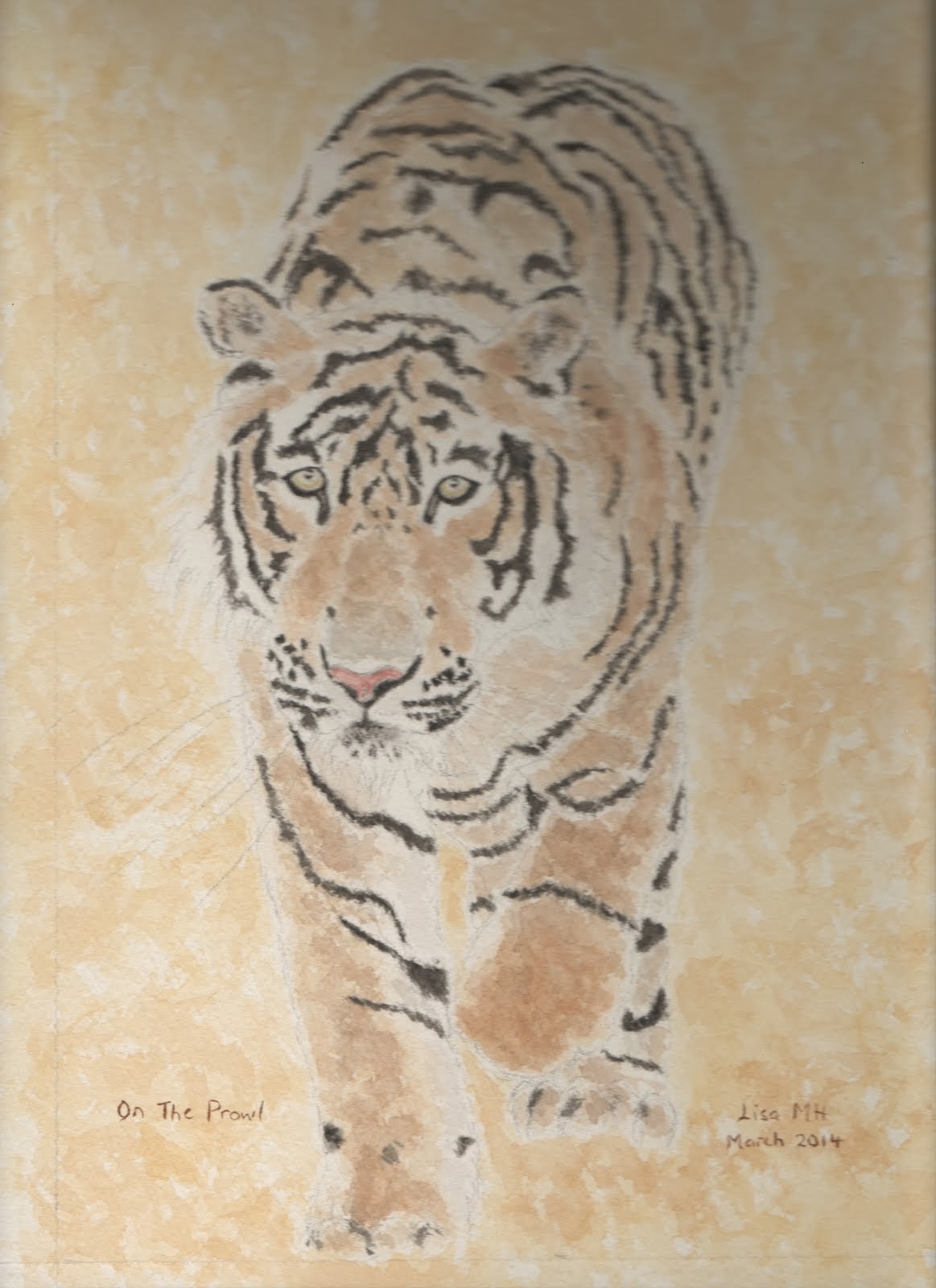
On The Prowl

On The Prowl
Watercolour tiger

Quotes Quota

"What saves a man is to take a step. Then another step."

"There are far, far better things ahead than any we leave behind."

C S Lewis