Feline Focus

Feline Focus
My latest puma, July 2016

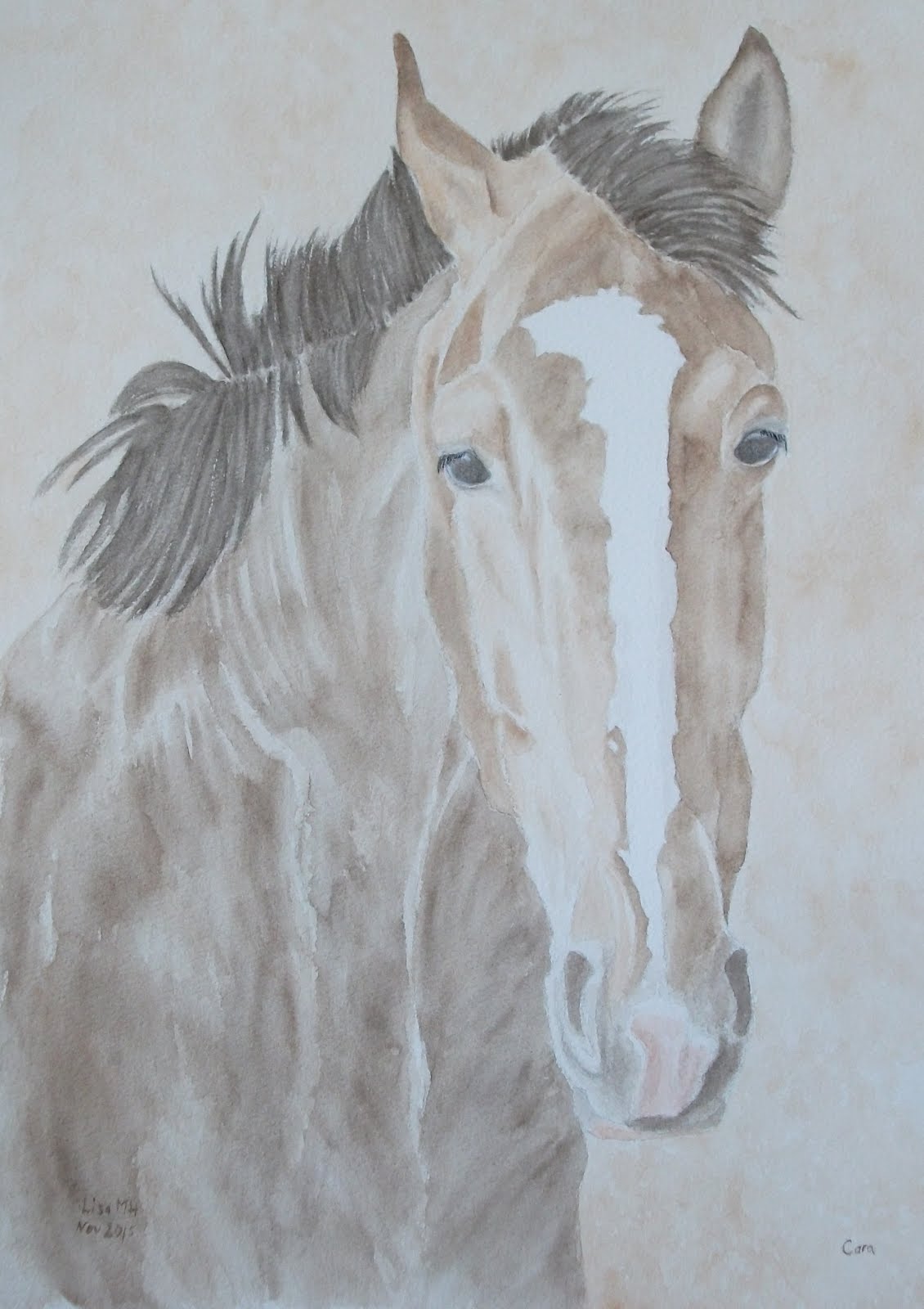
Carra

Carra
Beloved companion to Sarah, Nov 2015

Window To The Soul

Window To The Soul
Watercolour Horse, June 2015

Sleeping Beauties

Sleeping Beauties
Watercolour Lionesses, Nov 2012

QUOTES QUOTA

"Outside of a dog, a book is man's best friend. Inside of a dog it's too dark to read."

"Those are my principles, and if you don't like them... well, I have others."

Groucho Marx


Snow Stalker

Snow Stalker
Another snow leopard - my latest watercolour offering - July 2013
Showing posts with label ADHD. Show all posts

21 July 2018

Weebling To Thirty

Do you remember those toys called Weebles, which first appeared in the 1970s, and had the tag-line “Weebles wobble but they don’t fall down”?  (I just googled them, and it turns out you can still get them.)  They were great fun, and I especially loved the tree house, in which they lived.  I really wanted to live in that tree house.

Anyway, this is not a post about Weebles, per se.  This is about the fact that today is my AA birthday, and I have somehow managed to cobble together thirty years of consistent sobriety (that’s 30 years, in case anyone out there has problems with discerning the letters in words - though my internal grammarian baulks at the informal and technically grammatically incorrect use of numbers within a piece of text).

But enough of that pedantry.  So where do Weebles come into this miracle of recovery, you may be asking?  Simply in the fact that I’ve decided that the Weebles’ means of locomotion is one I share when it comes to describing the way I’ve done my recovery (and can be extended to encompass the way I “do” life in general) - namely, I’ve wobbled a lot but I haven’t fallen down.  Sometimes I go from side to side whilst remaining stationary; frequently, it seems I’ve gone backwards; oftentimes I’ve gone round in circles; but ultimately I have managed to make slow, tentative, frequently tortuous, forward progress.  

This is how come I happen to be sitting here now, the bemused (but grateful) recipient of the gift of thirty years of sobriety, which I have to tell you I was never really sure I wanted in the first place, didn’t ever really make a conscious decision to go after, but rather (in the classic autistic way, I can now see with hindsight) simply copied my way into; and for the first ten years wished I could give back, and return to the ignorance of not knowing that alcohol was not the solution to anything in life but simply one more problem to add to the pile.

Briefly, my journey of sobriety began with my second, and last, visit in 1988 to the psychiatric ward of my local hospital, after I’d been arrested for criminal damage, and had then tried to kill myself with an overdose.  

After this I was given the choice of either going home (where I was extremely miserable), or going to the local rehab unit for alcoholics/addicts, which conveniently happened to be next door to the hospital.  

Even though my initial visit to psychiatric had been for a two week detox from alcohol, which I’d voluntarily kept extending until I’d outstayed my welcome at the seven week mark (I felt strangely safe and at home there, after the initial terror on being admitted), I don’t recall any of the staff ever using the word ‘alcoholic’ to describe my drinking.  I believe I was initially considered to be possibly suffering from manic-depression (bipolar disorder), because I suffered extreme mood swings (due to both the effects of coming off alcohol, and what I now know is a combination of autistic meltdown, and ADHD).  

What is most remarkable is that, despite the fact that medication seemed to be freely and routinely prescribed to patients willy-nilly, I escaped the psychiatric system without ever being given anything other than the standard sleeping tablet, which I only took during my stay there.  It was years later, when discussing it with my best friend, that I realised just how blessed I had been, given that I had so many things for which I could easily have been medicated, especially given that, due to complete ignorance on the part of the staff, I was being misdiagnosed (autism not being widely recognised, especially in females, back in1988).  

And, distressingly and painfully uncomfortable as my life has frequently been since then (living without anything chemical to replace the alcohol and mute the chronic anxiety, and general sensitivity to everything around me), I am extremely grateful for being kept safe from what could have been a disastrous transference of my addiction to alcohol to an addiction to prescribed medication, as has happened to so many other people I know of.

To continue (before I weeble myself into a standstill), I chose to go to the rehab unit as the lesser of two evils.  And, as with my stay in the hospital, once I got over the shock of moving into an unfamiliar environment, I settled in and duly repeated the same pattern of becoming dependent - duly becoming the longest-serving resident, clocking in at a year and a half.  Yet again, I had to be almost forced to leave.

After I left and moved into my own home, at the age of twenty-three, things proceeded downhill from there.  Despite having been taught all things domestic by my dad starting at the age of seven (and then being expected to take care of him), I was hopeless at looking after myself.  And, whilst I’d come away from rehab with the knowledge that I couldn’t ever drink safely (‘one drink is too many, and a thousand is never enough’), there wasn’t a great deal else that was keeping me sober.  Essentially nothing had changed.  

Add to that an escalation in my undiagnosed anxiety, and a full resurgence of my also undiagnosed and raging eating disorder (compulsive overeater/under-eater/bulimic - in remission for a number of years now).  Plus I’d discovered that I could get mildly stoned on certain over-the-counter medications, which I used whenever I had to leave my flat.  A joyous existence, what ho!

It’s not surprising that, after nearly ten years of this, I descended into a state of hopelessness and depression, in which I wished daily that I could die, and finally progressed to the planning stage.

And at that point God stepped in and, in a remarkable act of Providence, reunited me with someone I’d met at the end of my time in rehab, for whom I’d briefly worked as a voluntary alcohol services counsellor (yes, me, counselling people - it doesn’t bear thinking about, I know), and who was now firmly steeped in the AA Twelve Step programme.  Through her, God saved my life.  

She became my AA sponsor; introduced me to the real recovery programme (it’s in the Big Book, not the meetings); helped me find a God of my own understanding (a Friend who loved me, rather than the critical and punishing father figure in which I’d come to believe); was the first person to recognise that I suffered from chronic anxiety, and the first person who identified me as being autistic; and she has been with me on this journey for the last twenty-one years.  Having just one person who truly knows me, and accepts me for who I am, has made all the difference - and for that I am extremely grateful.

What’s also remarkable is that, despite the struggles, I have never had the desire to drink alcohol again since sometime in the first year of my stay in rehab - the obsession to drink was removed (as it says in the Big Book) without me even realising it.  I have also never wished I were dead, and thought about killing myself, since reuniting in 1997 with the aforementioned person who is now my best friend and who, ironically, has also turned out to be a fellow autistic; and thoughts of wanting to die plagued me daily from the age of about seven, after my mum left us.

So, here endeth this brief overview of my time in recovery.  I can’t say it’s been easy (I’ve never been known to do anything easily), and there have been frequent set-backs, but I have to say it is ultimately worth it; and I will, no doubt, continue to wobble my way in Weebly fashion through the rest of my life.  

Therefore, I guess all that’s left to say is:-

HAPPY BIRTHDAY TO ME, HAPPY BIRTHDAY TO ME, HAPPY BIRTHDAY DEAR LISA WEEBLE, HAPPY BIRTHDAY TO ME!!!!

06 November 2017

My Imaginary Self

You know, I often feel as if there are two of me, and now I know why - there are.  I’d like you to meet my Imaginary Self.  She’s the one who convinces me that I am who I’m not, that I can do what I can’t, and, as a result, leads me off down rabbit holes which result in frustrating dead ends - not to mention time wasted on yet another distraction, of which my life seems to be one long series.

She’s been with me throughout most of my life, and has become so interchangeable with my true self that I often can’t tell which of us is real, and which the fantasy.  Even as I’m writing about ‘her’ now, I’m not quite sure whether I should be referring to her as being the one who has created, and believes, all of this false stuff about myself, and therefore convinces me of it; or whether it’s that I have created her, through the combination of ignorance, confusion, the influence of the neurotypical world, and (in recent times) resistance to accepting being an autistic with adhd, and what that really means.  As you can see, she has almost literally taken on a life of her own.  

However, this life she imagines is real doesn’t bear much resemblance to the one I inhabit, which is part of the problem - we are frequently in conflict because I cannot live up to her expectations, and she refuses to accept that I can’t do what she wants me to do, rather choosing to believe it’s because I’m refusing to try (that way she retains the illusion of being in control). 

I’ve been trying to write this post for weeks, now, and I’ve floundered around in the introduction, attempting to explain what I mean by her, instead of allowing the rest of the post to do that.  So I’m going to cut this (relatively) short, and try to be brief and succinct - though that, too, is an example of something my imaginary self can do, and I can’t.  Brevity is not my strong point: everything I write requires extensive editing.  You should see the draft notes for this post.

1  My Imaginary Self has both autistic and neurotypical wiring, which means that she thinks both autistically and neurotypically.  She isn’t clear on the exact details of how this works (details and logic not being her forté, unless it involves getting lost in the minutiae of the English language), just that she believes it does.  As such, she thinks she can suppress/control/manage some of her autistic/adhd symptoms by applying some of the neurotypical techniques she has learnt in her extensive research.  My real self has been trying to do this for fifty years (unconsciously for the most part): it hasn’t worked yet. 

2  As I mentioned above, details and logic are not my forté, but she harbours the illusion that she is a logical, linear, concise, analytical, academic thinker.  She’s not.  She couldn’t think in a straight line even if she had a ruler, and she cannot get from A to B without having to detour through the rest of the alphabet - usually more than once, and often encompassing the alphabets of any other random languages which might happen to be lying around to distract her (hello Sanskrit).

This illusion is compounded by the fact that she loves writing and everything about the English language, which she mistakenly believes means that she must be academic.  It doesn’t, and she’s not.  She’s a creative thinker - it’s just taking her a long time to figure this out, because she thinks in words not pictures (though she does paint pictures with words, which confuses her further).  Plus, she harboured a dream to go to Oxford University and be a scholar (like her hero, C S Lewis), even though she found school and college incompatible with her personality and mode of learning.  In her classically rigid autistic way, she thinks there’s only one way of learning in order to prove your intelligence, which requires the acquisition of a lot of information on a wide range of subjects, most of which actually bore the arse off her.

3  My Imaginary Self is a frustrated musical prodigy.  My real self has no musical talent whatsoever.  Based on this delusion, I spent one hundred and fifty pounds on a music keyboard to fulfil this supposed lifelong ambition to learn to play the piano, only to find it tedious beyond measure.  After hardly using it, I gave it away.

4  This same musical genius also believes that she’s a stifled seamstress waiting to burst forth and make her own clothes, because she thinks this would be easier than having to shop for them.  Unfortunately, the real me happens to be as interested in, and adept at, dressmaking as I am spot-welding, and my talent extends only as far as basic repairs, which I procrastinate over doing - a fact I should have taken notice of before I decided to fork out another hundred and fifty quid on a brand new sewing machine, which has now sat, hardly used, in a cupboard for about three years.  Another item to be donated.  

5  My Imaginary Self believes that putting off doing things will not only be temporary, but also make them easier to do later, when she feels better able to face them.  My real self is a chronic procrastinator who just defers action automatically, no reason required.  And it never makes it easier, but we always forget that.

6  My Imaginary Self thinks she’s tidy at heart, that being a minimalist would suit her, and this way she would get more writing and art done because this, she has read, is the way to combat clutter, and eliminate distractions.  My real self is chaotic, loves collecting and displaying things (like books), but also hoards things which she often doesn’t want to do, but can’t seem to let go of easily (paper, boxes, and containers in particular).  She’s attached to things more than people, and she’d panic if she had to live in a home with very little on display to stimulate her senses.  And it wouldn’t matter how clinically organised her environment was, something would still distract her - most probably the fact that her environment was too clinically organised.

7  My Imaginary Self thinks she’ll get bored if her choices are limited, so she needs lot of options to assuage my adhd; plus, she thinks this way she can overcome the narrow-focused obsessiveness of my autism, and become a more interesting, fully-rounded person.  My real self gets overwhelmed and in a flap if she’s faced with more than one alternative, and will often end up doing nothing at all because her brain has had a mini-meltdown and temporarily stopped functioning.  Or she won’t be able to focus on the thing she is doing, because she’ll be wondering whether she should have chosen one of the other options.

8  My Imaginary Self is erudite, and able to express this in a calm, relaxed, thoughtful, measured way when speaking in person to people.  My real self either clams up entirely because her mind goes blank when faced with another human being (or is reduced to repeating the few inane bits of small-talk she has learnt to express in such situations), or explodes into full-on twitter like a demented sparrow, where she just cannot shut up, and everything that comes into her head leaks out of her mouth.  This is often mistaken for garrulous sociability, when in fact it’s a sign of overstimulation and social anxiety.  Her erudition is confined to the written word, and she’s always relieved when she can escape back into blessed solitude.

9  My Imaginary Self chooses the ideas which are useful to her that she allows into her mind, and discards the rest.  She can distinguish between what’s meant to be taken literally (not to mention seriously, and personally), and what isn’t.  My real self is a sponge - a literal-minded, gullible, easily influenced, sheep-like sponge.  And, contrary to what my Imaginary Self believes, she hasn’t got a clue half the time what’s in her own mind, or why she does what she does - except that it’s usually as the result of something she read or heard somewhere… 

So, there she is - my Imaginary Self.  It took a while to wrangle her onto the page, but she’s there now - in the only place where she does exist, other than my own mind.  Now to try to leave her here… 

Namaste - I bow to the real you

01 July 2017

Confounding Co-Factors

Here’s a conundrum - what sometimes looks like addiction, feels like addiction, sounds like addiction, but isn’t?  Answer - autism.

How so?  Well, take, for example, my perennial problem with the internet.  Regular readers might already be aware of my on-going struggle to reign in my obsession with it, and may be bored out of their brains with my seemingly constant references to it - as I am myself.  But bear with me: this time I may actually have had a genuine epiphany.

As usual, I have not posted for so long because I’ve been stuck on the web.  In between bouts of trawling, I’ve been tying myself in knots trying to work out why I can’t seem to stay away from it, and how to manage my use of it (which, ironically, is all part of the obsession - so even when I’m not on there, I’m worrying about how to stay off there, etc).  

This time around, I finally determined that it’s an addiction - that I’d been “in denial”, minimising and rationalising my behaviour (for example, by blaming it on my ADHD).  After all, did it not fit within the simple AA definition of addiction in the Big Book:

‘If, when you honestly want to, you find you cannot quit entirely, or if when drinking, you have little control over the amount you take, you are probably alcoholic.  If that be the case, you may be suffering from an illness which only a spiritual experience will conquer.”

Substitute internet use for drinking, and it described perfectly what seemed to be the problem - inability to choose to stay off there (away from my compulsive web-trawling, as opposed to my “responsible” use of the internet for things like communication, or blogging) for any decent length of time even when I wanted to, or needed to in order to get anything else done; and lack of control over what I would do once I got on there, which not even extreme tiredness, or physical pain, could induce me to stop.

And, also as described in the Big Book, I have tried all ways to control it (egs setting up rules, using a timer, hiding the router AND the computer at times) - and failed.  All that’s done is driven me round the bloody bend, obsessing about how to stop being so bloody obsessed with the bloody thing!

I’ve tried fear, I’ve tried guilt, I’ve tried coaxing; and I’ve done what I do with everything, which is to compartmentalise it into two distinct and extreme camps (because I really don’t do middle ground) - those being my responsible, sensible, creative, productive use of it; and my unproductive, wasteful, negative use.  They haven’t worked.  

The unfortunate effect of categorisation is that, by extension, whenever I ‘give in’ to my compulsion, I judge myself to be choosing to be irresponsible, unproductive, and slothful; that I could stop myself if I really wanted to; that I just need to ‘pull myself together” (like a pair of curtains), and pull my socks up (as if having droopy socks are responsible for me not applying myself, or trying hard enough?!)   

Yet Step One of the AA programme says that, when it comes to addiction, we are unable to exercise free choice when we are in the grip of an overpowering mental obsession and physical compulsion to use whatever substance or behaviour it is to which we find ourselves enslaved, no matter the damage it may be causing. 

So, having arrived at what I thought was the right conclusion, I set about applying the solution: part of which involved the practical first step of trying to ‘detox’ (AGAIN) from my compulsive use of the internet.  Only this time (I thought) it was going to be different, because I believed I’d got to the root of my dilemma - finally identifying what the problem actually was.

Then I had a conversation with my sponsor/best friend, who mentioned that we’d been here before (with alarmingly frequent regularity) - having an obsessive conversation about my obsessive use of the internet; and that perhaps it wasn’t an addiction after all.  Did I not recall that being obsessed is part of being autistic, she asked (for probably the ten thousandth time since I’d been diagnosed back in 2010)?

And something clicked.  Perhaps she was right?  And perhaps it was time to try to make a wholesale shift in the way I think about myself, because I still seem to have some vague, unconscious idea that there are still parts of me - like my alcoholism, for instance - which are the same as the neurotypical version, and aren’t influenced by my autism: as if I have a brain that is separated into two halves (one being the autistic part, and the other the neurotypical), and they operate in tandem; and I just need to find a way to tap into the NT side in order to overcome the influence of the autism/adhd.  Fuck’s sake!  I thought I’d got over this ‘split personality’ business already!

I realise I haven’t gone into any specific details about the confusing similarities between autism and addiction, which I intended to include here, but this post is already long enough, so I’ve decided to split it up, and (hopefully!) I’ll write a second one about that stuff, soon.  I’m just relieved to have finally got something written.

May you find clarity and truth about your own life.    

04 April 2017

Blunting The Edge

My Lady Wren

Hi.  It’s been a little while since I’ve been able to sit and focus on something longer than a Literary Inspiration post (hence three in a row!).  Not that I’ve lacked ideas - just the ability to develop them beyond the initial draft.  Ironically, it wasn’t even as if I could claim that it was the internet that was distracting me, because it wasn’t.  

I’ve just had two weeks free from my compulsive internet trawling, using it only for essentials, like Sype.  But then I seem to remember the same thing occurring the last time I stayed abstinent - I gradually felt better, my brain calmed down, my mind got clearer, and my attention and focus improved, but I got very little or no writing done.  I did, however, do other things.

And it’s been the same this time.  I have actually managed to paint a picture (the first since July last year).  Whilst that in itself was great, the best thing about it was the fact that I enjoyed it, and there wasn’t the same amount of angst which usually accompanies it.

Whilst I have struggled to write any posts, I actually managed to write a bit of fiction, which I have done in the past, but have struggled with since.

And then there’s the fact that I have rediscovered the joy in my yoga practice, rather than it just being a necessity to my well-being, which is how I regard it (my alternative version to medication to help manage my anxiety and adhd, because I cannot take drugs due to being an alcoholic/addict).  Being obsessed with the computer means that my interest in everything else falls by the wayside - which includes my beloved yoga.

So, two weeks of freedom.  Again.  Two weeks appears to be my sticking point, at the moment.  It’s the longest I’m able to manage before I drift back to the internet.  I used to have the same thing occur when I was trying to become abstinent from overeating, which I used to find frustrating and disheartening.  

But I didn’t give up, and I got beyond that point when I was ready (which is usually not when you think you are), so I know that it’s just a part of the process, and not to listen to the Voice of Doom that tells me I’ll never be able to get completely free of this compulsion; or that I should accept it as part of the erratic nature of my adhd, and give up trying to manage it.  Accept that I need something to take the edge off of my anxiety, adhd, and all the other stuff about being me that makes everything I feel so acute, and that this is the lesser of the evils I have used (alcohol, medication, food, television). 

Except that it only works to take the edge of whilst I’m on there.  And then I’m left not only with the compulsion to keep going back, but also an increase in the symptoms that I was seeking to relieve.  My anxiety ramps up, I become more agitated, my focus and attention is shot to bits, and my brain feels like it’s melting.  Plus, I forget who I am, because I’m absorbing other peoples’ opinions again.

And here’s the other thing: I actually do have practical ways of taking the edge off, but without the negative consequences - with faith in a higher power, prayer/meditation, yoga, the change in my diet, and the barest bones of a daily routine to keep things ticking over and manageable - but no plans!!  They’re not instant, and they don’t render me unconscious (ie functioning, but not quite all here - like the walking dead, rather than someone in a coma), but they work to bring everything down to a manageable level.  

So, what happened to bring that ‘golden period’ to an end (other than me forgetting, yet again, the inevitable consequences of me web-trawling?)  Because there’s always a reason, as I learnt with alcohol, food, and any other addictive/compulsive behaviour - it doesn’t just happen that I find myself back trawling the internet, or with a drink in my hand, or bingeing on food. There’s a build-up which, if it isn’t being dealt with, turns into a mental and emotional tsunami.  

It may be the quietest tsunami you ever saw, because I am so poor at self-awareness, and so slow to process what’s happening to me, that it mostly doesn’t look like anything is wrong at all; but you’ll know it by the end result - me seeking ‘comfort’ and distraction on the internet from the feelings of restlessness, which I don’t recognise as being related to what’s happening in my life.  

Of course, this ‘comfort’ is only temporary, and not very comforting at all, given some of the stuff I sometimes inadvertently come across whilst trawling, and all that happens is that my life then becomes chaotic (more so than the manageable chaos which seems to be an intrinsic part of who I am - a trait which I have yet to accept as a fact, whilst I still strive to be Mrs Meticulously Tidy and Organised).

Here, then, are the events.

In November last year, I had to fill in an assessment form for the new disability benefit which is replacing the old one.  The DWP scares me to death, and I’m hopeless at filling in forms.

In January my friend Dee (who lives in Scotland, and I haven’t seen in person for about two years) visited on two separate occasions (staying overnight each time).  The second visit was in order to accompany me to the medical assessment I’d been called to attend for the new disability benefit.

Leaving aside the assessment, you’d assume that her visit would be a nice thing - and it is.  Except that I’m autistic - EXTREMELY autistic, and I don’t deal well with being around people, even in my own home, even when they are my closest friends.  It’s not relaxing, for either of us, as I have no idea how to behave, and I end up hovering around her.

As to the medical assessment, I haven’t had to go to one of these for quite a few years.  This ramped up my anxiety about the possibility of them taking away that money.

In February they informed me that, not only had I been awarded the new benefit, but that it had been increased substantially.  Yet again, you’d think this would be welcome: and it is.  But that doesn’t change the fact that, whether it’s good or bad news, I’m still clueless as to how to deal with it. 

Also as a consequence of both Dee’s visit and the assessment, she told me that I’m a lot further along on the autism spectrum than we thought - closer to the Temple Grandin autistic end, rather than the Asperger’s.  Whilst I know that I am extremely affected, it still comes as a bit of an unwelcome surprise to be told just how much so. 

Around the same time, I extended my circle of contacts from one (my friend Dee), to two.  And then, in the last week, I added another.  This is a big deal for me.  

I have been perfectly content to only engage with one person for a long time now (in this regard, I am classically autistic, preferring my own company to that of other people because of the stress engaging with them induces.  Plus, too many people offering too many differing viewpoints and opinions confuses me).  

But, as she said, she is coming up to her seventieth birthday this year, and, assuming she dies before me (jolly, I know!), I have no-one else with whom to share, or for support.  And whilst I may prefer my own company, and to have as few people in my life as possible, I do actually enjoy my limited interactions with her; and even I know that I need to have some people with whom to converse at a deeper level than simply to exchange polite greetings, the way I do with neighbours. 

It is also my fiftieth birthday coming up which, whilst I’m not consciously aware of it causing me any conflict (mostly because I just ignore it, the way I do every birthday - it’s just a number to me), no doubt there’s something going on.  

For one thing, I have found myself thinking more frequently about how I’ve got less time to do stuff, and how I wish I’d got my act together a lot sooner (particularly with regard to writing and art, but also with accepting and managing my autism/adhd).  I also sometimes find myself envying those who’ve been diagnosed earlier, which is not helpful, ‘cos it just leads to me feeling regret about my life. 

And then, in the last few days, I found out that one of my Aunts has died.  She is the last of my dad’s six brothers and sisters, and she was the oldest.  It wasn’t a shock (she was into her eighties), but, due to the distant and confusing nature of our relationship (of my relationship with the whole of my family), I have no idea how I feel, or what to do.

This culminated in me having the ridiculous idea (given that I cannot paint to order) that, rather than buy a card, I would like to paint one to send to her family (these are people I haven’t seen, or spoken to, for over twenty years).  And so I came on here to look for photos of appropriate flowers.  And got overwhelmed. And then got distracted.  And got lost for three days.  And now here I am, trying to drag myself back out of it.  Well it inspired me to write, anyway, which is the ultimate irony.

So there you have it - the anatomy of an autistic meltdown.

I hope that the only things melting in your life are food-related.

Åšanti

27 September 2016

Boundaries

Hi there (I’m trying to be less formal, but I’m really naff at knowing how to greet people.  And end conversations.  And then there’s the bit in the middle…  Well, that just about covers it all, then).

To the point of this post.

I did something remarkable, for me, the other day.  My local housing officer turned up for a visit, completely out of the blue.  She said it would only take five minutes (translation for us literal-minded autistics - it would be a short visit, but definitely not only five minutes long).  She just wanted to update my details, and as she happened to be in my village visiting other tenants, she thought she would just “pop in”.  So, was that okay?

Simple answer to that is “No”.  But of course, being me, I had a few moments where I considered saying yes, because that’s what I do.  I am one of those autistics who struggle to say no to people (this includes saying no to myself, the person responsible for coming up with my worst ideas), and to set boundaries about what I will and will not tolerate.  

I’ll tolerate almost anything, just as long as it allows me to avoid the discomfort of standing up for myself, and the possible consequences which may ensue (which are always dramatically awful in my mind, though rather vague.  If you ask me what I think might happen, I can’t really tell you.  I just KNOW it’s going to be BAD).  

And I also hate the idea of upsetting people, for fear that they might not like me.  So, basically, it’s all about how I look to other people…  How dumb is that?  Especially as most of those people are usually strangers to me, or ones who are of no real significance in my life - but I’m going to bend myself into a pretzel to not upset them; and then I’m going to hate both myself, and them, for the fact that that’s what I did.  And then I’m going to have a meltdown.    Methinks I should have me a Dodo Alert for when I’ve wandered into Dodo territory…  It’s a wonder I’m not extinct, too.

Back to my tale…

I said no.  Yep, I told her I was busy.  Fortunately, it was true - I was on Skype at the time, but I did consider cutting off my call for the moment while I talked with her.  My VERY IMPORTANT CALL, with my VERY IMPORTANT FRIEND, with whom I only get to converse three times a week.  

But even had I not been busy, it still wasn’t a good time, because I don’t deal well with spontaneous visits (spontaneous anything) - I can’t shift focus fast enough, and I end up saying things I don’t mean because my brain hasn’t had time to shift into gear.  And it just basically ramps up my anxiety levels, and freaks me out.  So, NO!  Just NO!!!  I don’t do people “popping in”, so go away.  Please.  (‘Cos I hate not being polite).  

So, yes, my mind, which has a fear of anyone in ANY position of authority (dustbin men, librarians, pen-wielding minor civil servants, anyone wearing anything vaguely resembling some kind of uniform - hello supermarket checkout assistants and shelf-stackers), had me wobbling for a moment, wanting to insist that the Housing Officer takes precedence over my friend.  And instead I ignored my mind, and I listened to the Voice of Sanity instead (commonly known as God, in my home).

What a relief!  I’d finally listened and acknowledged who I am, and what I can deal with, and it felt great.  I didn’t have to make some long speech, or try to explain in depth: I just had to say no, I was busy right now.  And nothing bad happened.  She accepted what I said, and arranged a day on which to return, which allowed me to be prepared in advance.

And today she arrived, and it was fine.  I got to tell her about my autism/anxiety/adhd; to explain why I don’t deal with spontaneous visits; and she seemed to understand (at least, she got why her unannounced arrival the other day freaked me out, which is all that I needed for her to get - another big change for me, ‘cos not that long ago I would have needed for her to FULLY comprehend my autism, and I would have expended ginormous amounts of energy in a futile attempt to explain it to her.  Me, the woman who can’t explain how to get from here to the bottom of my road - and it’s a straight road, and not very long).  

Even more impressive on my part, I didn’t apologise.  Normally I would have begun my speech with the words, “I’m sorry that I couldn’t…”, but I didn’t.  I merely stated the reasons why I couldn’t.  This is remarkable for me because I am a great apologiser.  “Sorry” has to be one of the most frequent words out of my mouth.  You bump into me, I say sorry.  You make a mistake, I say sorry.  You don’t explain yourself effectively to me, or I don’t hear clearly what you said, I say sorry.  I breathe, I say sorry.  

I often have Skype sessions with my friend where I literally have bouts of continuosly saying sorry, for no reason other than that I can’t quite get out the words that I want to say, so I fill in the gap with sorry.  It appears that I must think that it’s not so annoying having me apologising non-stop, rather than have her ‘suffering’ the silence that would ensue whilst I try to get my thoughts together.  I fear we have just wandered into Dodo territory again…  What kind of mind thinks up logic like this?!

Plus, I literally can’t stop once I start: I even find the repetition quite therapeutic, though I’m not sure it has the same effect on my friend.  Fortunately, she understands.  She’s very patient with me, and we just take the piss out of it.  It’s very difficult not to, considering that I am an erudite, bright, highly literate, intelligent, educated, intellectual woman with a gift for writing - and yet here I am, reduced to repeating “Sorry” like a faulty parrot.  Or one with sole access to an autistic whose vocabulary exclusively consists of the word “Sorry”.

So, the visit went well.  I said what I needed to say.  She did what she was here to do.  And off she went.  Oh, and she really liked my paintings.  And yes, it took longer than five minutes, but I was expecting that, so it doesn’t bend me out of shape any more.  I just had to channel the surge in anxious energy after she left, and find a way to calm down… which is how come I’m writing this.

And now here we are at the end… the other bit that I’m not quite sure how to do.  Goodbye?  Have a nice day?  Hope you’re more adept at setting boundaries than I am?  See, this is why I’ve taken to using Sanskrit terms plucked from my knowledge of yoga.  It’s so much easier - even if no-one understands what I’m saying.  Therefore:-

Namaste (and I wish you well on your journey to A LIFE LESS SORRY)

25 August 2016

Thought Bypass

This is what I need when attempting to navigate my mind...

“All action is born of thought.”  Author unknown

Okay, so I just checked my blog to see when I last posted, and it’s been just over a week, again.  It doesn’t seem that long, but then I have no sense of time, so how would I be able to tell?  This is why I now have a calendar notification set to alert me once a week: so I get the question, “When was the last time I wrote my blog?” popping up every Friday as a reminder.  I need something to prod me, given that my initial, over-enthusiastic posting has rather drastically waned to the more familiar dribble.  Ho hum.

This is not to say that I haven’t actually been writing this last week - or trying to.  I have started five separate pieces (they’re all sitting there, in various states of fruition, at the bottom of my screen - waiting…)  

But, unfortunately (as I mentioned last week), my attention has been divided between them and the Olympics - and when something like that happens then you can almost kiss goodbye to the writing; or, at least, to my being able to stick with one thing, and see it through to completion.  

My brain cannot cope with two things or more at once demanding my focus, and it will always choose the most stimulating, but least taxing - the one that gives instant, easier stimulation and gratification.  Writing does stimulate my brain, once I get going, and give myself over to it; but it requires no distractions, otherwise it just ends up as a sporadic, rambling mess, which needs a whole load of editing (if I even manage to complete it).  

It can also seem like too much effort when directly matched against the immediacy of the internet - one click of a button and I can be zoned out within seconds.  This is why I bang on so much about my problem with the internet - it’s a quick-fix to me, which is not good.  It certainly isn’t any good for my creativity and productivity. 

So, kind of moving on…  

... and this is what I imagine my mind looks like.  Scary.  No wonder I get lost.

… to the quote at the top of the page.  Whilst I agree wholeheartedly with this saying, I also think there should be a companion to it which goes, “All inaction is born of too much thought.”  This would perfectly embody my problem with thinking.  

I think too much.  I can think myself into, then out of, a course of action within seconds.  And then back in, and out, in and out, on and bloody on, ad nauseum…  I tire myself out with my thinking, which is why it’s never a good idea for me to give too much thought to what I’m going to do (or to anything at all, really, ‘cos by the time I’ve finished I’ll be too knackered to do much of anything).  

This is partly why I don’t do plans - ‘cos I think myself into and out of them, changing my mind about them every sixty seconds, redesigning them, changing the parameters, worrying about them, blah blah blah, and basically living in the future with the plan, and missing out on the moment: ’cos I am not one of those people who are able to make a plan, and then get on with what’s in front of them in the day.  

It’s like giving my mind the opportunity to talk my way out of it in advance; much better to catch it unaware by simply living in the day,  trying to bypass the receptacle of noise that is my mind, and tune into my higher Self (God - who exists only in this moment, ‘cos this moment is all moments rolled into one - deep, I know) for direction on what to do now.  

Easier said than done.  But I keep trying.  Plus, it is the essence of yoga (and I am, supposedly, a yogi).  Note to self: this might explain why I’m taking so long to reach ananda (the state of bliss that comes with being one with the Divine).

Interestingly, the time when thinking before acting would come in useful is the time when I don’t do it - or, at least, not conscious, considered thought.  I’m talking about just before I leap onto the internet with gay abandon, which I do with the vague idea that it’ll be alright this time.  And it never is. *heavy sigh*

So, once again, as with everything else in life (it seems), it all comes down to balance: too much thinking, and I turn into a catatonic potato; too little, and I turn into a fried potato (from jumping into the frying pan without looking where I leap).  And I don’t do balance.  I do erratic swings and roundabouts.  I guess I’ll have to get used to being dizzy, then.  You’d think I’d have grown accustomed to it by now, I’ve been doing it so long.

Right, I’m off.  Hey, look at that, though.  I managed to focus, and get this written all in a few hours, on the same day.  And I didn’t give it much thought beforehand: just had the title and a vague idea this morning, and off we went.  Yep, thinking is definitely overrated, in my opinion.  Just wish I could get my mind to agree.

I wish you peace and blissful union in the moment you’re in.

Åšanti      

02 August 2016

RECOVERY POST #1


“No person likes to think he is bodily and mentally different from his fellows.”  Big Book, page 30

You know what amazes me about the Big Book?  The fact that, if you break it right down to its individual, component sentences, you can see its relevance to the whole human experience.  You don’t have to be alcoholic (or have any of the other illnesses that traditionally share the 12 Step Programme) to find something of value or usefulness.  You just have to be open-minded - another way of saying not rigid in your thinking (which explains why I have a difficult time with this concept).

Obviously, the original application of this statement is meant to reference the difference between alcoholics and non-alcoholics; but for me, right now, its relevance is in regard to the difficulties I’m having with accepting that, as an autistic (with adhd thrown in as a bonus), I am differently-wired to other people.

First of all, I’d like to note the use of the word ‘different’.  There is no moral judgement in that word, no condemnation - which, as alcoholics, tends to be something we’re accustomed to either hearing from others, or applying to ourselves: that we’re somehow weak, bad, worthless, damaged, faulty, useless, abnormal, etc, and it’s essentially all because we can’t control our drinking.  When you really think about it, how daft is that?  

Well, a similar thing applies to being autistic, and having adhd.  Some of the judgements passed on us are that we are weird, difficult, faulty, useless, damaged, bad, worthless, etc.  It’s not generally something that anyone wants to be or have - which you can tell by the fact that people are worrying about the evidence that it seems to be on the rise; and that there are scientists out there trying to find a way to eradicate it.  It doesn’t make you feel warm and welcomed to the planet, I have to tell you, when the thing that is part of the very essence of who you are is judged to be some kind of undesirable abnormality.

And so we come to me.  It’s very difficult not to absorb all of this negativity (especially when you’ve kind of invited it in by going looking to see what other people have to say about autism and adhd), so it shouldn’t really be a surprise that, despite all of my positive speeches about how I’m merely different not faulty, and created by God, etc, I have yet to really accept my differences, and I frequently resort to judging certain aspects of myself harshly, mainly because I feel that they are getting in the way of me making any progress.  

Except that the progress I seem to be trying to make is in becoming less like myself, and more ‘normal’ ie non-autistic/adhd.  I choose to measure myself against non-autistics, and look to them for ideas about how to deal with life.  Is it any wonder I have a difficult time?  It’s like asking an oak tree to be a sunflower: it cannot do it, and to try to do so would leave it stunted and deformed.  And boy do I frequently feel stunted and deformed.

The page in the Big Book from where the quote is taken

I think the major aspect that I struggle with is the issue of having acute sensitivity, because it encompasses things not apparently obvious to me when I was first diagnosed.  I thought it was only about things like hearing (noise can distract me and drive me nutty, so I spend a large proportion of my time either wearing earplugs or headphones, and listening to brown noise - like white noise, only a different colour); taste (I am EXTREMELY sensitive to sugar, in any form - artificial or not - including fruit, and all the other ‘healthy’ variations); and touch (eg my sensitivity to the weather).  

What I didn’t count on was being sensitive to other peoples’ emotional energies, peoples’ opinions (which combines with me being literal, gullible, and serious-minded), and the electro-magnetic emissions emanating from some electrical devices: which, along with my distractability, causes me massive problems, particularly when using the internet.  Which I don’t want to admit, or accept, ‘cos I’m obsessed with it.  Like I once was with alcohol.  And sugar.  And television (another electronic device).  Bugger.

So I guess this possibly contributes, in part, to an explanation of why I experience such rapid sensory overload.  At least it sounds quite feasible, though I’m not quite certain.  As I said in the introduction to this series, I have no definitive answers: I’m just making this up as I go along.  But then neither, it seems, does anyone else know for sure.  So I guess it’s okay for me to shove in my twopenn’orth.  After all, it does affect me. 

I also have a thing about plans.  I want to be a person who can devise and follow a plan.  The amount of sites I’ve read about planning could sink a battleship.  I am obsessed with plans.  I’ve been obsessed with them since I was a kid.  And they’ve never worked for me.  Why would they work now??  (I need to make clear here that I am not referring to my daily routine, which includes the stuff necessary to keep my life ticking over - things like yoga, eating, bathing, and suchlike.)  

Fortunately for me, in AA we have something ultimately better, which is called living one day at a time, and following God’s guidance for us.  And, interestingly, God never informs me of what’s in store for the week ahead (never mind the month, year, or decade).  S/He/It doesn’t even let me know what They want me to do for the rest of the day.  I guess They know, and accept, better than I do that if there’s a plan to follow I’ll deviate from it: which is why They provided me with a solution that doesn’t force me to have to try to do something that I cannot do, ‘cos God isn’t interested in making my life difficult.  I do a good job of that myself. 

So, no, when it comes to certain things about being autistic and having adhd, I don’t want to be different.  But what I want, and what I need, are two separate issues, and I guess God had good reason for creating me this way.  And though it makes sense, I can’t say it makes it any easier to accept. *grumpy sigh*     

31 July 2016

RECOVERY POST - AN INTRODUCTION

The AA Big Book on the left, along with other recovery literature

This is the second idea I’ve had for a ‘series’ (along with the Literary Inspiration one), in order to give areas of my writing some focus, and to hopefully help with the issue of continuity on my blog.

As I have alluded to on numerous occasions, I use the 12 Step Programme of AA to stay recovered, and to help me live my life (more effectively in some areas than others).  It is the primary framework around which I have built my world, and without which I would be completely lost (as opposed to only vaguely so).

My original intention when I started the blog, back just after I’d acquired my Asperger’s diagnosis, was to write about my life as an autistic, but with a focus on applying the principles I’d learnt within the Programme to this new facet of my life.  

It didn’t quite turn out that way, mostly because I kept struggling to try to fit autism within my literal interpretation of the parameters of the illness and recovery model of the 12 Steps, as written down in the Big Book.  Instead of adapting the Programme to fit it, I was constantly trying to adapt the autism to fit the Programme: it didn’t work.  It doesn’t work.  It’s not meant to work like that, even when using it for its original purpose of dealing with alcoholism.  And even there, I had a hard time getting to grips with it, because of my rigid, literal-minded, autistic brain.  But that doesn’t mean that there isn’t a way to work it, just not like this. 

And what that way is, I’m not really sure: I have no definitive answers, and I’m still frequently bothered and bewildered by it all, but I thought that a way of dealing with it might be to investigate the Big Book (and other relevant 12 Step literature), but in a different way.  Rather than approaching it in my typically rigid manner (ie believing that the only  ‘right’ way to do it means starting at the beginning, and working in chronological order), I would work organically, and go with the flow of how my own brain works; and it doesn’t work linearly, much as I might try to force it to do.

Inside of each of my well-used books

So to clarify, this is not meant as some kind of blog version of a traditional Big Book Study Group (which would be difficult anyway, given that there’s no way to interact as I don’t have a comments section.  There is a reason for this, but I won’t go into it here).  I’m not trying to teach anything (not my understanding of the Programme, as it applies to alcoholism, or overeating, etc, of which I do have long-term experience).  
I’m simply trying to share - which may include some of my experience and knowledge about what works for me in those areas (as prompted by the literature), but mostly I’m hoping that it can help to shed light on the areas of difficulty I have; how to deal with the business of living with the WHOLE of me on a daily basis; and inspire me to change what I can, and make peace with myself for what I can’t.
Most of all, this is the experience of an AUTISTIC alcoholic, compulsive overeater/undereater/bulimic, general addict, social anxiety sufferer, with adhd (have I forgotten anything??!)  I have no idea what the non-autistic version of all of these things feels like, though I’ve seen a lot of examples of them, and they seemed strangely ‘normal’ - less intense.  You have been warned.

I’m doing this primarily to help myself, but I hope that it will be of benefit to anyone out there reading it.  You also need to know that I won’t be following a schedule (just another word for a  plan!), so expect them when they arrive - hopefully more than once a year.

May you find hope, peace, joy, and love, and a simple path through the often confusing mass that is life - one day at a time.

Namaste


Snow Leopard

Snow Leopard
An experiment in watercolour and gouache

Quotes Quota

"Do you believe in Magic?" asked Colin.

"That I do, lad," she answered. "I never knowed it by that name, but what does th' name matter? I warrant they call it a different name i' France an' a different one i' Germany. Th' same thing as set th' seeds swellin' an' th' sun shinin' made thee well lad an' it's th' Good Thing. It isn't like us poor fools as think it matters if us is called out of our names. Th' Big Good Thing doesn't stop to worrit, bless thee. It goes on makin' worlds by th' million - worlds like us. Never thee stop believin' in th' Big Good Thing an' knowin' th' world's full of it - an call it what tha' likes. Eh! lad, lad - what's names to th' Joy Maker."

From 'The Secret Garden', by Frances Hodgson Burnett

Love

Love
Copied from photograph of the same name by Roberto Dutesco

Quotes Quota

"There is no way to happiness - happiness is the way."
The Dalai Lama

"If you don't stand for something you will fall for anything."

Malcolm X

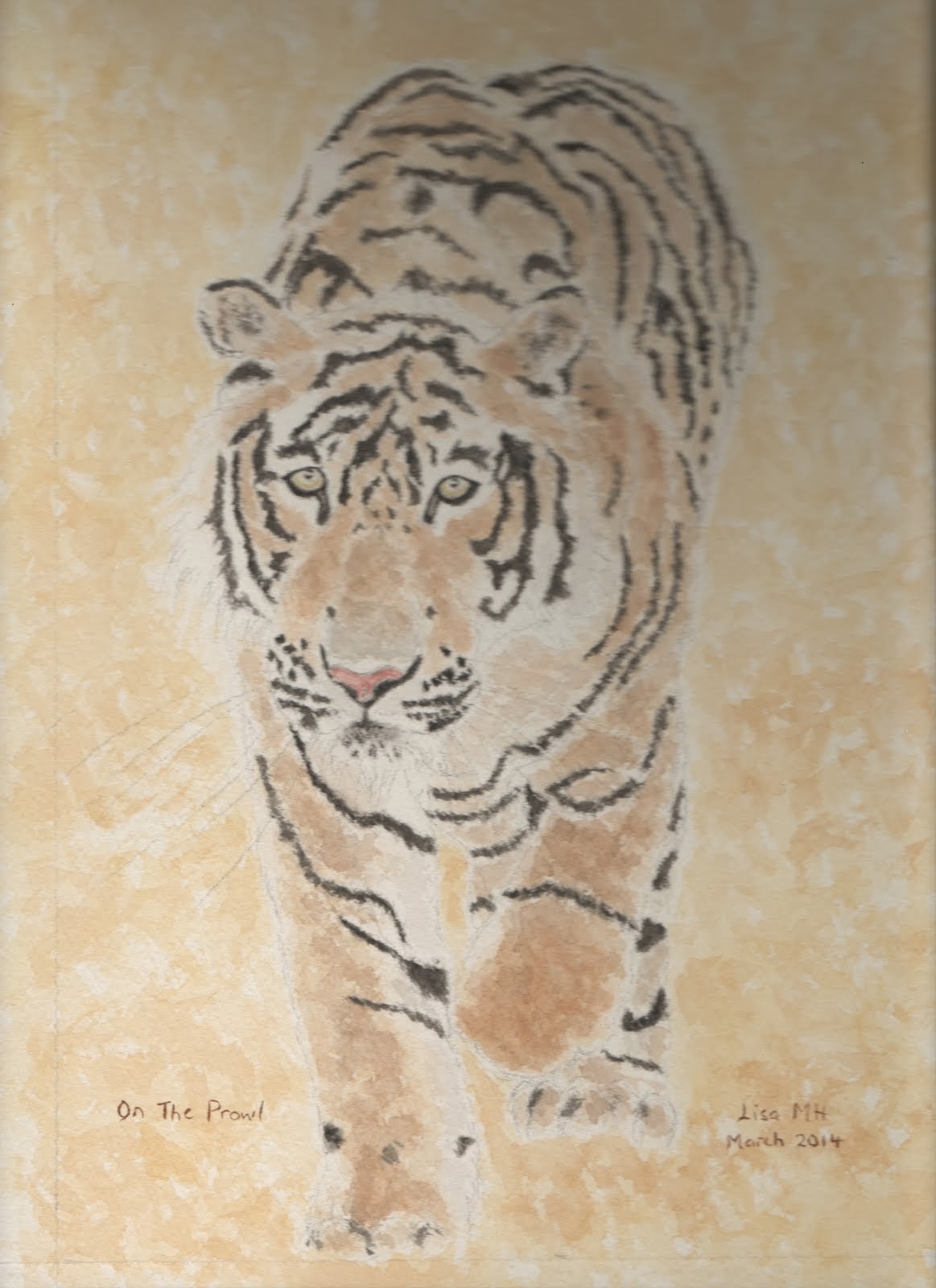
On The Prowl

On The Prowl
Watercolour tiger

Quotes Quota

"What saves a man is to take a step. Then another step."

"There are far, far better things ahead than any we leave behind."

C S Lewis