
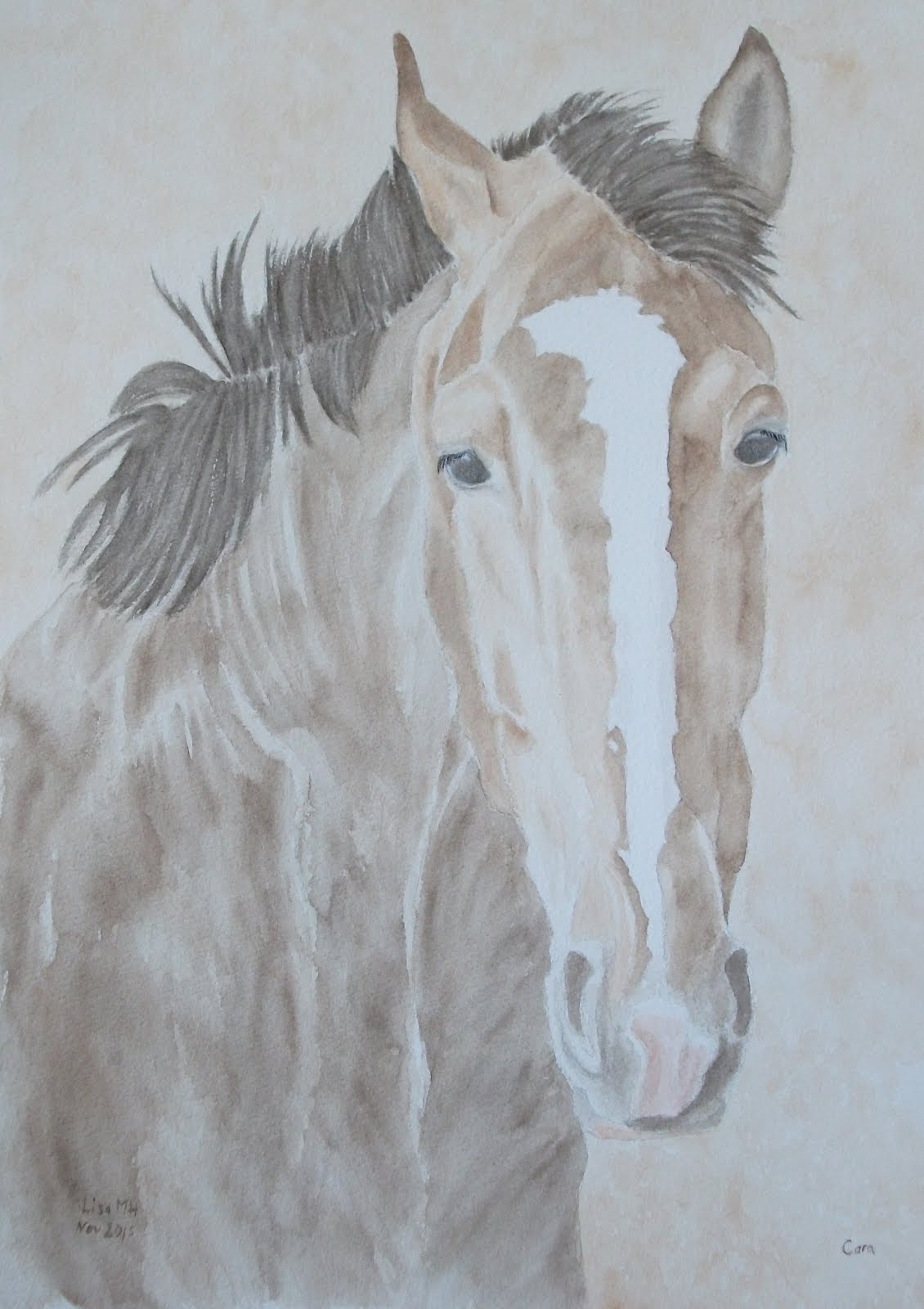


"My argument against God was that the universe seemed so cruel and unjust. But how had I got this idea of just and unjust? A man does not call a line crooked unless he has some idea of a straight line. What was I comparing this universe with when I called it unjust?" C S Lewis
I do love Lewis, despite not being a Christian myself.
As to his quote, I do this all the time (mostly now in other areas of my life), and it always leaves me feeling frustrated, conflicted, and out of synch with myself and God. And where do I get my ideas? From other people: and not just non-autistic people (who are my default guides to how to live a 'better' life), but also from people who are as out of step with God (or even more so) as I am. The blind leading the blind, indeed.
I compare my "universe" with other peoples', which only serves to confirm my beliefs about myself - that I'm not doing well enough; that I should try harder; that I'd be happy if I did it someone else's way, blah blah blah.
Take, for example, my obsession with the idea of the need for discipline, and more productivity. My personality, my wiring, does not lend itself to consistency - I am, by nature, erratic. I get enthusiastic about something, and want to do it all the time (right now I'm really into posting these quotes - it'll pass, unfortunately). But then, after a while, I lose interest and move on to the next thing (told you it'll pass).
But rather than accepting this about myself, going with the ebb and flow (no-one ever mentions the ebb), trusting that I'll always return to the things which really are my special interests (like writing, and art), and that this is God directing me, instead I compare myself to those people who propagate the idea of self-determination (some of them even talk about "setting an intention" to do something, which makes it sound quite spiritual, but which, on careful examination, often looks suspiciously like self-will to me); who elevate and seem almost to worship the ideas of daily discipline, productivity, and consistency.
Yet I fail, every time, to live up to these expectations and ideas - ideas which seem to be universally accepted as being the blueprint for a happy, successful, and fulfilling life. So, of course, for those of us who fail to follow these guidelines, the natural assumption is that our unhappiness, etc is because we aren't following them, and trying harder to walk this path is the only way to to achieve these goals, and get what we want.
And therein lies my other source of conflict - my relationship with God. As I understand it, I get a choice to either follow God's guidance, or my own; to ask Him/Her/It to direct my life and my thinking (this is where inspiration comes from), or to think for myself (which basically means following other people, because I'm relying on my limited stock of acquired information, nearly all of which originates from them; and which also incorporates my wobbly autistic interpretation of said ideas). So what I want, or think I want (if I even have half an inkling, which I mostly don't), is not necessarily what I need, or what God wants for me.
To me, therefore, if I'm following God, then me deciding what I want to do is in direct opposition to this. The minute I decide I want to be more productive, or more organised, I fall back on my default, narrow-minded understanding of what this means (the one that I have picked up from other people, and which always involves a plan of some sort, even if it's just a mental decision to write or paint every day, for example), and therefore take back control of directing my own life again, rather than turning it over to God to guide me throughout the day.
Being rigid in nature makes it impossible for me to shift focus between any plan for the day that I've made, and trying to let God direct me. Following the plan becomes my obsession.
Along with that, my black or white viewpoint also impedes my ability to see that there might be any alternative interpretations - that there isn't just one way to manifest organisation, productivity, consistency, etc. As my friend Dee frequently jokes, I am actually consistent - consistently inconsistent; I'm also reliably unreliable; and even chaotically organised.
Yet I laugh these things off, and view them as qualities which need to be overcome, because the bar against which I am measuring them is one created by a society which is primarily obsessed with efficiency, productivity, and keeping people under control, and doesn't really allow for creative alternatives. Things which God isn't interested in at all. S/He doesn't want to control me; S/He doesn't want me to follow the crowd. S/He wants me to be free.
So the assumption that the reason I can't find happiness, peace, and fulfilment is because I'm failing to try harder to follow the path laid out by other people, is wrong. The reason I can't find those things is because their path is the wrong one for me: it's too narrow, and it literally leads to unhappiness. Yet I keep insisting on trying to walk down it. And God won't walk down it with me. So there goes my peace, happiness, freedom, and fulfilment, waving to me as I walk away from Him, once again.
Showing posts with label Individuality. Show all posts
Showing posts with label Individuality. Show all posts
05 August 2017
01 February 2016
Higher Learning
“Knowledge without wisdom is like man without a faith - a self-propelled disaster waiting to happen.” Lisa M H
Yes, that’s me - the self-propelled disaster area, not waiting to happen, but in a constant state of happening.
Which idiot is it who said that “knowledge is power”? Had they never heard that “ignorance is bliss”? Do they not know that the ‘wrong’ knowledge in the ‘wrong’ hands (or minds, to be literally precise) can be a total liability, causing great harm? And not just to other people - there’s the stress you can inflict upon yourself just from having an insatiable need to know, without being discriminating about what knowledge you seek, and why you pursue it.
Perhaps the originator of the phrase “curiosity killed the cat” knew this, and was being intentionally vague because he thought it might scare the arse off of people if he actually reported that “curiosity killed my Uncle Horace, who read one too many medical articles about how stress could contribute to a heart condition, and promptly died from a heart attack brought on by the stress he experienced as a result of continually reading such depressing news.” Plus, it’s not quite as catchy as the cat version.
Which brings me, inevitably, back to me - the self-exploding, knowledge-seeking missile; who, had I been a cat, would have lost all nine lives within minutes of learning how to walk.
I like to think of myself as a seeker of knowledge and truth: which makes it sound terribly noble and worthy, as if I’m on some kind of crusade, searching for a latter-day version of the Holy Grail - information. I should be wearing armour, a cape, and bearing arms. I think a horse might be a bit too much, though: I hardly have enough room for a cat.
The problem is that I’m not very discerning about the knowledge I seek, or what its impact on me might be. I am a human hoover - I mainly suck up crap. And why should I be surprised by this when I am a hoarder by nature?
Random ideas pop into my head, about which I am absolutely convinced I need to know more (preferably right now, or I will expire on the spot): and off I go, back onto the internet - the Font of all Knowledge (dubious as it frequently is). My true quest, it seems, is to find a legitimate reason for being on the web. Again. *Sigh* God, at this rate I’ll soon be overtaking the amount of time the Crusaders spent battling in the Holy Land. Can’t I find another quest?
So, my latest ‘quest’ (which basically means I got distracted by a thought, and have since been in obsessive pursuit) has been for self-education. Again. I say “again” because I have a series of interchangeable ‘interests’ , with which I become engrossed (to put it mildly - I think the more appropriate terminology is obsessed, or hyper-focused), and repeatedly return to, ad infinitum. My forays into the realm of academia have become a regular highlight, especially since I discovered the world of free, on-line learning resources.
“Oh joy! Finally, a valid reason for going on the internet.” Er, not. “But why? WHY?!!!!! Why can’t I, when everybody else can?! It’s not fair!!!! I LOOOOOOOOOVE learning! And EVERYBODY says learning is a good thing - a means to self-improvement. It makes you a more interesting, well-rounded person. And it’s good for your brain - stops it from atrophying, and improves your memory. I’ll miss out on all of those benefits. It has to be good for me!”
This is what the knowledge I’ve acquired from other people tells me: people I know nothing about, other than what they choose to share on their sites - and even then I cannot get a read on them, or determine whether I’m meant to take what they say literally, due to the minor issue of my being autistic (impaired social understanding, anyone?). Which brings us to the fact that most of these people writing this stuff aren’t autistic, so they’re not writing it for me: I just think they are.
But the wisdom of my repeated experience (repeated ad nauseam because I repeatedly ignore it) tells me that I don’t do well with academic learning; that I’ve already found my calling, which is for writing and art, for which I already have everything I need within me - I don’t need to keep looking for “what I want to be when I grow up” (I’m nearly fifty, for God’s sake: I could drop down dead tomorrow, and then it’d be a bit late for that!), or just looking for more.
And then there’s the fact that it’s passive - I don’t actually do anything, neither whilst learning, nor with the knowledge I acquire, other than let it wash over me, and hopefully retain some of it (or not, since most of it goes over the top of my head anyway, for one reason or another - distraction and boredom being the two main culprits). It just becomes another obsession with which to bore myself, and any other poor sod who’s unlucky enough to gravitate within my orbit at the time, until it fizzles out and I move on to the next thing that grabs my attention. “Oh joy.” *Sigh*
But the real irony is that, despite apparently being extremely intelligent, I struggled with learning at school (other than English, for which I have a natural affinity), mostly due to a mixture of anxiety, easy distractibility and loss of interest, and just plain confusion about the subjects I was learning: they didn’t fit within the context of my life, other than as an abstract means to an end - that of passing exams in order to secure either a ticket into higher education, or a good job.
And I don’t do abstract. Nor do I do the formal model of education, or learning, but still I ignore my inner wisdom and keep on trying to fit myself into a round hole when I’m most definitely an alternatively-shaped peg.
So I guess it’s not what you know, but what you do with what you know. Or what you don’t do with what you know. Or even what you do with what you don’t know. Or what you do when you don’t know. The possibilities, it seems, are endless… like this paragraph.
And I guess that’s why we refer to the wisdom of Solomon, not the knowledge.

03 November 2014
A Secondhand Life
You may have noticed that I like quoting other people in my blog. More often than not, I’ll stick a quote, or two, at the top of the page, and away I go. Sometimes I use it as the starting point, the source of inspiration for what I write: other times it’s like an affirmation of the point I’ve been trying to make.
Until now I’ve not given much thought to why I do it: I’ve just assumed it’s a good thing, to be able to memorise and then recite things that I’ve read. I’ve seen it as a sign of intelligence, good memory, and learning. And I’ve always admired people who can do it; been in awe of those able to spout forth the words of wisdom of others. Of course, this idea kind of gets blown out of the water when you consider that you can teach a parrot to quote.
Now, I’m not saying that quoting is a bad thing, though only being able to parrot words that you’ve learnt is not really very helpful; being able to use quotes in the right context, understanding what the author meant by them, is a step up. But, as I’ve recently realised, for me there’s something else going on as well when I use them.
It’s as if my own words are not enough, like I don’t believe that they carry any weight compared to other peoples’, even if it happens that I am speaking from experience, and they are simply imparting academic knowledge (an example being that of autism, and the precedence I give to the words of those non-autistic ‘professionals’ and ‘experts’ in the field. If my experience doesn’t match up with what they say, then I discount my experience - or I try to bend it to fit into the autistic-shaped hole that they’ve carved out).
It wouldn’t be so bad if I confined my use of them to my blog. But the fact is that I liberally pepper my speech with other peoples’ words, in preference to coming up with something original of my own. I reference things I’ve read, usually with the words, “It’s like (insert name here) says in (insert name of book or other source material here) …”, which I’ve now become aware produces the unfortunate result of isolating me from myself, and keeping everything in a state of abstraction - i.e. it all stays in my head, and never touches my heart. I end up building a life for myself based on my dodgy understanding of someone else’s beliefs (and not just one, but lots of someone else’s). So it’s yet another bloody form of copying - I just can’t seem to get away from wanting to follow the herd!
And it isn’t as if I can’t think for myself - this whole blog is a testament to the fact that I have plenty of my own opinions and words to share. I just seem to be filled with such a level of self-doubt that I feel the need to have to refer back to someone else’s interpretation, or experience, rather than trusting my own, and utilising my own words. I constantly question my own judgement and understanding; and, believing that it’s not quite enough, not quite right, seek to validate it - hence the ubiquitous quotes.
No wonder it takes me so long to get going with writing or art - my brain is fast asleep, and has to be resuscitated first.
So, in an attempt to divest myself of this habit/trait, I have put aside for the next three months some of the books which I reference frequently, and which are responsible for colouring and shaping a great many of my beliefs and opinions. Hopefully, not having them to re-read (which reinforces and concretises them in my mind) will lead to me thinking more for myself, and coming up with original ideas, rather than simply dipping into the bottomless pit of my memory. I think it’s time to give that area of my brain a rest - it’s been shockingly overused, while the rest is in a state of semi-retirement.
No wonder it takes me so long to get going with writing or art - my brain is fast asleep, and has to be resuscitated first.
01 October 2014
The Declutter Bug
“The ability to simplify means to eliminate the unnecessary so that the necessary may speak.” Hans Hoffman
I’ve been decluttering for the past week or so (I’ve kind of lost track of time, as I am wont to do when I get locked onto one of my little ‘projects’). I say “been”, but the fact is I’m still in the midst of doing it, though it has calmed down to a trickle rather than the flood I had going on last week. But, even though I had the physical evidence as proof of the extensive clear-out (a massive pile of bags, boxes, and random large items, all carted off to the charity shop), my home doesn’t look that much different. In fact, if you were to see the state of it, you’d maybe wonder whether I was being delusional, and a tad optimistic: it looks more like I’ve been doing the opposite, what with the chaos that abounds, kind of like the aftermath of a mini tornado.
So what has it taught me? Well, apart from the obvious, which is that I hoard things (even though I hate doing it), my approach to the process of clearing out has been an illustration of certain of my ADHD, and autistic, traits running rampant.
Of course, I never meant for it to be - I had every intention of approaching it like a sensible, neurotypical person would, the way I’d read about it on the internet (of course I ‘had to’ go and read about it first, and then keep returning in order to re-motivate myself. Nothing at all to do with getting distracted by being on the internet… not much). It’s a wonder I actually managed to get anything decluttered at all. And it’s why it has taken me so long - ‘cos I don’t really have that much stuff, nor that much space. I live in a small, one-bedroomed flat. But there we go.
So I started off in typical fashion - not accepting that, as someone with ADHD and autism, reading about something that is actually very simple was a bad idea, especially given that it was being espoused by a lot of non-autistics/ADHDers; only to find myself, once again, comparing myself to them, and using them as my template.
And I discovered that, for something so simple, there were a lot of variations, and an enormous amount of blogs/sites out there dedicated to the art of decluttering/living simply/minimalism. I guess when you’re making a living out of it you’d have to stretch it out, otherwise you’d have nothing to write about on your blog (or in your book/s). It’s kind of ironic that we apparently need a book, or a blog, full of instructions on how to live simply. But hey, I’m dumb (and willing enough) to buy the idea.
Of course, when I set out I didn’t really make a decision at all. I just sort of fell into it, with the desire/need to empty out and get rid of a set of drawers, which I duly did: and then it simply escalated - as these things have a tendency to do with me. I kept making vague murmurings about needing to slow down, focus on one bit at a time, and not move onto another area until I’d completed that. But, in true ADHD fashion, I ended up starting in one place, becoming overwhelmed, being distracted by thoughts about what needed doing elsewhere, losing interest in what I was doing, and abandoning it to go start somewhere else, ad infinitum…
Hence I’m now sitting in a flat in a state of semi-completion, with smaller piles of unsorted clutter in each room - but, still, piles all the same. I’m beginning to think I might be allergic to order and tidiness, because I never quite get there (‘there’, I think, being a kind of utopian state where everything has a place, and it’s always in its place). Or I do, but it only lasts for about sixty seconds. Or I get one bit, or most of it, done, but never quite finish it (I have a problem finishing things in general - and starting them. But I’m okay with the bit in the middle).
It’s as if I see the finish line, where the spectre of neatness stretches out in front of me like an endless desert (a bit like an extreme minimalist’s home), and then I seemingly panic and baulk at running through the tape. I don’t know whether my mind subconsciously worries about what I’m going to do if I haven’t got anything to distract me, and so basically sabotages it all; or whether it’s as simple as me needing to accept that I’m a bit of an untidy person, that it’s a character trait of mine, but as long as I don’t end up hoarding, and let it get overwhelming, it’s okay. It’s not life-threatening (I’m not going to die from chronic untidiness), and it doesn’t make me a ‘bad’ person.
I’ve been chasing after the illusion of wanting to be a neat person for years, and so far it’s eluded me. That’s a lot of years. Perhaps if I stopped chasing it, my own version of order and tidiness might come to me. After all, there isn’t only one way to be ordered - there are those people who find order in chaos, or enjoy creating order from chaos - perhaps I’m one of those, and I should stop trying to obliterate what might be an essential part of my personality.
When I was on my web-trawl (doing my ‘research’ on decluttering) I saw a photo of Steve Jobs’ office, and it could only be described as looking rather messy and chaotic - and yet he created, and managed, Apple. Obviously to him his ‘chaos’ was inspiring rather than distracting, and he looked to create order and simplicity in the computers he built, rather than in his environment. Just think if he’d done what I do, and spent his time worrying about the fact that his room was untidy, and how to go about decluttering it - his Apple tree would still be a sapling, and never have grown enough to bear fruit.
“Keep It Simple”
“To each their own”, as they say. Now, if I could only stop trying to follow everyone else’s…
19 February 2014
The Meaning Of Life
“You must be the change you wish to see in the world.” Mahatma Gandhi
If it’s the case that everyone on the planet is different, a distinct entity, each with their own unique combination of characteristics, interests, and skills (not to mention physiological make-up), then why is it that “the world” insists on treating us all alike, trying to enforce on us a generic, societal norm to which we are expected to conform?
I have often noted how there appears to be a pattern to life that we are expected to comply with - it’s subtle, for the most part, but it’s there. No-one states it outright - the government doesn’t announce that we’re being herded and penned in like sheep where they want us to be, but that’s what seems to be happening.
Think about it - we’re born, and for a little while at the beginning we’re free. But then we’re expected to be sent to school, and suddenly our lives are no longer our own anymore, ‘cos here is where we will be both ‘socialised’ and ‘formally’ educated in the topics and manner that someone else far removed from us dictates is appropriate (our parents have very little say in this, once they agree to turn us over to the education system), with the end goal being that we shall, hopefully, be moulded into useful citizens who will conform and contribute to society.
Which basically means that our main objective in life will be expected to be working and making money - who gives a shit if you’re happy while you’re doing it? Hell, everybody knows that having money makes you happy. Don’t they? Well, that’s what ‘the world’ would expect us to believe anyway, it seems. Must be, since there’s so much emphasis placed on it.
Along with making money goes the expectation that we shall want to find a romantic partner in order that we may settle down some day (kind of like sediment) and have a family, for whom we will have to provide, thus keeping alive the incentive for working, and directing our focus on the continued need to make money. And, of course, since we have the equipment for making babies, then it’s assumed that we will naturally want to use it for that purpose at some point. If not, then there’s something obviously ‘wrong’ with us (as if there weren’t already enough things ‘wrong’ with me already!)
Then we head into retirement, the time that we expect to be able to finally take it easy, stop chasing the money, and hopefully be able to do all those things that we weren’t able to do previously because we were too busy having to focus on making a living in order to live. And, hopefully, of course, by now we’ve made enough to do those things.
Except that we might well find that by this time we’ve lost the energy, enthusiasm, motivation, and physical ability to do a lot of what we dreamed of doing, having been sucked dry by the stress and general wear and tear of daily life. Plus, of course, some of us may well have dropped down dead before then, which kind of puts the kibosh on any such plans. So retirement literally becomes a time when we’re put out to pasture, like an old horse, for whom there’s very little use any more. Gee, sounds great. I can’t wait.
I understand now why, for almost the whole of the first thirty years of my life, I felt a deep sense of melancholy and gloom, having this as my invisible blueprint for what was expected of me in order to be considered a success in life, and to achieve happiness.
One aspect in particular to which I have been giving a lot of thought (that means obsessing) in recent weeks is school. Do you realise that you don’t actually have to go to school; that you can legally opt out? I didn’t know that, until now. All those years I laboured under the illusion that I had no choice: it was either attend school, or get into trouble for truancy. God, was I pissed off when I found out!
Sure, I’d vaguely heard about homeschooling, where, if you’re lucky, you get to be taught at home by either your parents or a private tutor. But still, you follow the curriculum set by the education department, and you take exams.
I also recently found out that there are ‘alternative’ schools (like the Steiner Waldorf system), which place their emphasis on the needs of the individual pupil, rather than the institution, and which follow their own curriculum, giving equal importance to creative endeavours (like art, drama, dance, etc) as well as to the academic; as well as to the needs of the whole person. Where were these people when I needed them?!
And from there I discovered unschooling, a movement dedicated to not forcing education on your child at all, but to allowing the natural process of learning to take place. In unschooling parents don’t dictate what ‘should’ be learnt, but rather allow their children to decide what they would like to learn, based on their interests and abilities. Nor are they expected to prove their understanding by jumping through the hoop of exams, being tested like a bloody piece of machinery before it’s allowed off the factory line and sent off to be sold.
I was astonished. I was dumbfounded. I was envious. God, I wish my parents had known about that stuff when I was a child. Instead of which I had to endure the agony, the monotony and tedium, not to mention the chronic anxiety directly related to being shoved through an average, non-creative education system, which did a grand job of sucking the soul (both creative and otherwise) out of me and my artistic aspirations.
I went in there with a mind and body bursting with energy and ideas, but a lack of direction (mainly courtesy of having unrecognised ADHD). I came out subdued, lifeless, full of anxiety and fear about the future, and with hardly a thought to call my own, so well-indoctrinated had I been. But hey!, I’d got the qualifications to get myself a job as some kind of clerical worker/typist. Wow! Dizzy heights, I know. What a lot to look forward to, a lifetime of being trapped in an office, with people.
I’d had all of my dreams of being a writer, an artist, an athlete dismantled. All gone by the wayside, all considered to be simply unrealistic daydreams, fantasies, the luxury of people with the money and time to indulge in them. Childish. Unattainable. Out of my league. Considered back then to be ‘hobbies’, and not something you could make a living from: not ‘real’ work.
No, real work is the stuff that you do to make money; that makes you miserable; that isn’t supposed to be enjoyable; that you’re glad is over by the end of the day (like school). If you’re enjoying it then you must be doing something wrong.
And because I couldn’t use them as a means to make a living, they quickly fell by the wayside, and I stopped doing them altogether once I left education (an autistic trait, I believe - seeing no reason to do something unless it has an end purpose: mere enjoyment is not enough).
So why would God make us all uniquely individual, bestow on us widely differing gifts and talents, and then expect us to cast them aside in favour of having to learn and master the same things (egs maths, science, computers/IT, languages), thus turning us into mass-produced automatons? I guess the answer to that is that S/He doesn’t - man does that.
Imagine all those remarkable people who have lived unique and highly creative lives, not conforming to the ‘norm’, who have produced so much incredible stuff. How would our world look now if they’d all been forced to go through an education system designed to make them conform, and to remove their individuality? If they’d been forced to live an ‘average’ life, making worldly goods and achievements their goals? Doesn’t bear thinking about really, does it? We’d still be living in the dark ages - literally, ‘cos no-one would have had the foresight to use their imagination to come up with the concept of electricity.
We’d all still be relying on the sun, living in caves, chasing wild animals, and procreating. Mind you, sounds preferable to the life of an ‘average’ person now - living in a shoebox-sized home, with paper-thin walls, and crammed like sardines in a tin; and working in a shoebox-sized office, with paper-thin or no walls at all, crammed in like sardines. And people wonder why we have so many health problems when we live such an unnatural existence. Are they mad?
Subscribe to:
Posts (Atom)
Snow Leopard

An experiment in watercolour and gouache
Love

Copied from photograph of the same name by Roberto Dutesco
On The Prowl
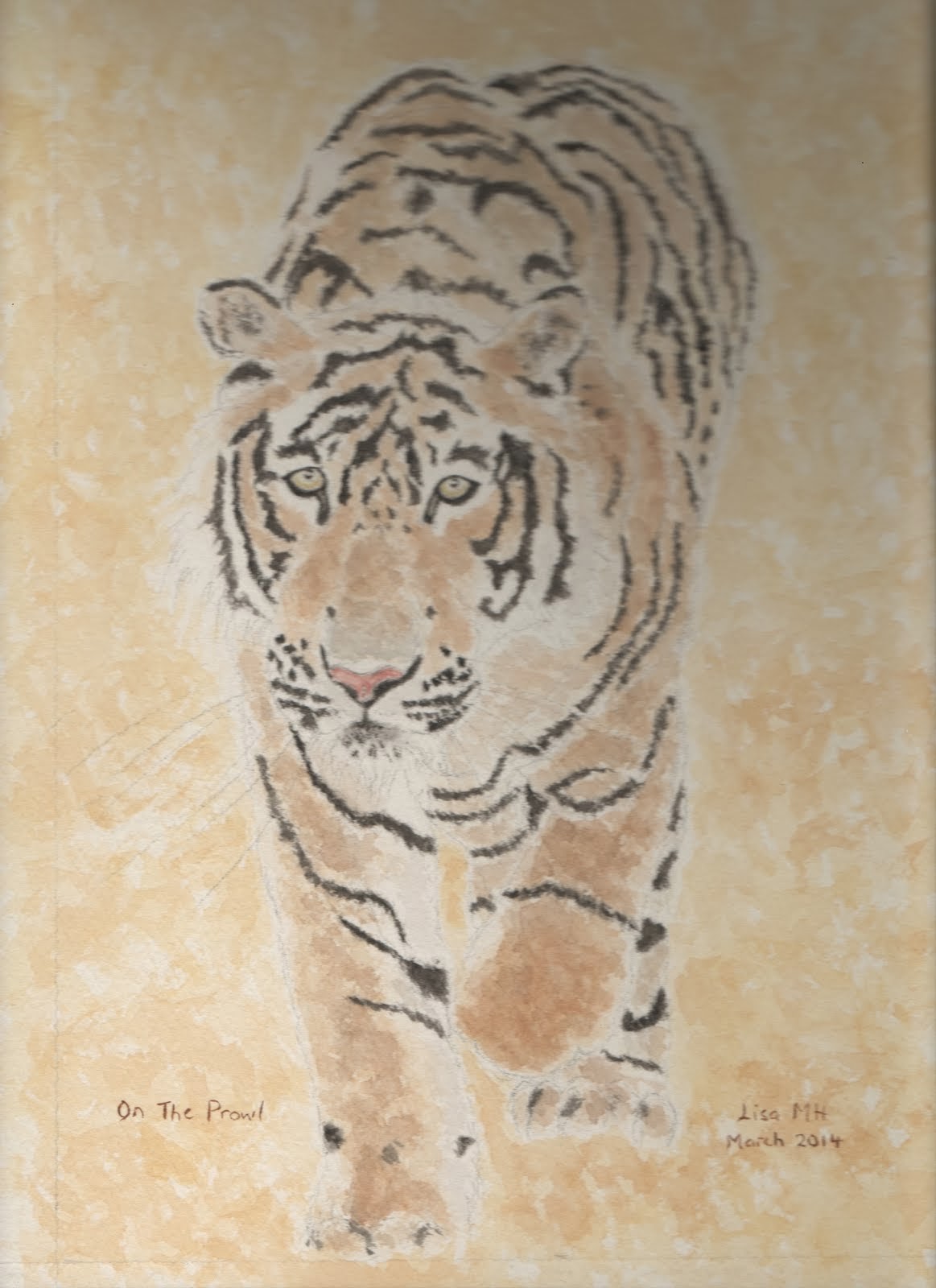
Watercolour tiger


