Feline Focus

Feline Focus
My latest puma, July 2016

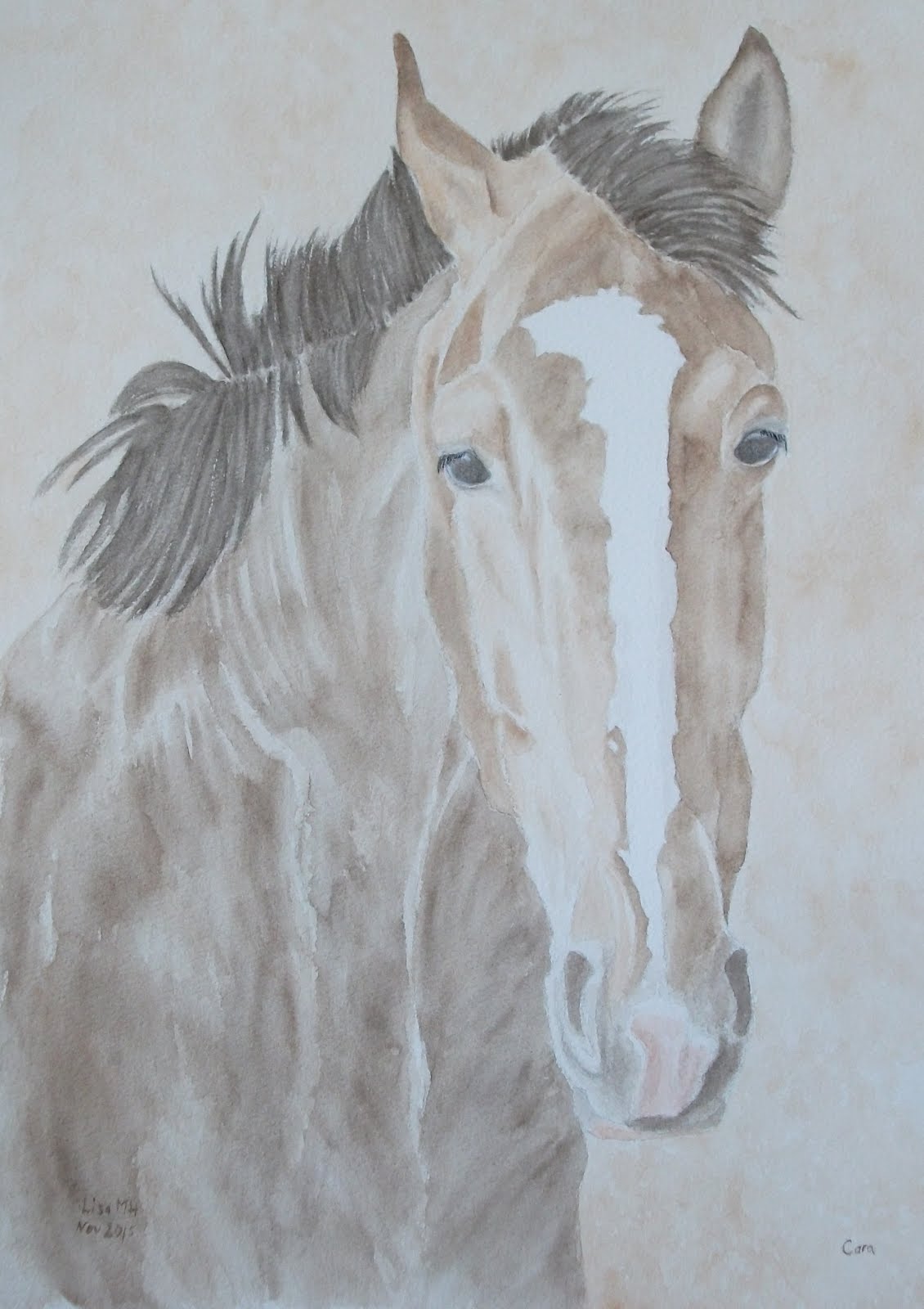
Carra

Carra
Beloved companion to Sarah, Nov 2015

Window To The Soul

Window To The Soul
Watercolour Horse, June 2015

Sleeping Beauties

Sleeping Beauties
Watercolour Lionesses, Nov 2012

QUOTES QUOTA

"Outside of a dog, a book is man's best friend. Inside of a dog it's too dark to read."

"Those are my principles, and if you don't like them... well, I have others."

Groucho Marx


Snow Stalker

Snow Stalker
Another snow leopard - my latest watercolour offering - July 2013

29 October 2012

Colour Blind?


There is a certain irony to the fact that, as someone who tends to view things as either black or white, I happen to love colour.  But then you might find it difficult to believe if you saw the way I dress.  I have turned into a monk: that is, I wear rather a lot of brown (or, to pinch a quote from Eddie Izzard, “Brown, brown, fuckin’ brown.”)  And black.  And blue.  The three B’s.  Could be I chose them subconsciously because of the symmetry of them all beginning with the same letter. 

Or maybe it’s just because I have all the fashion sense of a seaside donkey:  I am, after all, the woman who once owned, and adored, a bright salmon-pink, velour, sweatshirt.  Perhaps I was just being rebellious?  A shame I couldn’t do it with a bit more style.  Or even a modicum of taste.  Or the excuse that I really am colour-blind, and I mistook it for an autumnal rust colour.

But no.  The fact of the matter is I’m damned if I know why I did choose them, other than that they appear to be the easiest colours to co-ordinate, so that even I, surely, can’t possibly make them clash.  Or maybe it’s because, as a child, I was instilled with the idea from my dad that brown was ‘my colour’, because of my colouring – I’m a redhead, with pale, creamy-coloured skin, masses of freckles, and dark blue eyes.  Just screams out “brown!” to you, when you put it like that, doesn’t it? 

Well I guess it does if you’ve got no imagination, no colour sense, and you just want to make it easier for yourself when it comes to buying clothing for presents at Christmas and birthdays - which basically describes my dad.  So, I’d get brown, and my sister would get black.  For some reason, only apparent to him, this was the colour that he decided suited her because she was a rosy-cheeked blonde.  Lucky her!

Also, I didn’t just get to wear brown, but live in it.  Yes, my dad’s incredible taste extended to our surroundings, too.  So we had magnolia walls, white paintwork, and carpets in various shades of brown: one of which had a startlingly loud geometric pattern that demanded to be noticed above all else in the room – which it inevitably was.  At least, I couldn’t keep my eyes off of it, and it gave me something to stare at when there was nothing remotely interesting to watch on television.  

Funny thing is it would probably be considered the height of fashion now, since brown and neutral shades all seem to be the rage.  Though I don’t think that carpet would ever be considered stylish or in vogue, not even at the time that he bought it.  Someone was probably taking the piss when they sold it to him.  Whoever designed it was probably pissed when they came up with the idea.  Or stoned, and still living in the seventies.

So, having been raised in the land of bland, I took a decided disliking to anything remotely resembling beige, white, or brown, when it came to decor.  Which is rather fortunate since my own first home happened to be fully decorated and carpeted (a real blessing, as I hadn’t got a clue how you went about doing such things): and, apart from the kitchen, which had cream walls and a brown carpet, the rest of it was a mixture of pale greens, pinks, blues, and a splash of lilac on the wallpaper in the bathroom.  I thought I’d died and gone to heaven!  I’d never seen so much colour, and with matching carpets too. 

And it made it so light and airy, another thing that had always been missing in the houses I’d lived in with my dad.  It made it almost impossible to ever feel cheerful, inhabiting such gloomy surroundings.  Not to mention the lack of light.  And the ever-increasing piles of useless crap that my dad hoarded, which seemed to take on a life of their own like some living entity, taking over the house, and encroaching on our living space so that there was hardly room to breathe, let alone move about. 

He was a true autistic, unable to resist collecting anything that he thought might come in useful, and unable to throw anything away.  And, unfortunately for us, he had the autistic’s lack of judgement and common sense, being unable to determine what constituted useful or important enough to keep.  So he kept it all, “Just in case.”  (There’s a film called ‘Mozart and the Whale’, which is based on the true story of two Aspergers trying to have a relationship with each other, and the male lives in exactly the kind of home that we had – the film’s depiction is not an exaggeration!)

By the time I moved on to my next home it was time to develop my own taste, as I now had to decorate from scratch.  And so I came up with the idea that I wanted my surroundings to resemble something Mediterranean – all yellows, burnt oranges, sea-blues and greens, and the like.  Just no white, even though it is rather a predominant colour in that region (but hey, this was my idea of Mediterranean, so it was bound to stray from authenticity, and be a bit of a confused jumble).  I’d become obsessed with the area after reading ‘A Year In Provence’ by Peter Mayle, and then developing a special interest in Italian football.  Doesn’t take much, does it? 

In the end I got my dream colour scheme – every room painted in the same colours to give a sense of flow (another thing I’d always wanted).  And I liked it so much I brought the same ideas to my third, and present, home, complemented by a beautiful copper-coloured carpet that also extends throughout the flat.  All a far cry from what I was raised in: and, for a long time, beyond the scope of my imagination, not to mention my practical capabilities, which were nil until my best friend taught me how to decorate, and develop my home-making skills.  I have a LOT to thank her for.

Like now, with the clothes.  Yes, it’s her fault that I am currently contemplating the contents of my wardrobe with a mixture of disdain and bewilderment.  Or disdainful bewilderment.  Or even bewildered disdain.  Take your pick.

How, I ask myself, have I ended up wearing such drab attire?  When did I start dressing in compliance with my dad’s idea of what suits me?  Why do I insist on wanting to follow the crowd, and conform to some unwritten dress code, especially when I don’t need to anymore?  I have to say I seem to have a thing about uniforms.  I really loved my school uniform, which was navy blue and white, my favourite combination.  I especially loved my PE kit, which probably explains why I now spend a predominant amount of time wearing my yoga gear, especially the bottoms.  It appears I still haven’t left school behind me – and I haven’t been anywhere near it for well over twenty years.  And I wonder why they say autistics have difficulty with change.

Of course I wouldn’t be making such radical changes to my wardrobe were it not for my aforementioned friend’s helpful input – not to mention her initial, inspirational, instigative comments along the lines of, “You look drab.  Your clothes are boring and uninspiring.  The colours are awful.  They don’t do anything for you at all.” 

(I must point out at this juncture that, despite how it sounds, my friend is not one of those people who go around offering their unsolicited opinion and advice willy-nilly, blundering forth like an elephant on the rampage, without stopping to consider the ramifications of what she might be about to say.  Nope, that description best suits me.  What she is is honest and straightforward, a necessity for autistics if you want us to “get” what you’re trying to tell us.  There’s no point speaking in code, or hinting at me: I’ll just completely miss the point, and possibly end up taking offence (which I still often do even with the direct approach – nothing’s fool-proof).  This is one of the reasons I like her.  I asked, she answered.  ‘Nuff said.

Which is why I am now the proud owner and wearer (not all at once, mind) of nine (of course nine – one for each day of the week, and two “just in case”) new,ethnic-style tops, in a multitude of bright (but not clashingly so) colours, all of which complement my colouring, and express more truly who I am.  Or who I’m discovering myself to be.  Yet another reason for changing the way I dress. 

I’ve been a yogi for nearly ten years now and I am, in my soul, a gentle, peaceful, sappy, alternative, free-thinking, independent, artistic individual – who still wears combat trousers and big CAT boots, has a hankering for military-style clothing, and sports gear, all left over from my days of being in conflict with myself (especially hated being female), and the rest of the world, from whom I thought I needed to learn to defend myself.  And who would rather have learned martial arts than yoga, thanks all the same.  Not for me all that peace-loving, hippyesque wussiness, and standing around pretending to be a tree.

So it’s perhaps a little long overdue that the outside of me should begin to reflect the inside.  After all, it’s not like people haven’t known for years that I’m really a bit of a sensitive soul, and not the mindlessly combative moron that I’ve ended up trying to emulate and project.  The only person not aware of it has been me.  But then I’m always the last to know.

And, as my friend pointed out when I mentioned that I really love the beautiful orange and red colours that the Dalai Lama and his Tibetan monks all wear, he probably doesn’t keep a set of combat gear in his wardrobe for times when he doesn’t feel so calm and spiritual, and wants to have “a day off”.  Which is, essentially, what I’m trying to do.  I’m dressing two different people.  Is it any wonder I don’t know who I am half the time?  I just can’t decide who I want to be.  And they say yoga is about uniting the whole person.  Guess I’ve still got a lot of work to do there, then. 

But now, at least, I can do it in style and bright colours, so I might cheer up a bit about the whole business.  No more Eeyore grey for me.  At least, not on the top half.  I’ve had to temporarily bring a halt to my wardrobe renaissance, on account of a lack of finances, and poor planning.  But fear not, the bottom will catch up one day, and then I really will be a whole person.  But for now I shall have to remain half and half – the Combat Yogi of Misterton.  


P.S.  You may have noticed that there are rather a lot of links in this piece.  Yes, I have discovered the LINK button, and have, of course, gone rather berserk.  Fear not, I'll calm down when I find something else more exciting to take its place.  But for now you'll have to put up with "The Links Effect"!

18 September 2012

The Trick Is To Keep Breathing


“If you don’t go within, you go without.”
From ‘Conversations With God’ by Neale Donald Walsch

“God is in every breath.”

It’s remarkable how I can completely miss the obvious.  I astound myself sometimes, I really do.  I’d bypass the point even if my life depended on it.  Take breathing, for instance...

The first thing I learned in yoga was how to breathe properly.  And the first thing I forgot was how to breathe properly.  Phenomenal, isn’t it, what an autistic mind can misplace when left to its own devices?  And that, unfortunately, is what I was left to – to try to learn yoga by myself, with only the aid of a book for me to work through and attempt to understand, and no-one to keep reminding me of the salient points: like the need to focus on the breath.

So of course, once I’d read the section on breathing, I promptly forgot most of it in my excitement and impatience to move on to what I viewed as the REALLY important bits – the asanas (that’s postures or poses to you non-yogis).  Plus, I probably knew that trying to rein in my mind to pay attention to what I was doing was going to be a bugger, so I conveniently consigned that part to the ‘inconsequential’ pile, possibly to be attempted at a later date – when I was able to focus better.  Yes, I imagined that simply doing yoga postures, without specifically practicing concentrating on the breath or on what my body was doing, would somehow miraculously teach me how to focus - whilst I continued to let my mind wander wherever it wanted.  This is what I call the autistic version of multi-tasking: I appear to be able to do two things simultaneously, but one of them is suffering badly from a lack of attention – and it isn’t the thinking.

At this point in the proceedings (just over nine years ago) I hadn’t yet discovered that I was autistic, or had ADHD to explain the decided lack of anything resembling an attention span.  But when I did find out, I came to the erroneous conclusion that this explained why I hadn’t been able to attain any measure of control over my mind (thereby completely circumventing the fact that I actually hadn’t tried very hard either, it being excruciating, like trying to keep a jack in a box when the lid’s broken); and that the book was written for non-autistics, so this definitely meant that I was not going to be able to do it at all, thus letting me off the hook.  I thought.

The funny thing is that once I started to progress in my yoga practice, I found myself wanting to be able to attain what was promised in my books, which drove me to make time to include the practice of breathing and meditation techniques.  And, remarkably enough, they started to work.  I actually found myself able to sit still and do nothing, other than breathe and try to focus, for longer than thirty seconds.  Okay, so my mind was still rampantly running amok, but it was no longer dictating what my body should do – a bit like sitting still in the middle of a war-zone, with people yelling at me that I should move out of the way.  Not a lot of peace, but I wasn’t going to shift until I decided it was time.

And then I discovered that, even though I still couldn’t seem to control my mind, which insisted on attaching itself to every thought that came my way (the opposite to what you’re supposed to do, which is to let the thoughts flow in and out – totally not autistic!), I felt calmer, and my mind was quieter: it was like someone had finally managed to find the volume control and turn the noise down.  I wasn’t reacting to every thought that entered my head, trying to analyse and talk myself out of having them.  It had finally clicked that the moment I engaged in any way with my thinking, was the moment when my mind had won the battle to get my attention, thereby diverting it away from what I was supposed to be doing, what was really important – focusing on the breath, and being in the present. 

The irony is that my best friend has been telling me this for years, with regard to the rest of my life.  It’s one of a number of phrases she has to keep repeating to me, parrot-fashion, until I get the meaning.  “Stop analysing, stick to the plan, focus on what you’re supposed to be DOING, and ignore what you’re THINKING and it’ll go away.”  Unfortunately, I was always too busy listening to what my mind had to say about it all, and analysing what she’d said, to actually follow her advice. 

And I basically did the same when it came to reading my yoga book which, coincidentally (or not), contained almost the exact same advice: “Just enjoy what you are doing, give it your full attention, stay present in what you are working on, and keep focusing on the breath ...”; and: “The mind loves to wander to the past or the future; try and stay in the present moment when you practice.  Keep the mind on the breath, observing what it’s doing and how it feels.  By doing this the mind stays in the now.”; and one more time, just in case you missed the point (which I did, repeatedly): “Thoughts will begin to slow down and you will find yourself simply observing their flow, without grasping at them or becoming attached to any of them.”

So, what is it that is so special about the breath?  Well, in yoga they consider it to be the essence of existence, so that when you inhale you not only take in oxygen, but the energy of life, out of which everything in the universe (including us) is made.  Another name for it is God, which I personally prefer: it’s a lot less of an abstract concept to have to deal with, especially when it comes to the question of talking to It.  “Good morning, energy, please help me stick to my plan today,” would make me feel rather as if I were talking to nothing in particular,just a lot of air – or myself.  Whereas the word God denotes that I am talking to a friend.

I also find it amazingly symbolic that in the Bible it tells of how when God created man, He breathed life into him.  Yep, breathing is probably the most effective way of connecting with God (or your spirit, soul, or higher Self, whatever you want to call it), and it doesn’t cost a thing.  You just have to learn to slow down in order to be able to listen, not just talk, otherwise it’s like asking someone for directions to somewhere, and then walking off before they get the chance to tell them to you; which is the kind of relationship I have frequently had with Him.  Fortunately She’s never taken the hump and walked off when I’ve returned to talk at Her.    

When you breathe deeply, into your tummy, you slow down the breath, and when it slows down the mind slows down too.  And if you practice enough you can actually shut it up completely (for a while, anyway): it’s almost as if it gets bored when it’s not being listened to.  But you have to practice A LOT – this thing, this mind with its plethora of thoughts, is persistent, patient, and has had a great deal of practice at running the show: and it requires the exact same attributes in order to take back control.  Attributes with which an obsessive/compulsive autistic, with ADHD, is not exactly naturally endowed.  I can spell them, and I know how to use them in a sentence, but the Three Ps have left me frequently perplexed when it comes to applying them in my life.

Which is why it’s only taken me just over nine years to work out that I’ve been missing a bit in my yoga practice.  That it just happens to be the essential bit is par for the course for me.  And the final irony is that the word ‘yoga’ actually means ‘to unite, combine, yoke’, which translates to meaning that the body, mind, and soul all end up working in unison through the practice of yoga.  Mine have all been doing what they always do, going their separate ways, whilst I have questioned whether yoga is really as effective as I’ve read that it is supposed to be.  After all, it’s only been going for about three thousand years!

03 September 2012

Get Out Of Your Mind


“Be empty.  Think of who created thought!  Why do you stay in prison when the door is so wide open?”
Rumi

“We should take care not to make the intellect our God.”
Albert Einstein

I would have told you that I loved thinking, not so very long ago.  It was something that excited and interested me, stimulated my mind, and gave me an adrenalin rush - so I wasn’t any too keen on giving it up.  The idea of being empty used to scare the shit out of me.  What would I do with all that space in my head?  What thoughts would I have if I wasn’t the one choosing what to think?  Would I become bland and boring, without a single idea of my own?  And how would I figure anything out if I didn’t think about and analyse things?  What was the purpose of my mind if I didn’t use it?  How would I fill the time that was taken up with it?

And then came the very, very, very gradual realisation that it’s not that I love it so much (at least, not all of it), but rather that I am addicted to the rush, and that it serves as a distraction from what I am meant to be doing.  I could spend whole days just sitting (or wandering around aimlessly), lost in my own inner world, avoiding doing anything in this one: it’s easier than having to force myself to have to focus, and practice discipline and self-control.  And besides, I don’t always care too much for this reality, so drifting off into another world is just another way of escaping. 

With the rush, though, comes the over-stimulation, and with that comes the inevitable crash: thinking wipes me out, physically as well as mentally.  Unfortunately, this doesn’t mean that I am left in a state of such tiredness that I am able to go to sleep for hours on end to recoup: that would be too convenient.  Instead I find myself catapulted into a state of something that almost resembles suspended animation – my body and mind have slowed down so much that I can barely think or function, and yet my whole being is thrumming with an overabundance of nervous energy that makes it impossible for any part of me to be still.  It’s a bugger.

I had also started to recognise a while ago that my thoughts are actually rather repetitive – obsessive I think is the word (God forbid that I should be called obsessive!).  So much so that even I was remembering having had them before (and sharing them with my long-suffering friend), on an all-too-regular basis.  My mind has learned the very neat trick of being able to take the same thoughts and repackage them, so that I never quite recognise that I’m just replaying the same stuff: I’ve had more repeats than you get on television.  Rather than being the free-thinking intellectual I thought I was, it turns out that I am often extremely boring, and my thoughts can be terribly tedious.  I’m bored with them, so they must be bad ‘cos I usually think they’re so riveting, and important, that everyone wants to hear them. Again.  And again.  And again.  And again...

The other, major problem with my thinking is that when it gets going I am controlled by it: I just don’t seem to know when, or how, to stop; and even attempting to slow it down is almost impossible.  And as to imagining that I can control the kind of thoughts I have – it’s a delusion.  It’s as if I am not really choosing them at all: not consciously, anyway.  It’s like plugging into a television set, where all the controls are stuck so you cannot switch it off, change channels, or adjust the volume – I am simply bombarded by the myriad of random images and sounds being projected at me, and it feels like I’m being pinned to the sofa, unable to move, a passenger in my own life.  And anyone unfortunate enough to be around when it’s happening invariably gets steamrollered by my verbiage.

But even when I do get a truly inspirational idea, one that doesn’t originate within the narrow confines of my maze of a mind, but which comes to me from my higher Self (God, as I like to call it, though some people get bent out of shape about the word), there still remains the problem of what I do with it – namely, sit and admire it from every conceivable angle, talk about it at depth, and bask in the glow of wonderment that I’ve finally seen the light (again).  And the moment I do all of that, in order to attempt to control, understand, and keep hold of it, I move into obsession, and off we go again.  Different thoughts, same behaviour.

I have pondered the question, long and hard, of how to deal with this obsessional thinking.  It especially confounded me when I discovered that I am autistic, and that being obsessive is a common trait.  Did this mean, then, that I was condemned to have to live with this constant stream, never having any respite from it?  Was I going to be at the mercy of my ever-cogitating mind?  If that was the case, was it possible for me to choose to be obsessed only with positive things, and to channel that into constructive pursuits?  This appeared to me to be what people like Temple Grandin have done, and she has only two major obsessions, as far as I’m aware.  Was this the answer?

Er, no - to put it bluntly.  Perhaps for some autistics it works, but it hasn’t been a great success for me.  Of course, I have no idea whether Temple Grandin is still plagued by random obsessive thinking, in amongst her consuming focus on her special interests.  All I know is that trying to only be obsessed with my special interests, to keep at bay all that uninvited, negative crap that enters my head at random and then refuses to leave, doesn’t work for me. 

For one thing, I have more than just two particular interests – yoga, writing, art, craft, Sanskrit, calligraphy, reading, and dancing.  Which means that deciding to be obsessed with one of them (writing, for example) simply results in my being distracted from doing the others.  I end up with my head full of story titles and bits of poetry, all demanding to be taken notice of and written down – except that it happens at the most inopportune moments (in the middle of yoga, for example), which means that I can’t do anything with them because that would mean abandoning my plan.  Of course, the minute I get to my writing time the whole bloody lot has disappeared, or I’ve lost interest because they’ve been replayed in my head so many times that it feels like I’m just rehashing an old tale.  And there’s nothing more boring than having to write up a twice-told tale.  Especially when you’ve heard it being retold in your head a lot more than just twice! 

Or, I just can’t make a decision as to which one to go with first because my head has been flooded with too many ideas all at once.  Plus, not only has my enthusiasm for writing been spent, but I’ve also in the process lost interest in everything else that I haven’t been able to focus on doing during the day because I’ve been lost in my head.  And part of the purpose of my weekly plan is to help me practice disciplining my mind to focus on what I’m doing.

So, once I’ve worn myself out with my initial over-enthusiastic ruminations, and got bored with them, my mind is happily primed and ready to assail me with any thought, positive or negative, that happens to be lying around: after all, one obsessive thought is no different to another – as I have found to my cost.  Yep, I’ve basically opened the door and invited them in.

I have realised that I’m probably never not going to think in an obsessive way, when I do think.  I cannot help but move from one theme to the next, in a rigid manner, and to have a relatively limited set of topics at any one time, which I have a tendency to return to regularly.  Spontaneity is not my thing, no matter how much I might wish to be, or try to be – my brain just isn’t designed to be able to accommodate this particular trait, and it’s pointless railing against it.  

But what I’m discovering about myself is that this doesn’t have to mean that I can never enjoy moments of peace; nor learn to be able to focus my mind on what I am doing; or acquire the ability to slow down my mind and ignore my thoughts, and not be at the mercy of it and them.  Can you imagine having peace in your head, and not being overwhelmed and controlled by the constant stream of noise raining down on you, like being in the midst of a bomb attack?  Well, I’ve found a way.  The irony is that I’ve been doing it for nearly ten years but completely missed the point, until now.  And it’s all in the breath. 

Snow Leopard

Snow Leopard
An experiment in watercolour and gouache

Quotes Quota

"Do you believe in Magic?" asked Colin.

"That I do, lad," she answered. "I never knowed it by that name, but what does th' name matter? I warrant they call it a different name i' France an' a different one i' Germany. Th' same thing as set th' seeds swellin' an' th' sun shinin' made thee well lad an' it's th' Good Thing. It isn't like us poor fools as think it matters if us is called out of our names. Th' Big Good Thing doesn't stop to worrit, bless thee. It goes on makin' worlds by th' million - worlds like us. Never thee stop believin' in th' Big Good Thing an' knowin' th' world's full of it - an call it what tha' likes. Eh! lad, lad - what's names to th' Joy Maker."

From 'The Secret Garden', by Frances Hodgson Burnett

Love

Love
Copied from photograph of the same name by Roberto Dutesco

Quotes Quota

"There is no way to happiness - happiness is the way."
The Dalai Lama

"If you don't stand for something you will fall for anything."

Malcolm X

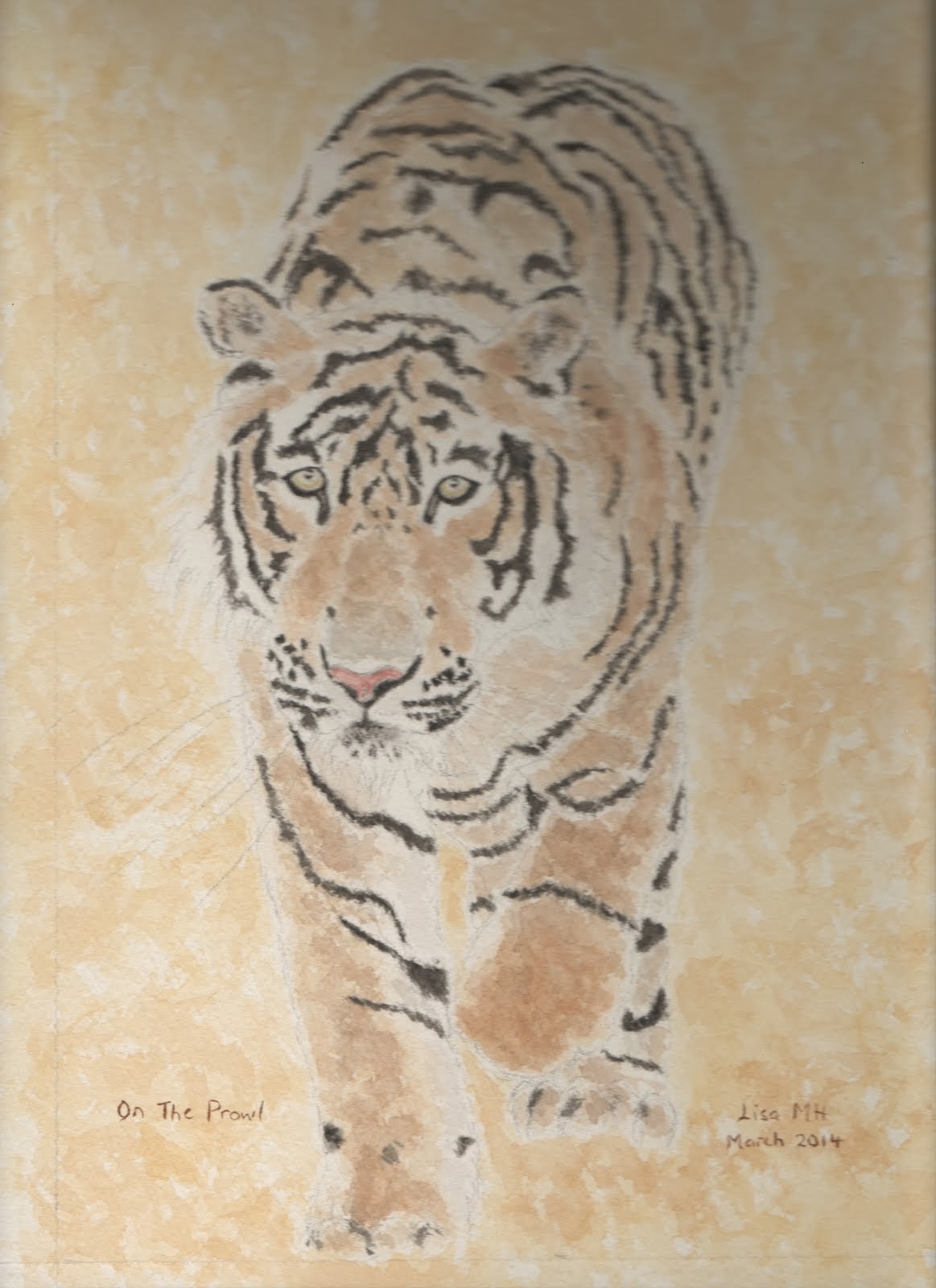
On The Prowl

On The Prowl
Watercolour tiger

Quotes Quota

"What saves a man is to take a step. Then another step."

"There are far, far better things ahead than any we leave behind."

C S Lewis